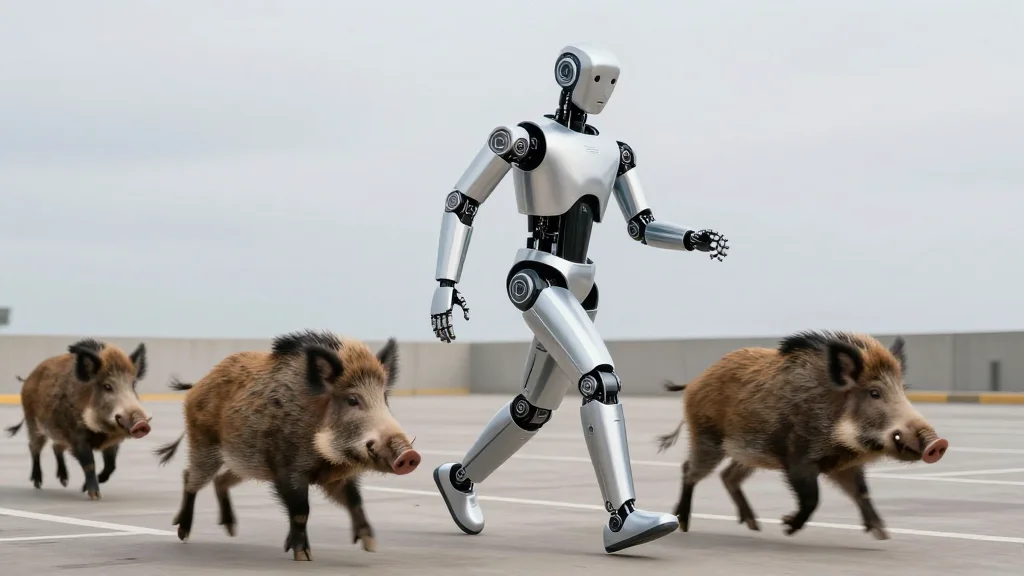
Unitree G1 Humanoid Robot Goes Viral After Chasing Wild Boars in Warsaw

Why It Matters
The viral boar‑chase highlights how quickly humanoid robots are transitioning from laboratory prototypes to public spectacles, a shift that can accelerate consumer acceptance and investment. By demonstrating high‑speed locomotion and autonomous navigation in a chaotic, real‑world setting, Unitree’s G1 proves that the technology is approaching the agility needed for tasks such as disaster response, security patrols, or even non‑lethal wildlife management. However, the stunt also exposes the gap between headline‑grabbing capabilities and practical utility, reminding stakeholders that reliability, safety and regulatory compliance must keep pace with performance gains. Furthermore, the episode underscores China’s strategic advantage in the humanoid market. Unitree’s aggressive pricing, rapid product cycles and integration with global e‑commerce platforms (e.g., AliExpress) are expanding the addressable market far beyond industrial users. As Western firms scramble to catch up, the competitive dynamics could reshape supply chains, talent flows, and standards for humanoid robotics worldwide.
Key Takeaways
- •Unitree G1 robot dubbed Edward Warchocki chased wild boars in Warsaw, video went viral with millions of views
- •Basic G1 model sells for $23,809; “ultimate edition” reaches $58,365, underscoring a new price tier for humanoids
- •Unitree plans to field G1 robots in the Beijing Humanoid Half‑Marathon on April 19, featuring over 70 teams
- •Co‑founder Radosław Grzelaczyk says China is two years ahead of any other country in humanoid development
- •Security concerns persist after reports of backdoors in Unitree’s earlier robot models
Pulse Analysis
Unitree’s viral stunt is less a marketing gimmick than a litmus test for the next wave of humanoid robotics. The G1’s ability to run, detect, and pursue moving targets in an uncontrolled environment signals that the core locomotion problem—balancing speed with stability—is nearing a commercial tipping point. Historically, humanoid robots have been confined to slow, deliberate motions; breaking the 4‑mph barrier, as the G1 does, narrows the performance gap with human workers and opens doors to time‑critical applications such as emergency response or rapid inventory movement in warehouses.
China’s dominance is not accidental. By leveraging massive manufacturing capacity, aggressive pricing, and a vertically integrated ecosystem that includes AI models, perception stacks, and global distribution via platforms like AliExpress, firms like Unitree can iterate faster than most Western competitors. This creates a virtuous cycle: lower prices attract more developers, which generates more data and software improvements, further driving down costs. The downside is a potential security blind spot; the same openness that fuels adoption also invites scrutiny over firmware integrity and data privacy.
Looking ahead, the real test will be whether the G1 can transition from viral stunts to repeatable, mission‑critical deployments. The upcoming Beijing half‑marathon will serve as a high‑visibility benchmark for endurance, autonomy and safety. Success could accelerate contracts with municipal authorities seeking non‑lethal wildlife control or crowd‑management solutions, while failure may relegate the technology to the realm of entertainment. Investors and policymakers should watch how Unitree balances hype with hard‑won reliability, as the outcome will shape the commercial trajectory of consumer‑grade humanoid robots for years to come.
Unitree G1 Humanoid Robot Goes Viral After Chasing Wild Boars in Warsaw
Comments
Want to join the conversation?
Loading comments...