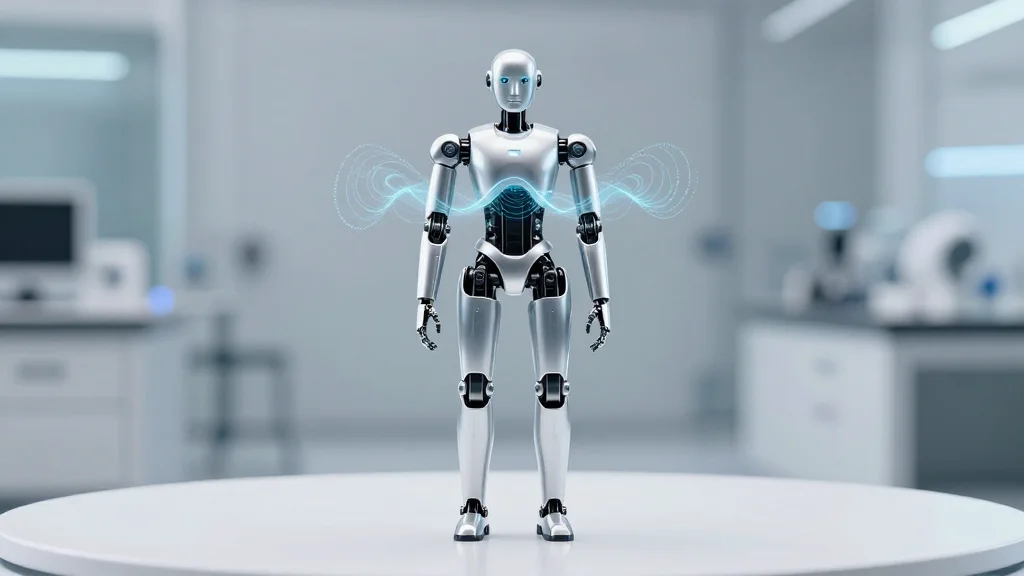
WIRobotics Secures $68 Million Series B to Accelerate Humanoid Robot Commercialization


Why It Matters
The funding round positions WIRobotics at the forefront of a nascent humanoid market that promises to reshape manufacturing, logistics, and personal assistance. By leveraging a decade of movement‑data from its wearable robots, the firm can offer a level of adaptability that many current humanoids lack, potentially lowering barriers to adoption in sectors that require nuanced human interaction. Moreover, the involvement of a diversified investor group—including venture firms with deep ties to AI and hardware—signals confidence that Korean robotics can compete on a global stage. Successful commercialization of ALLEX could catalyze further private investment into humanoid research, accelerating the overall pace of automation.
Key Takeaways
- •WIRobotics raised KRW 95 billion ($68 million) in Series B funding led by JB Investment.
- •Series B will finance the ALLEX humanoid platform, with a commercial launch targeted for late 2026.
- •Wearable robot WIM has sold over 3,000 units and generated KRW 2.79 billion in 2025 revenue.
- •Partnerships with AWS, NVIDIA and a global automotive OEM are advancing Physical AI capabilities.
- •A new North American entity in California will support global expansion and distribution.
Pulse Analysis
WIRobotics’ latest financing reflects a convergence of two trends: the maturation of data‑centric robotics and the appetite of capital markets for hardware that can be scaled through software services. The company’s strategy of turning wearable‑robot telemetry into a humanoid control framework is reminiscent of how early smartphone makers leveraged app ecosystems to create network effects. In this case, the ‘app’ is the movement‑data model that informs ALLEX’s manipulation algorithms, giving the robot a personalized edge that could be decisive in environments like hospitals or factories where variability is high.
Historically, humanoid robots have struggled with cost and reliability, limiting adoption to research labs. WIRobotics’ approach—pairing a proven commercial product (WIM) with cloud‑based AI and a subscription revenue stream—offers a pathway to amortize development costs over a broader user base. If the company can deliver on its mass‑production timeline, it may force incumbents to rethink pricing and integration models, potentially spurring a wave of modular, data‑driven robot platforms.
From an investment perspective, the round’s composition is notable. JB Investment’s lead role, alongside players like Smilegate Investment and FuturePlay, suggests a blend of traditional venture capital and strategic tech investors. This mix could provide not only funding but also access to AI talent, cloud infrastructure, and distribution channels. The upcoming proof‑of‑concept with an automotive OEM could serve as a marquee case study, demonstrating that a Korean‑born humanoid can meet the rigorous demands of high‑throughput manufacturing. Success here would likely attract additional OEM interest, creating a virtuous cycle of validation and scale.
Overall, WIRobotics is poised at a pivotal inflection point. Its ability to translate wearable‑robot data into a commercially viable humanoid could redefine how robots are deployed across industries, and the Series B funding gives it the runway to test that hypothesis at scale.
WIRobotics Secures $68 Million Series B to Accelerate Humanoid Robot Commercialization
Comments
Want to join the conversation?
Loading comments...