
Companies Mentioned


Why It Matters
A compounding discovery engine unlocks sustainable traffic from both search and AI assistants, giving SaaS companies a durable competitive moat and faster revenue pipelines.
Key Takeaways
- •SEO now spans search, AI answers, community platforms.
- •Combine on‑site fundamentals with scalable programmatic content.
- •Off‑site authority fuels both rankings and AI citations.
- •Track competitor metrics weekly for early performance signals.
- •Treat reviews and listings as growth channels for AI engines.
Pulse Analysis
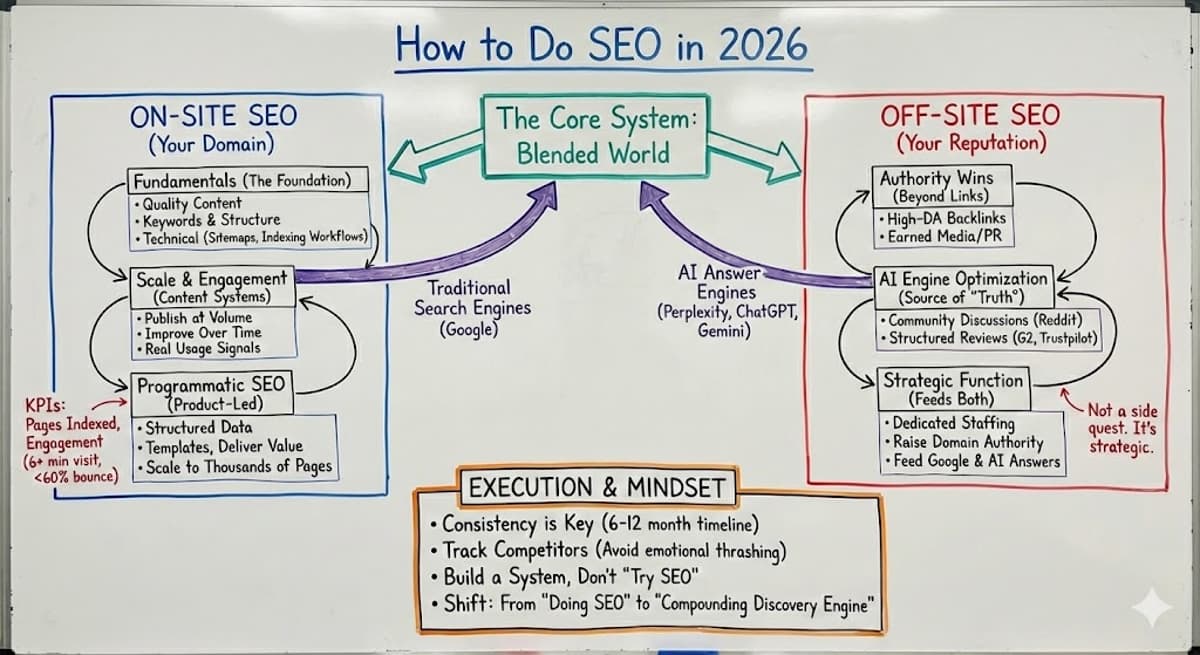
In 2026 the SEO landscape has evolved from a single‑channel ranking game into a multi‑surface discovery strategy. SaaS buyers research products across Google, AI assistants like ChatGPT, niche community forums, and curated list sites. Companies that map these touchpoints and optimize content for each channel create a broader net of visibility, ensuring that potential customers encounter their brand wherever the research journey leads. This shift demands a mental model that treats search engines, answer engines, and off‑site platforms as interconnected parts of a single discovery funnel.
On‑site work remains the foundation, but scale and engagement now define success. Core technical health—clean architecture, sitemaps, and intent‑aligned content—must be coupled with programmatic publishing pipelines that generate thousands of indexable pages. Metrics have moved beyond page counts to indexed volume, read‑through rates, and user‑intent satisfaction. By treating each page as a product feature, teams can iterate quickly, using real usage signals to refine templates and improve relevance, which accelerates indexing timelines and drives meaningful traffic.
Off‑site authority has become the true moat, especially as AI models prioritize trusted sources. Strategic backlink acquisition, high‑authority reviews, and placements on curated listicles directly influence both traditional SERP rankings and AI answer citations. Embedding review generation into customer success workflows and allocating dedicated resources for link building turn reputation into a growth engine. Continuous competitive tracking—monitoring keyword shifts and backlink profiles weekly—provides early performance indicators, keeping the SEO system visible and adaptable over the long term.
How to Actually Do SEO in 2026
0
Comments
Want to join the conversation?
Loading comments...