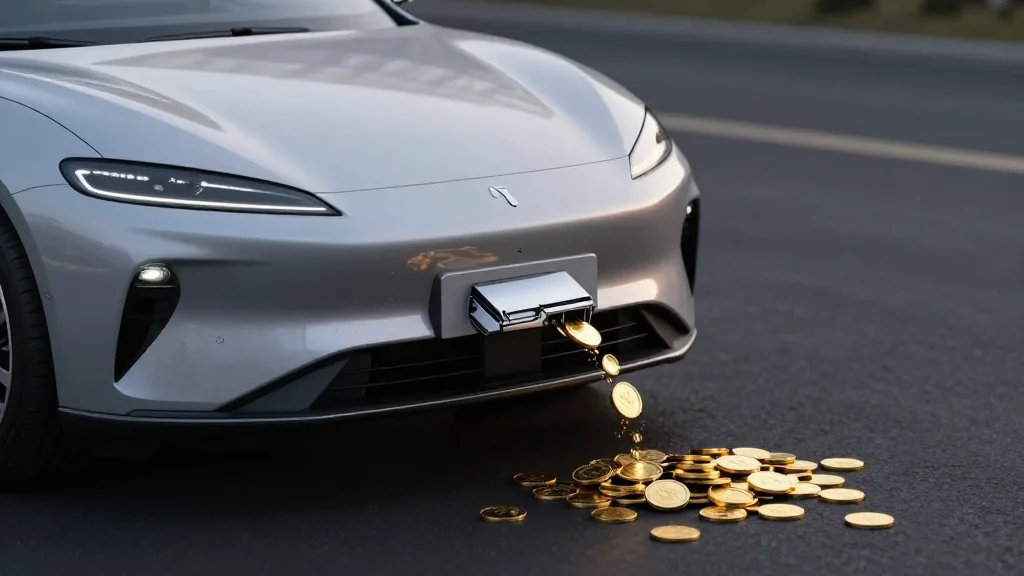
BYD's Q1 Profit Drops 55% as Discount War Cuts Per‑car Earnings

Companies Mentioned

Why It Matters
The BYD profit collapse signals that even the largest high‑volume sellers are vulnerable to pricing wars that can quickly erode earnings. For sales leaders across the automotive and broader consumer‑goods sectors, the episode underscores the importance of aligning sales incentives with profitability, not just unit volume. It also raises questions about the sustainability of China’s EV boom, where fierce competition may force other manufacturers into similar discount battles, potentially reshaping pricing dynamics and financing structures across the industry. Investors and corporate finance teams will need to monitor how BYD and its peers manage the trade‑off between market share and cash‑flow health. A prolonged discount environment could trigger tighter credit conditions, higher borrowing costs, and a shift toward premium or differentiated product lines as a path to restore margins.
Key Takeaways
- •BYD Q1 2026 net profit fell 55% YoY to 4.08 bn yuan ($597 m).
- •Average vehicle discounts hit a record 10% in March 2026.
- •Per‑vehicle profit dropped to 3,000‑4,000 yuan, a 55%‑66% decline from a year earlier.
- •Short‑term borrowings surged 72% to 66.3 bn yuan ($9.7 bn).
- •Revenue fell 12% to 150.2 bn yuan (~$21 bn), marking the third consecutive quarterly decline.
Pulse Analysis
BYD’s earnings illustrate a classic sales‑volume versus margin dilemma that has resurfaced in the EV sector. Historically, automakers have used discounts to win market share, but the scale of today’s discount war—driven by a crowded Chinese market and low‑cost entrants—has pushed per‑car profitability into negative territory for many players. BYD’s strategy of leveraging sheer scale to outlast competitors now collides with a financing reality: the company’s debt load has ballooned to nearly $10 bn, a level that could constrain future investment in R&D or overseas expansion.
From a strategic standpoint, BYD may need to pivot toward higher‑margin segments, such as premium models or battery‑as‑a‑service offerings, to break the discount spiral. Alternatively, the firm could double down on cost efficiencies in its supply chain, but that would require significant operational overhaul. Competitors watching BYD’s cash‑flow strain might seize the moment to capture price‑sensitive customers, further intensifying the discount race.
In the broader sales ecosystem, BYD’s experience serves as a cautionary tale for any organization that rewards sales teams solely on unit volume. Aligning compensation with profitability metrics, tightening discount approval processes, and investing in data‑driven pricing tools will become essential to avoid the pitfalls BYD now faces. The next quarter will be a litmus test: can BYD restore cash‑flow discipline without sacrificing its market‑share momentum, or will the discount war force a strategic retreat that reshapes the competitive landscape of the global EV market?
BYD's Q1 profit drops 55% as discount war cuts per‑car earnings
Comments
Want to join the conversation?
Loading comments...