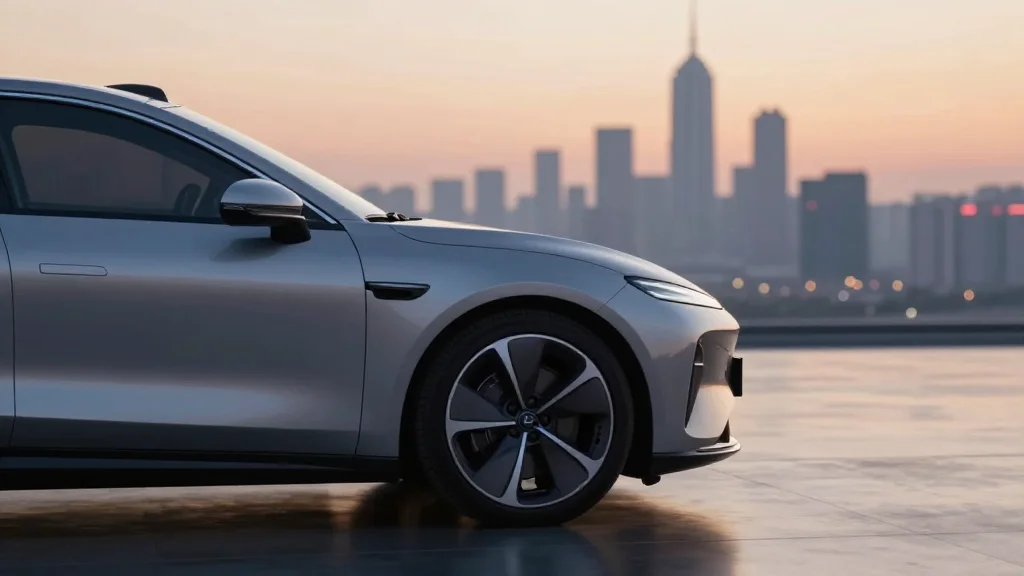
Hyundai Accelerates EV Push in China, Targets 500,000 Annual Sales

Why It Matters
Hyundai’s $1.1 billion infusion and 20‑model roadmap signal a decisive shift toward electrification in the world’s largest auto market. Achieving the 500,000‑unit sales target would not only restore the automaker’s Chinese market share but also provide a scalable platform for exporting technology globally. The India partnership taps a high‑growth, low‑cost segment, diversifying Hyundai’s revenue base and positioning it against rivals such as BYD and Tesla, which are also racing to dominate EV sales in Asia. If Hyundai can translate its product pipeline into volume, the company could reverse its profit decline, improve cash flow and strengthen its competitive stance in a market where battery costs, software integration and local consumer preferences are rapidly evolving. The moves also illustrate how legacy OEMs are leveraging joint ventures and localized development to compete with pure‑play EV manufacturers.
Key Takeaways
- •Hyundai and BAIC invest 8 billion yuan ($1.1 billion) in Beijing Hyundai JV
- •Launch of IONIQ V marks first dedicated IONIQ model for China
- •Target of 500,000 annual vehicle sales in China over next five years
- •Q1 2026 revenue rose 3.4% to 45.94 trillion won ($34.5 billion) despite profit dip
- •Joint Development Agreement with TVS Motor to launch electric three‑wheelers in India
Pulse Analysis
Hyundai’s China strategy reflects a broader industry trend where legacy automakers double down on localized EV development to stay relevant against native Chinese players. By committing over $1 billion and a 20‑model pipeline, Hyundai is betting that speed and relevance in product offerings will outweigh its recent earnings weakness. The 500,000‑unit sales goal is ambitious; it requires not just new models but also a robust charging ecosystem and software services that Chinese consumers now expect. Hyundai’s ability to integrate its global platforms with China‑specific battery tech will be a key differentiator.
The Indian three‑wheeler venture is equally strategic. While the global EV market is dominated by passenger cars, the three‑wheeler segment accounts for a sizable share of urban mobility in emerging economies. By leveraging TVS’s manufacturing footprint and local market insight, Hyundai can achieve economies of scale faster than building a greenfield plant. This partnership also mitigates risk, as TVS will handle sales and after‑sales support, allowing Hyundai to focus on technology.
Looking ahead, Hyundai’s dual‑track approach—high‑volume, premium EVs in China and cost‑effective, high‑density three‑wheelers in India—creates a diversified revenue engine that could cushion the company against regional downturns. Success will hinge on execution: delivering the IONIQ V on schedule, meeting quality expectations, and scaling the Indian E3W production without compromising margins. If Hyundai can pull this off, it may set a template for other OEMs seeking to revive sales through region‑specific electrification strategies.
Hyundai Accelerates EV Push in China, Targets 500,000 Annual Sales
Comments
Want to join the conversation?
Loading comments...