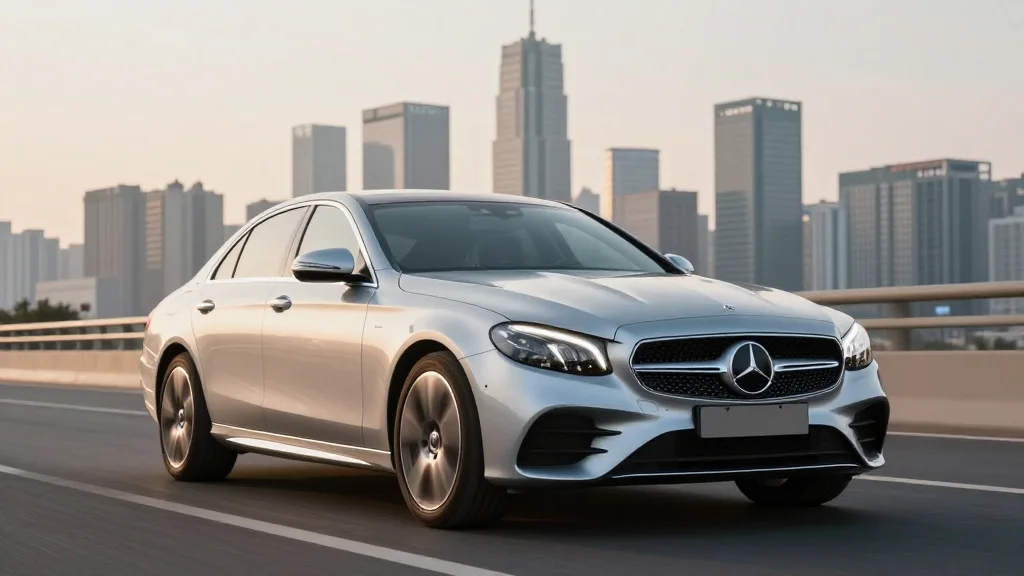
Mercedes Rejects VW’s China‑Only Model, Keeps Global Portfolio

Companies Mentioned
Why It Matters
Mercedes’ decision highlights a strategic fork in the automotive industry’s approach to China, the world’s largest car market. While Volkswagen’s hyper‑localized model has delivered a near‑14% market share, Mercedes is betting that its global brand equity and premium positioning can compete without bespoke products. The outcome will influence how other global OEMs allocate capital, negotiate joint‑venture terms, and design product line‑ups for China. For the broader sales ecosystem, the contrast between deep localization and a global portfolio affects dealer networks, supply‑chain contracts, and financing arrangements. A shift toward more China‑only models could accelerate local supplier development, but also increase exposure to regulatory and demand volatility. Mercedes’ cautionary stance serves as a counterweight, reminding investors that scale and brand consistency remain valuable assets in a market where consumer preferences are evolving rapidly.
Key Takeaways
- •Mercedes CEO Ola Källenius says the firm will not develop a China‑only vehicle without a strong market case.
- •Volkswagen’s “In China, for China” strategy has secured a 13.9% passenger‑vehicle market share in China.
- •Mercedes sold roughly 1.2 million vehicles in China in 2023, relying on global models with long‑wheel‑base variants.
- •VW’s China‑only models include the Lavida sedan, ID. UNYX SUV, Phideon sedan, E5 Sportback and upcoming E7X SUV.
- •The strategic split may reshape dealer networks, supplier contracts, and capital allocation for global OEMs.
Pulse Analysis
Mercedes’ refusal to follow Volkswagen’s China‑first playbook reflects a risk‑adjusted calculus rooted in brand architecture and cost discipline. By keeping its portfolio global, Mercedes preserves the economies of scale that underpin its high‑margin premium business. However, this approach may limit its ability to capture price‑sensitive segments where localized models can undercut competitors on cost and features. VW’s joint‑venture model, while capital‑intensive, has demonstrated that a tailored product suite can translate into tangible market share gains, especially as Chinese consumers increasingly demand technology‑forward, locally resonant vehicles.
The decision also underscores the divergent paths automakers can take in a market where policy, consumer taste, and competitive pressure evolve quickly. Mercedes may be betting on the durability of its brand cachet and the willingness of Chinese affluent buyers to pay a premium for a globally recognized badge. If the market tilts toward more localized, tech‑centric offerings, Mercedes could find its share eroding, forcing a strategic pivot later. Conversely, a sustained global‑portfolio strategy could protect margins and simplify supply chains, a crucial advantage if global economic headwinds tighten financing conditions.
Looking ahead, the next strategic inflection point will likely be the rollout of electric vehicles (EVs) in China. VW’s localized EV models are already gaining traction, while Mercedes is positioning its EQ line within the existing global lineup. The success of these EVs will test whether a global platform can meet China’s unique regulatory standards and consumer expectations without bespoke engineering. Investors should monitor sales data, joint‑venture negotiations, and any policy shifts that could tip the balance toward deeper localization or reinforce the merits of a unified global portfolio.
Mercedes Rejects VW’s China‑Only Model, Keeps Global Portfolio
Comments
Want to join the conversation?
Loading comments...