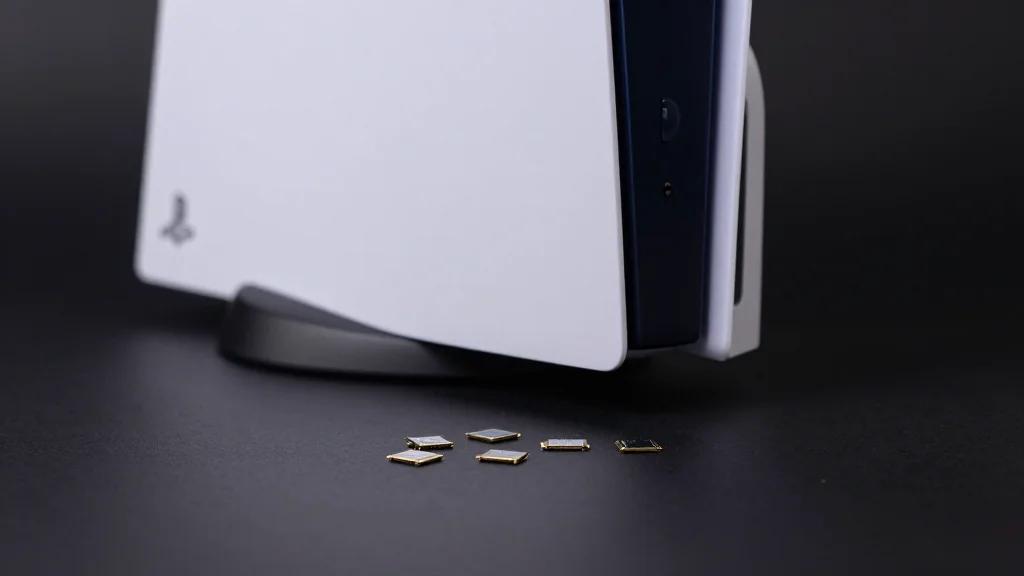
Sony PS5 Sales Plunge 46% as Memory Shortage Forces Price Hikes

Companies Mentioned
Why It Matters
The PS5 sales decline illustrates how supply‑chain constraints can quickly erode hardware demand, even for a flagship product with a strong brand. For the broader gaming industry, Sony’s experience serves as a cautionary tale: reliance on a single component—memory—can force price hikes that alienate price‑sensitive consumers and shift revenue dependence to software. The situation also highlights the strategic importance of blockbuster titles like GTA VI, which can act as a lifeline for hardware sales in a market where margins are increasingly thin. For retailers and distributors, the sharp drop signals potential inventory overhangs and the need to recalibrate ordering forecasts. For investors, the shift from hardware to software profitability reshapes valuation models, emphasizing recurring revenue streams over unit sales. Ultimately, Sony’s challenge underscores the intertwined nature of component supply, pricing strategy, and content pipelines in shaping the health of the console ecosystem.
Key Takeaways
- •Sony shipped 1.5 million PS5 units in Q4, a 46% YoY decline.
- •Two price hikes raised the standard PS5 price from $499.99 to $649.99.
- •Memory‑chip shortage forced Sony to secure only minimum quantities for the holiday season.
- •Operating income rose 12% to ¥463.3 billion ($2.95 billion) on stronger software sales.
- •Analysts cite GTA VI launch and high‑margin software as potential mitigants.
Pulse Analysis
Sony’s PS5 slump is a textbook example of how a single supply‑chain bottleneck can cascade into a full‑blown revenue crisis for hardware‑centric businesses. The GDDR6 memory shortage, driven by geopolitical instability and soaring demand from data‑center manufacturers, left Sony with limited leverage to keep prices competitive. By raising the console’s price by roughly 30%, Sony protected per‑unit margins but sacrificed volume, a trade‑off that proved costly in a market where price elasticity remains high.
Historically, console makers have weathered component shortages by extending product cycles or introducing lower‑cost variants. Sony’s decision to double‑down on the existing PS5 platform, rather than accelerate a next‑gen PlayStation 6 rollout, reflects a calculated bet that software revenue can cushion hardware weakness. The $765 million impairment charge tied to Bungie underscores the risk of over‑reliance on first‑party titles that fail to meet expectations. However, the upcoming GTA VI launch could act as a catalyst, potentially driving late‑cycle hardware sales and reinforcing the ecosystem’s stickiness.
Going forward, Sony must diversify its component sourcing, perhaps by investing in alternative memory technologies or securing longer‑term contracts with multiple suppliers. Simultaneously, it should accelerate the development of a more affordable, memory‑light console to capture price‑sensitive segments. Balancing these hardware strategies with a robust pipeline of high‑margin software will be essential to restore growth and protect shareholder value in an increasingly competitive console landscape.
Sony PS5 sales plunge 46% as memory shortage forces price hikes
Comments
Want to join the conversation?
Loading comments...