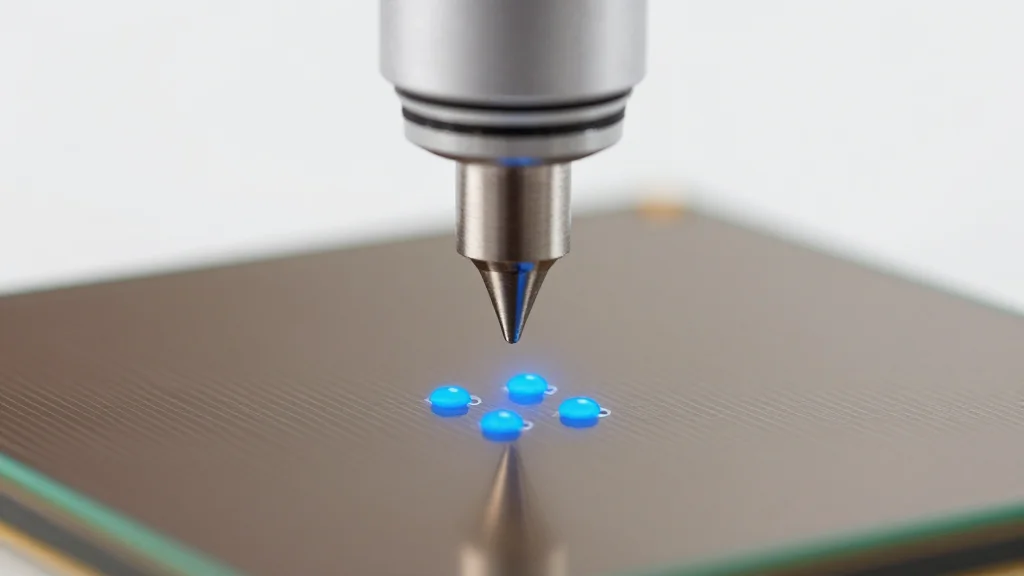
Atomically Precise Mechanosynthesis of Carbon Structures on Hydrogenated Si(100) by Inverted-Mode STM
Key Takeaways
- •Inverted‑mode STM enables single‑site carbon donation on Si(100).
- •Researchers built patterned polyyne chains via stepwise C‑C bond formation.
- •Hydrogen‑passivated silicon surface serves as reactive template for atomics.
- •Demonstration paves way for programmable atomically precise nanofabrication.
Pulse Analysis
Atomically precise manufacturing has long been a holy grail for nanotechnology, promising devices built atom‑by‑atom rather than by bulk lithography. The recent work using inverted‑mode scanning tunneling microscopy (STM) marks a breakthrough by achieving both positional and chemical control of carbon on a silicon substrate. By leveraging a hydrogen‑passivated Si(100) surface, the researchers created reactive sites where individual carbon atoms could be donated and linked, forming linear polyyne structures with unprecedented accuracy.
The significance of this mechanosynthetic capability extends beyond academic curiosity. Silicon remains the backbone of the semiconductor industry, and integrating atomically precise carbon structures could enable ultra‑dense interconnects, novel quantum bits, or bespoke catalytic surfaces. Moreover, the method’s scalability—demonstrated through patterned multi‑site donation—suggests a route toward programmable fabrication platforms that could complement or eventually replace conventional photolithography for niche high‑performance applications.
Industry observers should watch how this technology matures, particularly regarding throughput, error rates, and integration with existing fab lines. If the approach can be automated and adapted to larger wafers, it could catalyze a new class of nano‑electronics, sensors, and quantum devices, reshaping the competitive landscape for firms investing in next‑generation manufacturing. The convergence of STM‑based mechanosynthesis with silicon’s mature ecosystem positions this breakthrough as a potential catalyst for a paradigm shift in how we design and produce nanoscale systems.
Atomically precise mechanosynthesis of carbon structures on hydrogenated Si(100) by inverted-mode STM
Comments
Want to join the conversation?