Key Takeaways
- •New GR solution shows collapsing star can spawn a dark-energy mini‑universe
- •Mini‑universe expansion counteracts gravity, halting collapse before a black hole forms
- •Gravastar model offers singularity‑free alternative, preserving information without an event horizon
- •Findings resolve 25‑year question of how gravastars could form in nature
- •Research may prompt revisions to astrophysics textbooks and inspire observational tests
Pulse Analysis
Black holes have long been the default explanation for the fate of massive stars, yet their singularities and event horizons raise profound theoretical puzzles, from information loss to the breakdown of known physics. Over the past decades, alternative compact objects such as gravastars—hypothetical stars packed with dark energy—have been proposed, but a credible formation pathway remained elusive. The new study from Goethe University provides a concrete mechanism, linking the collapse of a dying star to the birth of a self‑contained, expanding mini‑universe, thereby sidestepping the singularity altogether.
The authors solve Einstein’s equations in a dynamic setting, showing that as the stellar core compresses, quantum‑scale fluctuations can trigger a rapid phase transition that generates a pocket of dark energy. This pocket behaves like a tiny Big Bang, inflating outward and exerting pressure that balances the inward pull of gravity. The resulting equilibrium yields a gravastar whose external spacetime mimics a black hole’s, while its interior remains horizon‑free and information‑preserving. By framing the process as a cosmological bounce inside a star, the model bridges concepts from early‑universe inflation and compact‑object astrophysics, offering a unified picture that could reconcile general relativity with quantum considerations.
The implications are far‑reaching. If gravastars can form naturally, astronomers may need to reinterpret gravitational‑wave signatures and electromagnetic observations that have been attributed to black holes. Future missions such as the Event Horizon Telescope upgrades or space‑based interferometers could search for subtle deviations in shadow size or echo patterns indicative of a horizon‑less object. Moreover, the theory invites fresh theoretical work on dark‑energy dynamics under extreme curvature, potentially informing broader efforts to unify gravity with quantum field theory. As observational capabilities improve, the gravastar hypothesis could shift from speculative to testable, prompting a reassessment of the cosmic endpoints of massive stars.
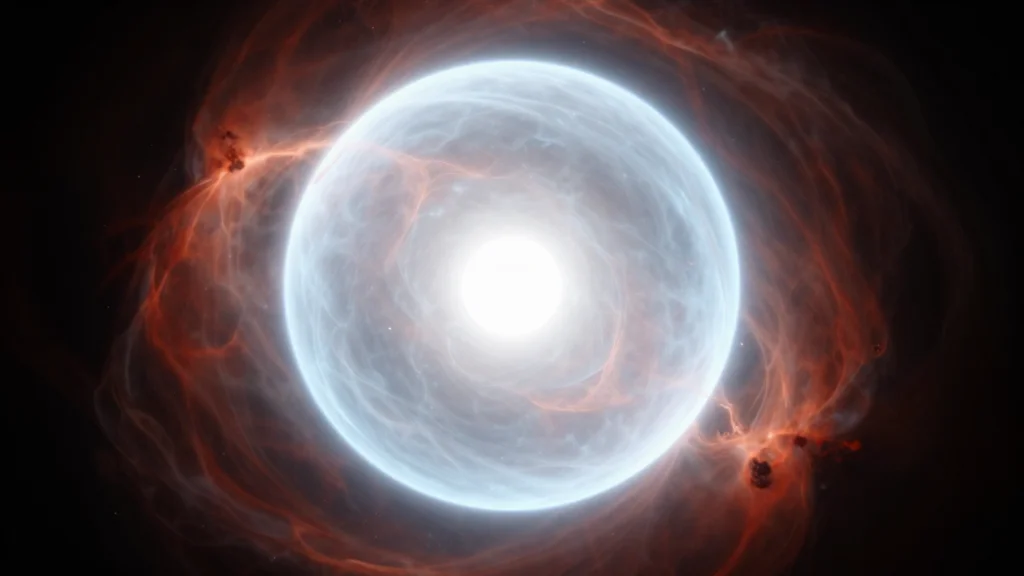
Big Bang inside a star: How a gravastar forms
Comments
Want to join the conversation?