Bringing Bacteria Into Better Focus
Key Takeaways
- •Gold‑coated fiber concentrates up to 100,000 bacteria in 60 seconds
- •Tenfold efficiency boost over traditional photothermal methods
- •Works on 20 µL liquid samples, enabling micro‑volume analysis
- •Three‑dimensional convection captures particles from all directions
- •Designed for integration with optical sensing and spectroscopy
Pulse Analysis
Detecting pathogenic bacteria at ultra‑low concentrations has long been a bottleneck for clinical labs and field monitoring. Conventional culture techniques require days, while immunoassays still need several hours and often involve bulky instrumentation. These delays can hinder early intervention during outbreaks or contamination events, underscoring the market’s demand for rapid, high‑sensitivity platforms that operate on minute sample volumes.
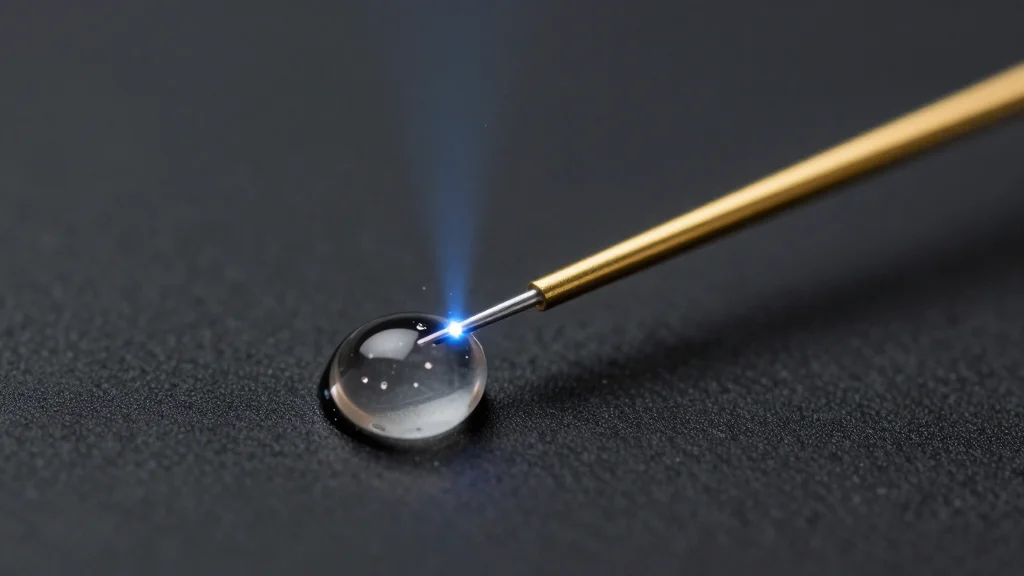
The Osaka team’s solution leverages a thin‑film gold coating on an optical fiber to convert a focused laser beam into localized heat. This heating spawns microscopic bubbles that generate three‑dimensional convection currents, sweeping microbes and nanoparticles toward the fiber tip. In laboratory tests, the system amassed roughly 10,000 microparticles in a single minute and scaled up to hundreds of thousands of bacteria from just 20 µL of fluid—outperforming existing photothermal techniques by more than tenfold without requiring elaborate optical setups.
Beyond proof‑of‑concept, the technology opens pathways for compact diagnostic devices. By coupling the fiber’s concentration capability with downstream optical spectroscopy or label‑free sensing, manufacturers can create handheld analyzers that deliver results in minutes rather than hours. Such integration could accelerate point‑of‑care testing in hospitals, streamline food safety inspections, and enhance real‑time environmental surveillance, positioning the approach as a versatile tool in the growing bio‑analytics market.
Bringing bacteria into better focus
Comments
Want to join the conversation?