Key Takeaways
- •Impurities like hydrogen and oxygen enable superlow‑friction interfaces
- •Shear‑induced aromatization transforms amorphous carbon into graphitic layers
- •Low‑valency impurities stabilize nano‑voids, preventing diamond‑like reformation
- •1,000 quantum‑MD simulations confirmed impurity‑driven friction reduction
- •Tuning impurity type/concentration offers autonomous self‑lubricating coatings
Pulse Analysis
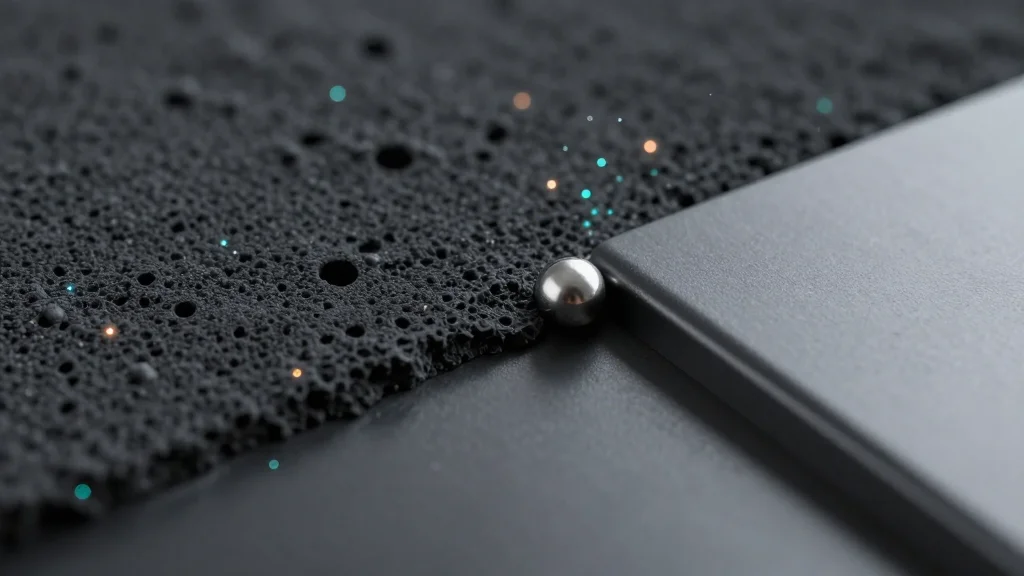
The recent study from Osaka Metropolitan University and Fraunhofer IWM overturns a long‑standing assumption that chemical impurities are purely detrimental to carbon‑based coatings. By running 1,000 quantum‑mechanical molecular‑dynamics simulations, the researchers showed that trace amounts of low‑valency elements—particularly hydrogen and oxygen—act as nanoscale scaffolds during sliding. Under shear stress these impurities stabilize tiny voids, allowing surrounding carbon atoms to reorganize into aromatic, graphene‑like rings. This shear‑induced aromatization creates a continuous, graphitic interface that slides with friction coefficients approaching superlubricity.
From an engineering perspective, the ability to trigger self‑lubricating behavior from within an amorphous carbon layer opens new pathways for wear‑resistant design. Conventional approaches rely on pre‑applied graphite coatings or external lubricants, both of which add processing steps and can degrade under extreme temperatures. By deliberately doping carbon films with controlled amounts of hydrogen or oxygen, manufacturers could produce components that generate their own low‑friction surface during operation, extending the life of bearings, gears, and micro‑electromechanical systems while cutting energy losses.
The next phase will move beyond simulation to experimental validation, testing multi‑impurity blends under realistic pressures and temperatures. Success could accelerate adoption in sectors ranging from automotive powertrains to aerospace actuators, where friction‑induced wear accounts for billions of dollars in maintenance costs annually. Moreover, the concept of impurity‑engineered superlubricity aligns with broader trends toward smart materials that adapt in service, positioning carbon‑based self‑lubricating coatings as a strategic asset for the emerging low‑energy, high‑efficiency manufacturing ecosystem.
Chemical impurities make carbon surfaces superslippery
Comments
Want to join the conversation?