Curiosity Rover Finds More Evidence of Ancient Lakes on Mars
Key Takeaways
- •Curiosity's ChemCam detected highest iron, manganese, zinc combo on Mars
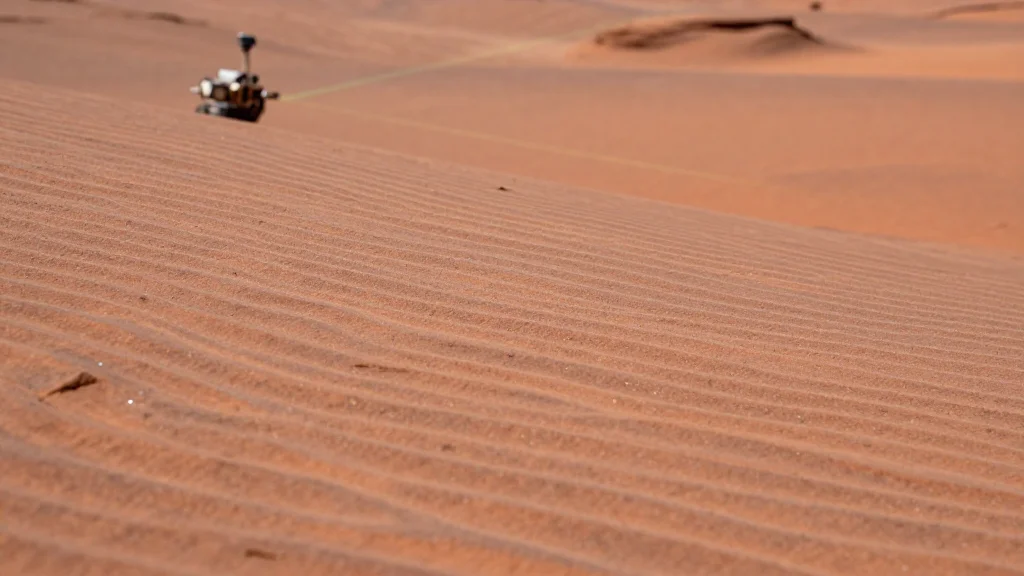
- •Ripples indicate a shallow, redox‑active lake on Mount Sharp
- •Redox‑rich waters could have supported microbial metabolism in ancient Mars
- •Findings guide future Curiosity targets and Mars sample‑return priorities
Pulse Analysis
The Curiosity rover’s ChemCam instrument has uncovered a striking geochemical signature in Gale Crater: a suite of iron, manganese and zinc concentrated within finely preserved ripple structures. These metal‑rich deposits are the hallmark of redox‑active lake environments on Earth, where oxidation‑reduction reactions drive mineral precipitation. By confirming that such chemistry existed on ancient Mars, scientists gain a concrete proxy for evaluating past water activity and the planet’s capacity to host life‑friendly conditions.
Redox chemistry is a key energy source for many terrestrial microbes, allowing them to thrive in environments that would otherwise be inhospitable. The presence of iron‑ and manganese‑rich waters in the Amapari Marker Band suggests that, even as Mars transitioned from a warm, wet epoch to a colder, drier state, isolated pockets of liquid persisted long enough to sustain microbial metabolisms. This bolsters the hypothesis that Mars’ early biosphere, if it ever emerged, could have been patchy yet resilient, exploiting chemically rich niches much like extremophiles on Earth’s hydrothermal systems.
Beyond its astrobiological intrigue, the finding reshapes mission planning. The metal‑laden lake deposits become prime candidates for in‑situ analysis and future sample‑return campaigns, offering a chemically diverse archive of Mars’ aqueous history. Researchers can now prioritize drilling or scooping sites that intersect these redox zones, improving the odds of retrieving biosignature‑bearing material. As NASA and international partners chart the next steps toward returning Martian rocks, the Amapari Marker Band stands out as a strategic waypoint in the quest to answer whether life ever arose beyond Earth.
Curiosity rover finds more evidence of ancient lakes on Mars
Comments
Want to join the conversation?