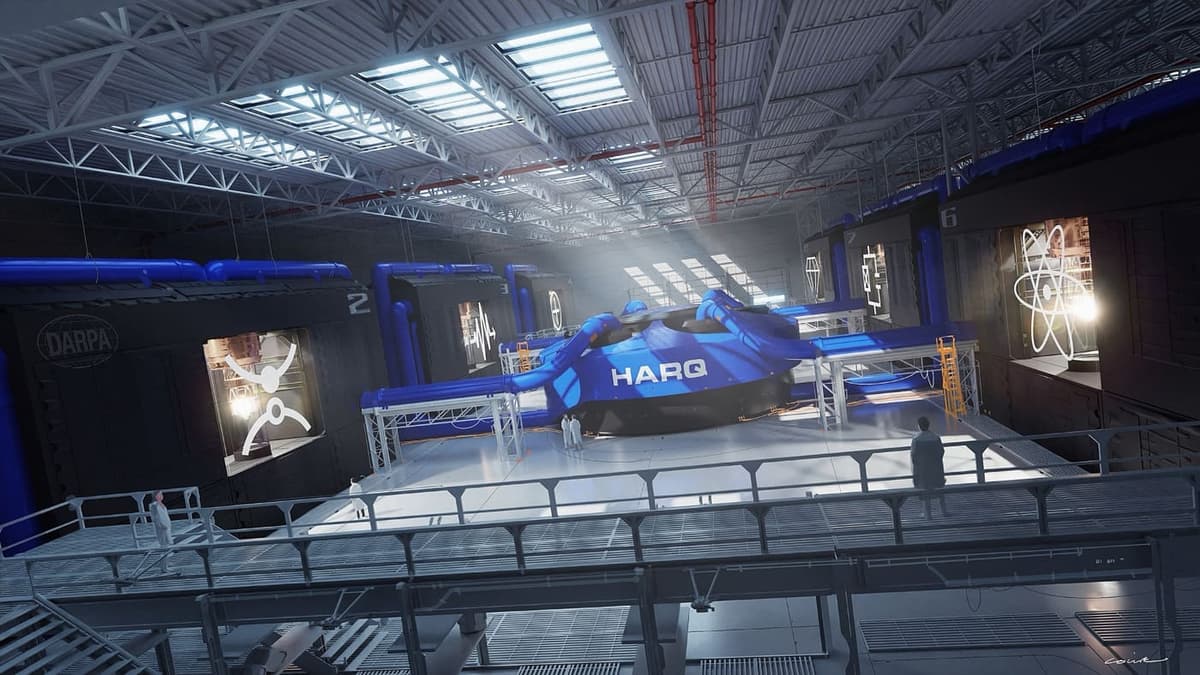
DARPA Funds 19 Teams to Blend Diverse Qubit Technologies

Key Takeaways
- •DARPA funds 19 teams for heterogeneous quantum architecture
- •MOSAIC workstream builds compilers for multi‑qubit optimization
- •QSB focuses on high‑fidelity interconnects across qubit types
- •Program mirrors CPU‑GPU‑ASIC heterogeneity in classical computing
Pulse Analysis
The quantum computing field has long been dominated by a race to perfect a single qubit technology, whether superconducting, trapped‑ion, or photonic. While each platform offers distinct advantages, none alone can satisfy the demanding error‑rates, connectivity, and gate speeds required for large‑scale algorithms. DARPA’s HARQ program acknowledges this bottleneck, betting that a modular, heterogeneous architecture—similar to how CPUs, GPUs, and ASICs collaborate in today’s data centers—will provide a more pragmatic path to quantum advantage.
At the core of HARQ are two parallel workstreams. MOSAIC tackles the software layer, designing compilers that intelligently partition quantum circuits across the most suitable qubit types, creating a "mosaic" of optimized sub‑circuits. Meanwhile, the Quantum Shared Backbone (QSB) addresses the hardware challenge of linking these diverse qubits without degrading coherence, leveraging novel materials and precision control to maintain signal fidelity. Early milestones include prototype interconnects and proof‑of‑concept compilation pipelines, which together will demonstrate that heterogeneous systems can outperform monolithic designs on benchmark problems.
If successful, the program could reshape the quantum ecosystem. Industry players may adopt a best‑of‑breed strategy, integrating superconducting processors for speed with trapped‑ion modules for long‑term storage, all coordinated by a unified software stack. For national security, such flexibility promises faster development cycles for cryptanalysis and materials discovery. Moreover, the DARPA investment signals confidence to private capital, likely spurring a new wave of venture funding aimed at modular quantum hardware and the ancillary tooling required to make it commercially viable.
DARPA Funds 19 Teams to Blend Diverse Qubit Technologies
Comments
Want to join the conversation?