Friction Stir Welding Boosts LPBF Copper Performance
Key Takeaways
- •FSW eliminated ~7% porosity in LPBF copper stir zone
- •Tensile strength rose to 235‑245 MPa after friction stir welding
- •Hardness doubled to 170 HV in cooled weld region
- •Weld fractures occurred in base metal, not in the joint
- •Enables assembling larger heat‑management components beyond LPBF build limits
Pulse Analysis
Copper additive manufacturing via laser powder‑bed fusion (LPBF) faces two fundamental hurdles: the metal’s high reflectivity and thermal conductivity make it difficult to achieve full melt, resulting in lack‑of‑fusion pores that lower strength and conductivity; and the limited build volume forces designers to split large heat‑exchanger, coil, or nozzle geometries into multiple parts. These pores act as stress concentrators, while the need for post‑build assembly adds cost and reliability concerns. Consequently, copper AM has remained a niche capability despite copper’s unmatched heat‑transfer characteristics.
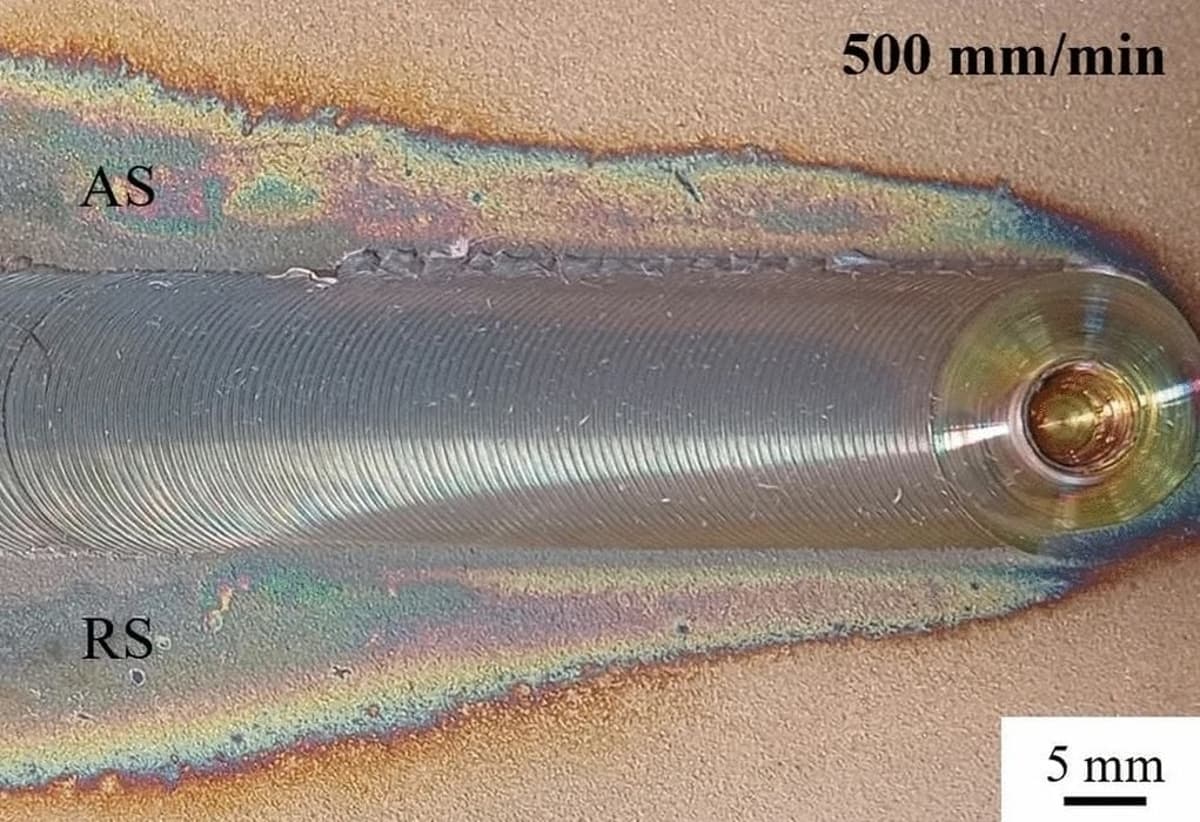
The Politecnico di Torino and CIM team applied friction stir welding (FSW), a solid‑state technique that plastically stirs material below its melting point, to join LPBF‑produced CuNiSiCr plates. Using a 900 rpm tool at 100 mm/min and 500 mm/min, they reduced the as‑built 7 % porosity to near zero within the stir zone. Hardness rose from 84 HV to 170 HV in cooler weld regions, and ultimate tensile strength increased to 235‑245 MPa, while ductility fell modestly. All fracture events occurred in the base metal, confirming the joint’s superior integrity.
By eradicating porosity and delivering joint strengths that meet or exceed the parent alloy, FSW provides a scalable path to assemble copper components larger than a single LPBF build envelope. Designers can now print optimized fluid channels, fin arrays, or coil windings and fuse them into leak‑tight, high‑conductivity assemblies without the hot‑cracking risks of fusion welding. The process also cuts scrap rates and shortens lead times, offering cost benefits for aerospace, power‑electronics, and advanced thermal‑management markets where copper’s performance is critical. As the technique matures, it could become a standard post‑process, accelerating copper AM adoption.
Friction Stir Welding Boosts LPBF Copper Performance
Comments
Want to join the conversation?