Key Takeaways
- •Surface tension dominates over gravity at micro scales
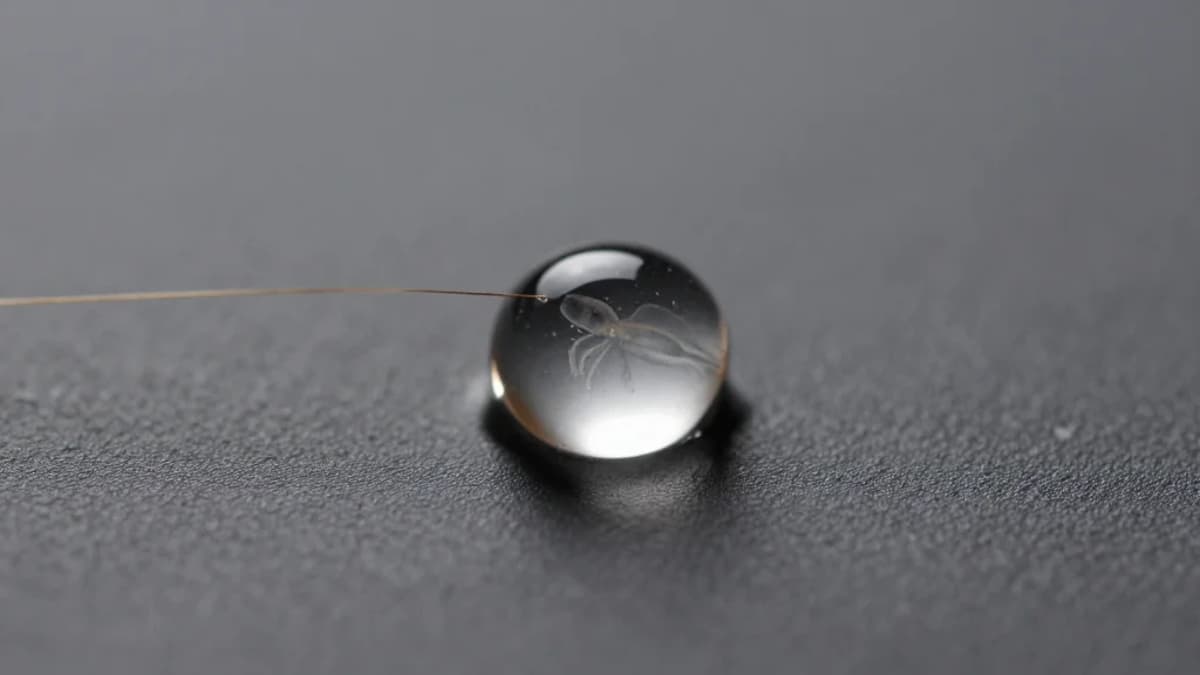
- •Droplets form spheres, cling to spiky hairs
- •Pond surfaces act like elastic trampolines for insects
- •Escape requires specialized locomotion techniques
- •Insights guide microfluidic engineering and biomimicry
Summary
The article explores how water behaves fundamentally differently for microscopic invertebrates, where surface tension outweighs gravity. At this scale, droplets cling to spiky hairs and retain a perfect spherical shape. Even pond surfaces act like elastic trampolines, allowing tiny creatures to skim across them. Escaping these surfaces demands specialized locomotion techniques, highlighting the unique fluid dynamics of the micro‑world.
Pulse Analysis
At the heart of the phenomenon is surface tension, a cohesive force that becomes the primary driver of fluid behavior when objects shrink to millimeter and sub‑millimeter dimensions. Unlike the familiar pull of gravity that shapes rivers and oceans, surface tension pulls water molecules together, forming perfect spheres and allowing droplets to adhere to minute structures such as the hair‑like projections on tiny invertebrates. This shift in dominant forces creates a fluid environment where the classic rules of macroscopic hydrodynamics no longer apply, demanding a re‑examination of fundamental physics for the micro‑world.
Biological organisms have evolved remarkable adaptations to exploit these forces. Certain insects and crustaceans use the trampoline‑like surface of a pond, generated by a thin film of water under tension, to launch themselves or glide across the water’s surface. Their bodies and appendages are tuned to maximize contact with the elastic film, converting surface energy into kinetic motion. Conversely, escaping from this surface requires specialized techniques—such as rapid leg thrusts or body undulations—that overcome the same tension that initially supports them. These strategies illustrate nature’s ability to turn a physical constraint into a functional advantage.
The implications extend far beyond ecology. Engineers designing microfluidic chips, lab‑on‑a‑chip platforms, and soft robotics draw directly from these natural principles. By mimicking the way tiny organisms manipulate surface tension, innovators can create self‑propelling droplets, efficient fluid transport without pumps, and responsive surfaces that change stiffness on demand. As research continues to decode these interactions, the convergence of biology and fluid dynamics promises new materials and devices that operate with the elegance and efficiency found in the smallest corners of the natural world.
Comments
Want to join the conversation?