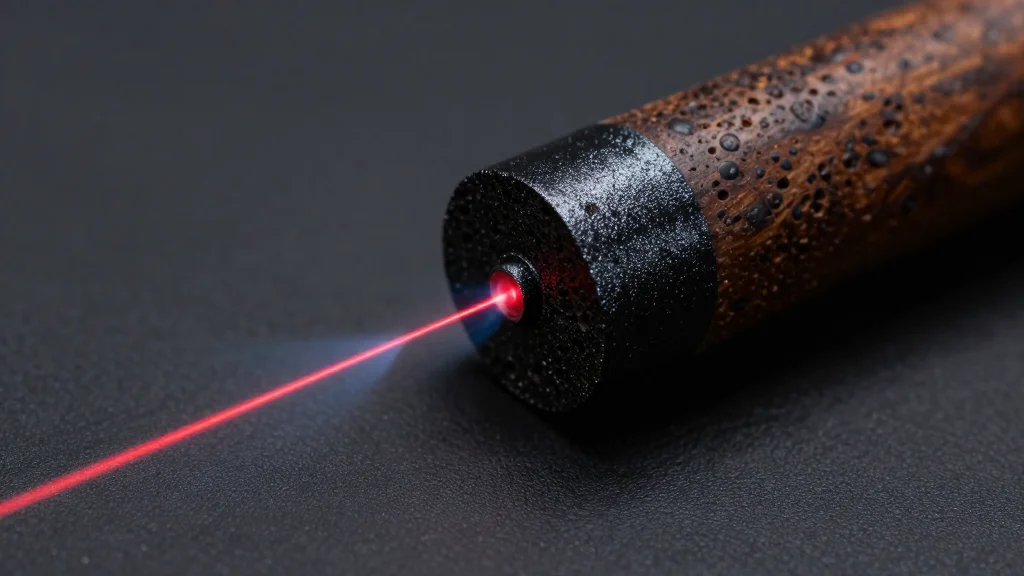
Graphene-Engineered Wood Lowers the Power Barrier for Laser Propulsion
Key Takeaways
- •Natural wood achieved 907.74 s specific impulse, highest density‑specific performance
- •Graphene‑delignified wood lowered ablation threshold to 0.54 MW m⁻²
- •Tensile strength of GDW reached 273 MPa, ten times natural wood
- •Porous architecture guides light and ejecta, boosting thrust efficiency
- •Design trade‑off: efficiency vs low‑power operation and mechanical robustness
Pulse Analysis
Laser‑ablation propulsion relies on a beam heating a solid until a thin layer vaporizes, producing recoil. Traditional propellants such as metals demand megawatt‑scale intensities to initiate ablation, while polymers ablate easily but waste mass, limiting specific impulse. The key to a practical system is a material that couples light efficiently, ejects minimal mass, and survives the mechanical stresses of repeated firing. Recent advances in nanomaterials have shown that carbon‑based structures can absorb light strongly, yet dense carbon composites lack the low‑density scaffolding needed for high mass‑efficiency.
The study published in Advanced Science demonstrates that a porous wood scaffold, chemically delignified and impregnated with graphene, meets those competing demands. Natural wood already offers aligned channels and low bulk density, delivering an impressive 907 s specific impulse. Adding graphene and compressing the delignified matrix raises optical absorption and tensile strength to 273 MPa, while dropping the continuous‑wave ablation threshold to just 0.54 MW m⁻²—the lowest reported to date. This combination of structural porosity and enhanced absorption enables distributed heating and directed vapor flow, improving thrust coupling without sacrificing mass efficiency.
For the burgeoning market of pico‑satellites and on‑orbit servicing, the ability to generate thrust with a modest laser power budget could simplify power‑train design and reduce overall spacecraft mass. The GDW material’s tunable architecture means designers can prioritize either maximum specific impulse or lower power operation depending on mission constraints. However, scaling from laboratory pendulum tests to flight hardware will require validation of repeatable material erosion, debris mitigation, and thermal cycling durability. If these hurdles are cleared, graphene‑engineered wood could become a cornerstone of low‑cost, laser‑driven propulsion architectures.
Graphene-engineered wood lowers the power barrier for laser propulsion
Comments
Want to join the conversation?