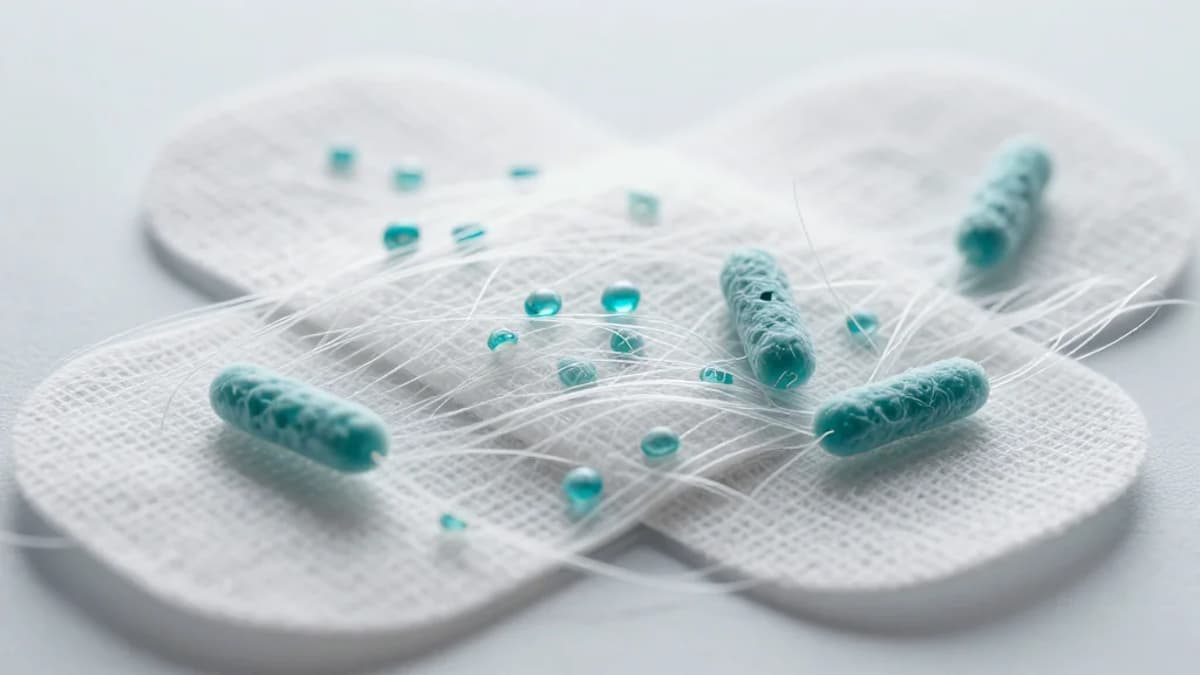
Graphene Oxide Destroys Bacteria without Harming Human Tissue
•March 12, 2026
0
Key Takeaways
- •Graphene oxide binds POPG via hydrogen bonds.
- •Oxygen functional groups drive antibacterial efficacy.
- •Nylon nanofibers retain activity after washing.
- •Over 99% bacterial reduction in pig wound models.
- •Selectivity spares mammalian cells, avoiding toxicity.
Summary
Researchers have demonstrated that graphene oxide (GO) selectively kills bacteria by forming hydrogen bonds with a phospholipid, POPG, found only in bacterial membranes. The study shows that GO’s oxygen‑rich surface is essential for this activity, achieving over 99% suppression of E. coli and other pathogens while leaving mammalian cells unharmed. Incorporating GO into nylon nanofibers creates durable, washable wound dressings that eradicate bacteria in mouse and pig models. The mechanism targets a structural lipid bacteria cannot discard, offering a resistance‑proof alternative to traditional antibiotics.
Pulse Analysis
Antibacterial nanomaterials have long struggled to balance potency with safety, as silver or copper nanoparticles often damage host tissue while killing microbes. Graphene oxide breaks this trade‑off by leveraging its abundant oxygen functional groups to interact selectively with bacterial membranes. Recent experiments confirm that GO’s hydrogen‑bonding affinity for the diol‑rich phospholipid POPG—absent in mammalian cells—drives rapid membrane disruption, delivering >99% bacterial kill rates across Gram‑negative and Gram‑positive species.
The mechanism was validated through a suite of advanced techniques. Cryogenic electron microscopy revealed GO‑induced puncturing of POPG‑laden vesicles, while infrared spectroscopy and NMR pinpointed hydrogen‑bond formation between GO’s epoxides, alcohols, and carboxyls and POPG’s glycerol headgroup. By systematically varying GO’s oxygen content, researchers showed that reduced GO loses efficacy, underscoring oxygen groups as the critical factor. This molecular insight explains why GO can be inhaled safely in humans yet remains lethal to bacteria.
Translating the chemistry into medical products, the team electrospun GO‑infused nylon nanofibers that maintained antibacterial performance after repeated washing. In murine and porcine wound models, these fibers achieved >99.9% bacterial clearance and accelerated healing with minimal inflammation. Because POPG is essential for bacterial viability, resistance development is unlikely, positioning GO‑based textiles as a durable complement to conventional antibiotics, especially in settings plagued by multidrug‑resistant infections.
Comments
Want to join the conversation?