Key Takeaways
- •Electron pressure, not heat, drives terahertz phonons in Pt/Cu superlattice
- •Laser pulses (few femtoseconds) trigger sub‑trillion‑second lattice oscillations
- •Layer thickness and material choice tune electron‑driven motion
- •Findings link plasmonic chemistry, hot‑electron dynamics, and ultrafast heat flow
- •European XFEL’s MID instrument captures depth‑resolved structural changes in real time
Pulse Analysis
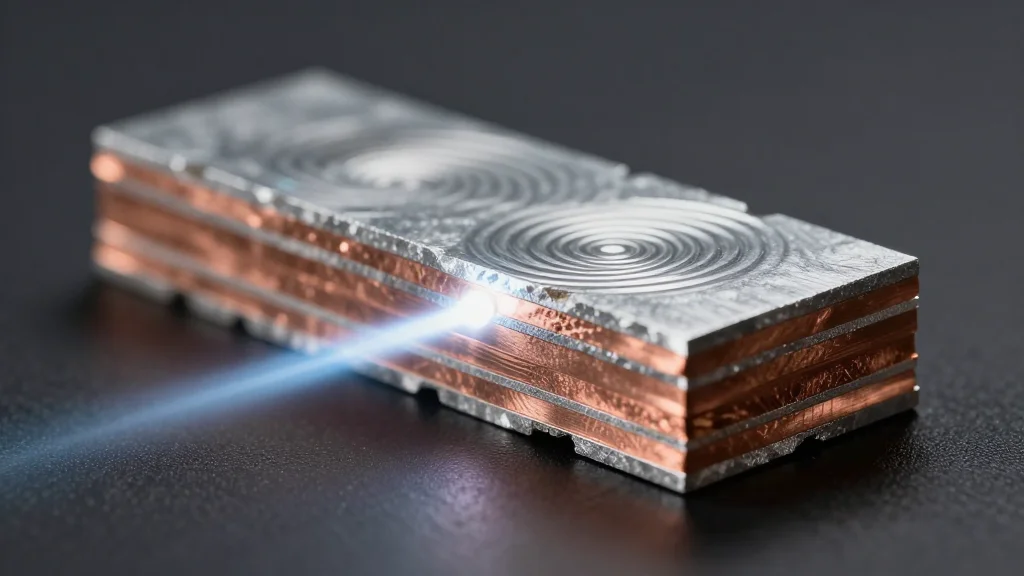
The ability of light to generate mechanical motion inside metals has long been limited by the slow diffusion of heat from excited electrons to the lattice. The new study overturns that paradigm by showing that the pressure exerted by hot electrons themselves can launch coherent THz phonons within a few femtoseconds. By stacking platinum and copper layers only a few nanometres thick, researchers created a synthetic lattice where the electron pressure in platinum acts like an internal piston, instantly squeezing adjacent copper layers. This ultrafast, non‑thermal mechanism was directly visualised using the high‑energy X‑ray pulses of the MID instrument at European XFEL, providing unprecedented insight into electron‑lattice coupling at the sub‑picosecond scale.
Beyond the fundamental physics, the findings have practical implications for nanophotonic engineering and plasmonic chemistry. Because the oscillation amplitude and frequency depend on the choice of metals and the precise thickness of each layer, designers can now fine‑tune electron‑driven forces to manipulate surface‑bound molecules, potentially steering catalytic pathways with light. The observed electron pressure also bridges the gap between plasmonic field enhancement and actual energy transfer to chemical bonds, suggesting new strategies for light‑driven synthesis and energy conversion that bypass traditional thermal routes.
Industry stakeholders are already eyeing applications ranging from ultrafast signal processing to next‑generation sensors. Devices that harness THz phonons could enable on‑chip acoustic modulation at frequencies far beyond current electronic limits. Moreover, the ability to channel hot‑electron energy directly into surface reactions may boost the efficiency of photocatalysts for hydrogen production or CO₂ reduction. As ultrafast X‑ray facilities become more accessible, further exploration of electron‑pressure phenomena is poised to accelerate the development of high‑speed, low‑loss photonic and catalytic technologies.
How does light turn into motion within a metal?
Comments
Want to join the conversation?