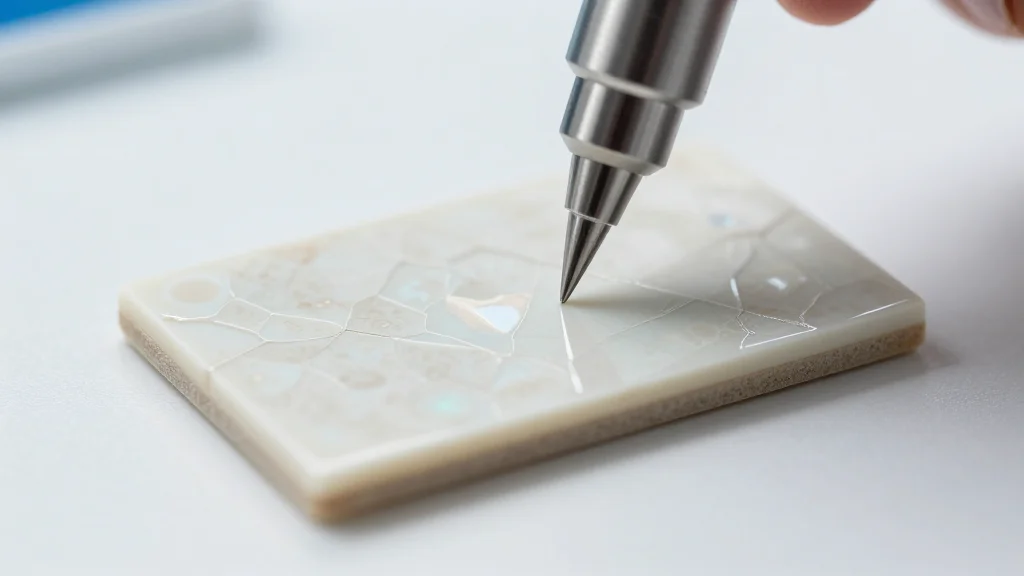
How Grain Boundary Engineering Could Unlock New Ceramic Properties
Key Takeaways
- •Empa receives SNSF funding to study grain boundary engineering.
- •Aluminum oxide chosen as model ceramic for boundary investigations.
- •Rare‑earth element doping targets grain boundary chemistry modifications.
- •Tailored boundaries could improve optics, microelectronics, and medical implants.
Pulse Analysis
Grain boundary engineering represents a frontier in materials science, shifting focus from the bulk grains to the nanometer‑scale interfaces that dictate a ceramic’s overall behavior. Traditional ceramic processing emphasizes grain size, density, and sintering conditions, but the chemistry and structure of grain boundaries can introduce both defects and advantageous properties. By characterizing these interfaces with advanced electron backscatter diffraction and spectroscopy, scientists can begin to predict how subtle changes affect toughness, dielectric response, and optical clarity, opening a new design dimension beyond conventional alloying.
At Empa, the High Performance Ceramics laboratory is applying this concept to aluminum oxide, a workhorse material in optics and electronics. The team, led by Michael Stuer and Annalena Erlacher, leverages rare‑earth dopants to alter boundary chemistry, while systematically varying grain size and sintering pressure to map performance outcomes. Supported by the Swiss National Science Foundation, the project bridges the gap between idealized bicrystal experiments and the complex polycrystalline structures used in industry. Early results suggest that precise boundary manipulation can fine‑tune refractive index and fracture resistance, traits essential for laser windows, high‑frequency substrates, and bio‑compatible implants.
If scalable, grain boundary engineering could redefine market expectations for ceramic components. Manufacturers of microelectronic chips could replace fragile silicon with tougher, optically transparent ceramics, while medical device makers might produce implants with superior wear resistance and tailored bioactivity. The approach also invites cross‑disciplinary collaborations, linking chemists, physicists, and engineers to develop standards and computational models. As the field matures, it promises to accelerate the transition of ceramics from niche high‑temperature applications to mainstream, high‑value products across multiple sectors.
How grain boundary engineering could unlock new ceramic properties
Comments
Want to join the conversation?