Key Takeaways
- •Simulations match gravity data with rocky interior models.
- •Some configurations show water‑rich, others rock‑dominant interiors.
- •Study challenges “icy giant” classification for Uranus, Neptune.
- •Additional spacecraft needed for definitive composition measurements.
- •Findings affect exoplanet mass‑radius interpretation models.
Summary
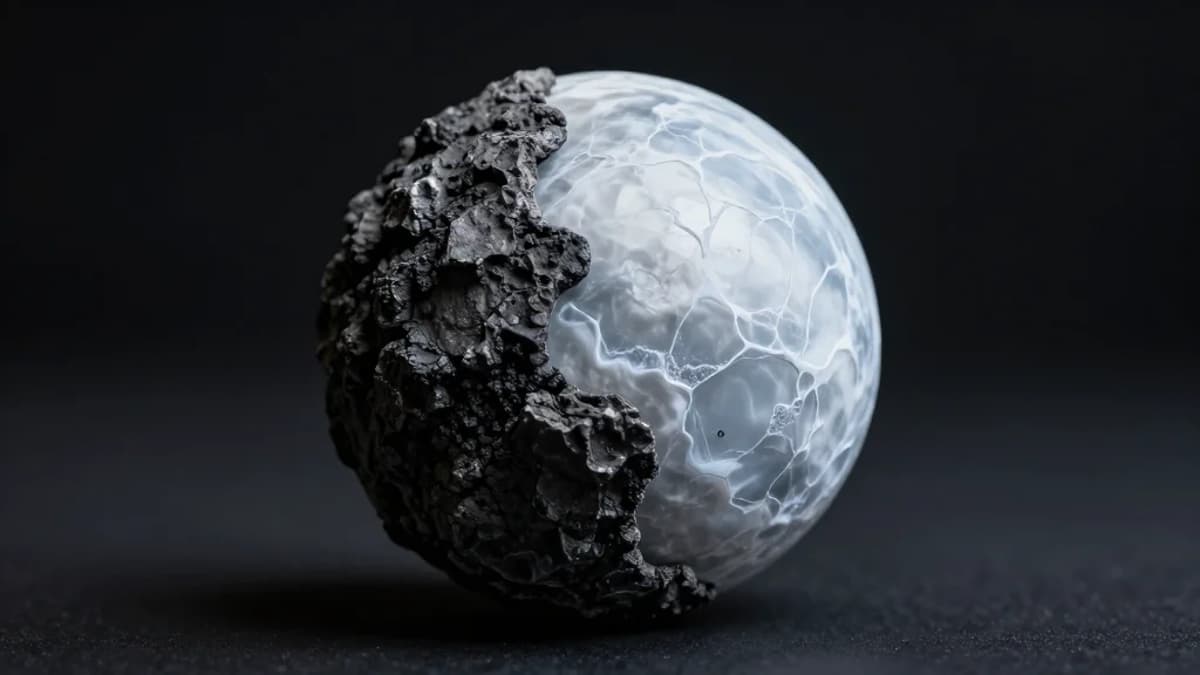
A new simulation study suggests Uranus and Neptune may be more rocky than icy, challenging the traditional "icy giant" label. Researchers generated thousands of interior configurations that simultaneously satisfy gravitational data and thermodynamic constraints, revealing both water‑rich and rock‑dominant possibilities. The findings imply that the planets’ bulk composition could resemble terrestrial worlds more than previously thought. Further spacecraft missions are required to obtain precise measurements and resolve the debate.
Pulse Analysis
The outer reaches of our solar system have long been dominated by the notion of "icy giants," a term rooted in early observations that emphasized volatile‑rich envelopes. Yet as exoplanet surveys uncover a spectrum of planets with masses and radii comparable to Uranus and Neptune, the need for a more nuanced classification grows. Understanding whether these bodies are dominated by ices, rocks, or a mixture directly informs theories of planetary accretion, migration, and the distribution of heavy elements across the galaxy.
In the recent study, researchers employed a Monte‑Carlo‑style simulation that iteratively adjusted interior layer thicknesses and material fractions to reproduce the measured gravitational moments of Uranus and Neptune. By enforcing thermodynamic stability and realistic equations of state, the model produced a catalog of viable structures, ranging from water‑rich mantles to dense, silicate‑laden cores. The coexistence of both icy and rocky solutions highlights the inherent ambiguity of gravity‑only data, but the prevalence of rock‑dominant configurations suggests that the classic icy label may oversimplify the planets' true nature.
If Uranus and Neptune are indeed more terrestrial in composition, the ramifications extend beyond our backyard. Planetary formation models would need to accommodate significant solid accretion beyond the snow line, while exoplanet researchers would recalibrate mass‑radius relationships used to infer composition of distant worlds. The study underscores the urgency of new missions—such as orbiters equipped with high‑precision gravimetry—to acquire the data needed for definitive interior mapping. Such investments promise to refine our understanding of giant planet diversity and improve the predictive power of comparative planetology.
Comments
Want to join the conversation?