Imaging Technique Captures More Information About Ultrafast Microscopic Processes
Key Takeaways
- •CST‑CMFI records intensity and phase in a single femtosecond shot
- •Technique revealed hidden phase dynamics in ZnSe carrier excitation
- •Real‑time plasma imaging could improve laser‑based medical procedures
- •Combines chirped pulses, compressive imaging, and neural‑network reconstruction
- •Goal: separate spectral and temporal info for broader ultrafast applications
Pulse Analysis
Ultrafast optical imaging has long been constrained by the need to choose between brightness or structural information, limiting researchers’ ability to fully characterize events that unfold in a few hundred femtoseconds. The newly reported CST‑CMFI method overcomes this bottleneck by encoding time into wavelength using a chirped laser pulse, then applying dispersion‑encoded coherent modulation and compressive spectral imaging. A physics‑informed neural network decodes the compressed data, delivering simultaneous intensity and phase maps for each temporal slice, effectively turning a single exposure into a high‑speed movie.
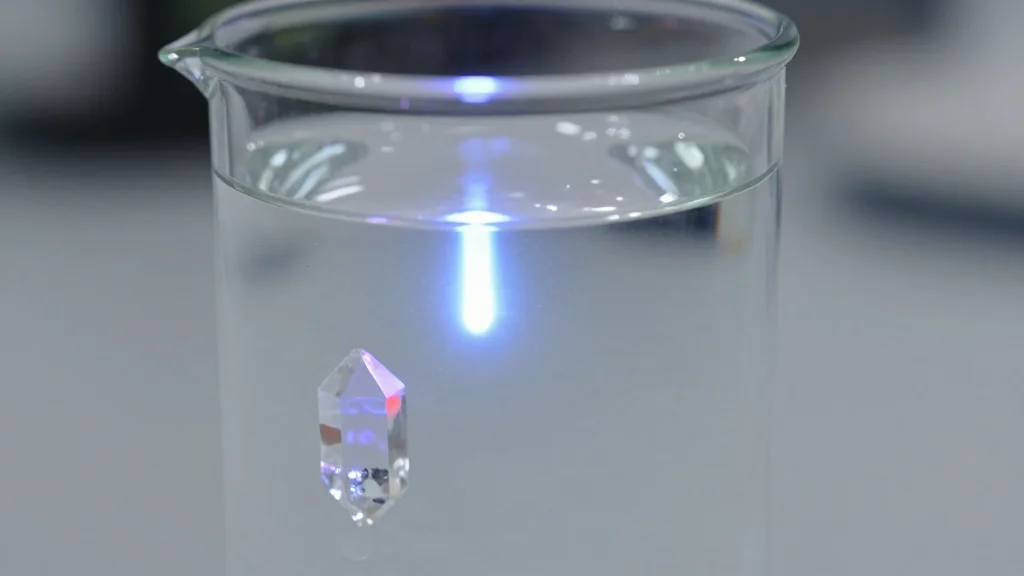
In proof‑of‑concept experiments, the team captured the evolution of a plasma channel in water and the carrier dynamics in zinc selenide (ZnSe). The plasma study revealed rapid refractive‑index shifts that are invisible to intensity‑only cameras, offering insights valuable for laser‑based surgery and precision machining. The ZnSe measurements highlighted pronounced phase variations despite modest intensity changes, underscoring the method’s heightened sensitivity to electronic processes that drive next‑generation optoelectronic devices.
Beyond academic curiosity, CST‑CMFI promises tangible commercial impact. By delivering richer data from a single shot, it can shorten development cycles for high‑power laser systems, improve the design of faster semiconductor components, and aid solar‑cell research where ultrafast carrier behavior dictates efficiency. Future work aimed at decoupling spectral and temporal dimensions will broaden applicability across chemistry, biology, and materials science, positioning the technology as a cornerstone for industries that rely on precise, real‑time insight into femtosecond‑scale dynamics.
Imaging technique captures more information about ultrafast microscopic processes
Comments
Want to join the conversation?