Key Takeaways
- •Coriolis force too weak to dictate sink drain direction
- •Drain geometry and water entry dominate rotation in household fixtures
- •At the Equator, cyclones cannot form due to minimal Coriolis effect
- •Water may drain straight or any direction regardless of hemisphere
- •Misunderstanding persists despite scientific evidence and controlled experiments
Pulse Analysis
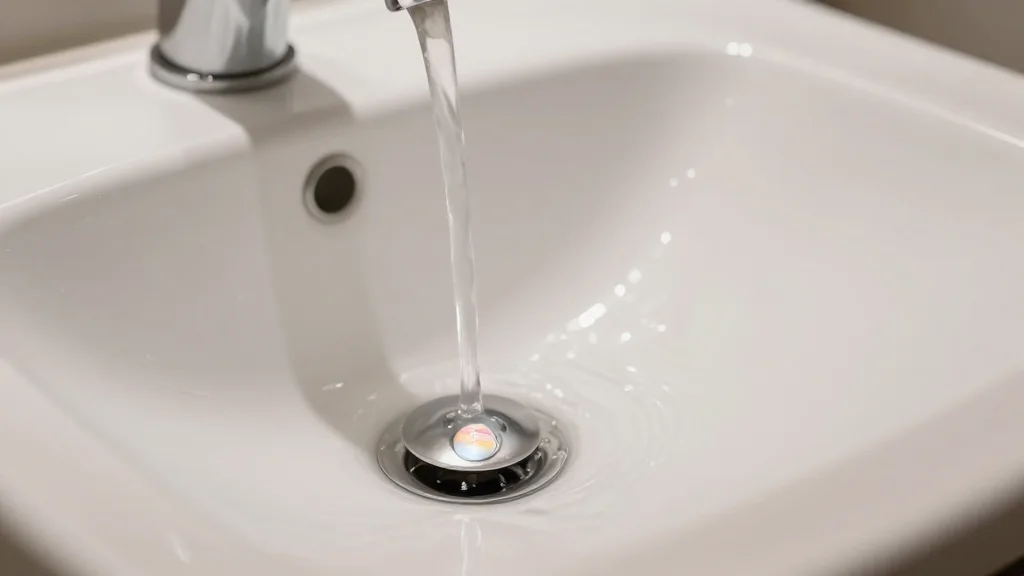
The Coriolis effect, a by‑product of Earth’s rotation, subtly deflects large‑scale motions such as ocean currents and atmospheric flows. Its magnitude, however, is minuscule compared with the forces acting on a few liters of water in a household drain. When water exits a tap, inertia and the shape of the basin dominate, causing the liquid to swirl in whichever direction the initial disturbance or asymmetry dictates. Laboratory demonstrations that carefully eliminate these variables show virtually no consistent spin, confirming that the Coriolis force is orders of magnitude too weak to overcome the turbulence of a draining sink.
In practice, the direction water spins down a plughole is dictated by how the water is introduced, the angle of the inlet, and imperfections in the drain’s geometry. Experiments conducted at the equator and across both hemispheres repeatedly produce clockwise, counter‑clockwise, or even straight‑down flow, disproving the notion of a universal hemispheric rule. The same physics explains why tropical cyclones—large, organized systems that do respond to Coriolis forces—cannot develop within roughly five degrees of the equator. The insufficient deflection prevents the spin needed to organize a storm, steering cyclonic activity away from the equatorial belt.
The persistence of this myth matters beyond trivia. Educators and engineers must convey accurate fluid‑dynamics principles to avoid design errors in plumbing, HVAC, and water‑resource projects. Moreover, clear communication about why the equatorial zone is relatively cyclone‑free informs real‑estate decisions, insurance underwriting, and climate‑risk modeling. By separating anecdotal observations from physics‑based explanations, stakeholders gain a reliable foundation for both everyday engineering and broader environmental planning.
In Which Direction Does Water Drain at the Equator?
Comments
Want to join the conversation?