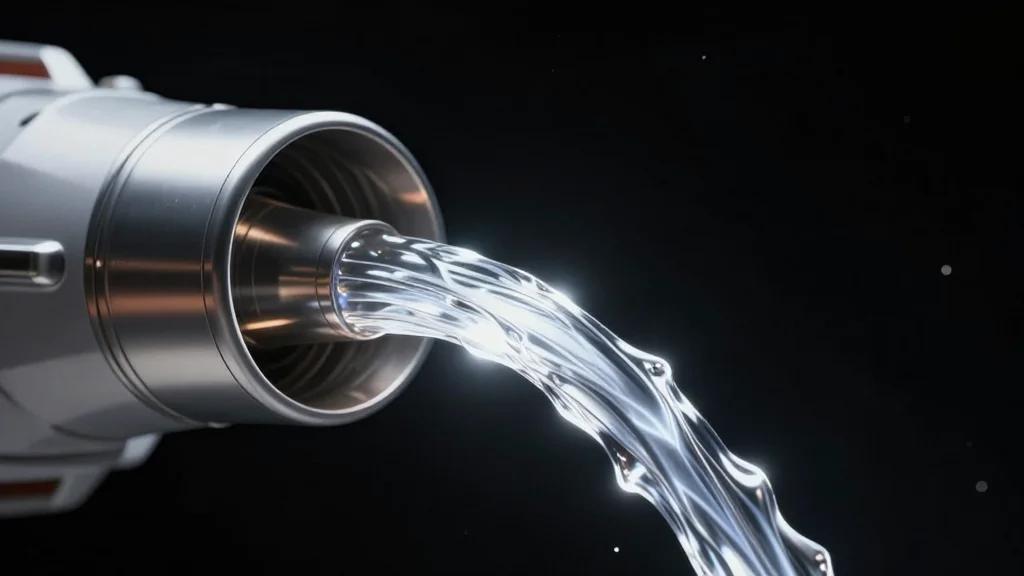
Liquid Metals as Vital Materials for Future Deep-Space Missions
Key Takeaways
- •Room‑temperature liquid metals enable high‑efficiency propulsion for micro‑satellites
- •Liquid metals provide superior thermal management under launch and re‑entry stresses
- •LM‑based soft robotics support lunar construction and planetary exploration
- •Conductive LM fibers offer lightweight radiation shielding for next‑gen spacesuits
- •LM technologies could reduce reliance on ground‑based life‑support systems
Pulse Analysis
The push toward interplanetary travel has exposed the limits of traditional aerospace materials, which often struggle with extreme temperature swings, vibration, and radiation. Room‑temperature liquid metals—such as gallium‑based alloys—combine metallic conductivity with fluidic adaptability, offering a rare blend of high thermal conductivity, low saturated vapor pressure, and the ability to be pumped without moving parts. This unique property set enables compact, vibration‑free electromagnetic pumps that can circulate heat or propellant in micro‑gravity, addressing a critical bottleneck in spacecraft power and thermal‑management systems.
Beyond heat removal, liquid metals are reshaping propulsion concepts for deep‑space missions. Field‑emission thrusters that employ liquid‑metal emitters can deliver low thrust with ultra‑high precision, ideal for attitude control, formation flying, and drag compensation on nanosatellites. Their high specific impulse and rapid throttling open pathways to more efficient interstellar probes. Simultaneously, the fluid nature of these metals supports soft‑robotic actuators and reconfigurable structures, allowing lunar‑base construction robots to adapt shape on demand while maintaining structural integrity under lunar dust and temperature extremes.
The commercial implications are significant. Lightweight, conductive fibers woven from liquid‑metal inks can double as radiation‑shielding layers in next‑generation spacesuits, reducing mass while enhancing astronaut safety. Integrated sensors fabricated with liquid‑metal traces enable real‑time health monitoring and environmental diagnostics, paving the way for autonomous life‑support loops that lessen dependence on Earth‑based resupply. As private launch providers and national agencies seek cost‑effective, high‑performance solutions, liquid‑metal technologies are poised to become a cornerstone of the emerging space‑economy, driving investment in materials research and in‑orbit manufacturing capabilities.
Liquid metals as vital materials for future deep-space missions
Comments
Want to join the conversation?