Living Liquid Metal Composites for Next Generation Bioelectronics
Key Takeaways
- •Spores disrupt oxide, boosting conductivity to 5.1×10⁶ S/cm.
- •Composite self‑heals in 30 seconds, twice as fast as pure alloy.
- •Retains >90% conductivity after 500 bending cycles at 10% strain.
- •Dormant spores preserve performance, maintaining 90% conductivity after one week.
- •Enables liquid metal adhesion to paper and other substrates.
Pulse Analysis
Liquid metals such as gallium‑indium alloys have attracted attention for flexible electronics because they flow like a liquid while conducting electricity nearly as well as copper. Their Achilles’ heel, however, is the rapid formation of an insulating oxide skin that blocks electron flow and hampers adhesion to substrates. Traditional work‑arounds—mechanical agitation, chemical etching, or polymer coatings—add cost, introduce brittleness, or compromise long‑term stability, limiting the material’s adoption in wearable and implantable devices.
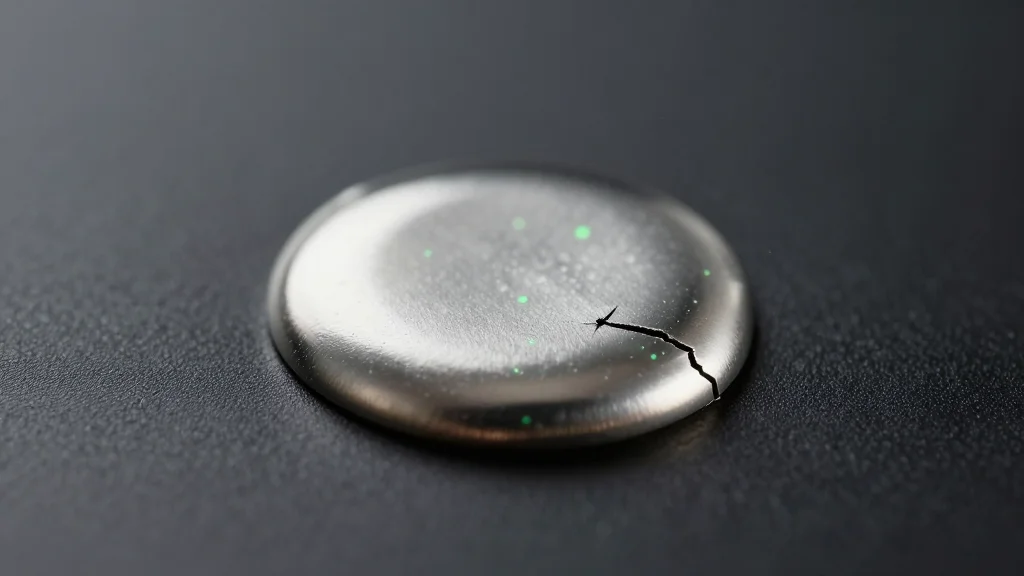
The Binghamton team’s innovation lies in embedding dormant Bacillus subtilis endospores directly into the alloy. The spores’ chemically rich outer shells bind to the oxide, creating micro‑ruptures that allow droplets to merge and restore conductivity without external pressure or heating. In the dormant state the composite conducts ~1.1×10⁴ S/cm; once activated with a simple nutrient solution, conductivity surges to ~5.1×10⁶ S/cm, and the material retains over 90% of this performance after a week of air exposure. Mechanical tests show cracks heal in roughly 30 seconds—three times faster than pure liquid metal—and the composite survives 500 bending cycles at 10% strain while keeping most of its electrical integrity.
These properties open a pathway to truly bio‑integrated electronics. Self‑healing, oxide‑resistant conductors can be printed on paper, textiles, or even directly onto biological tissues, enabling durable wearable sensors, implantable monitors, and soft robotic interfaces that communicate through both ionic and electronic signals. Commercialization will require tighter control over spore activation and long‑term stability assessments, but the living metal concept could redefine how engineers bridge the gap between silicon‑based circuitry and living systems, driving a new wave of adaptive, resilient bioelectronic products.
Living liquid metal composites for next generation bioelectronics
Comments
Want to join the conversation?