Key Takeaways
- •Vela satellites detected first gamma‑ray bursts in 1967
- •Bursts proved astrophysical, not nuclear, reshaping astronomy
- •Discovery spurred 1963 Nuclear Test Ban Treaty negotiations
- •Gamma‑ray bursts now linked to supernovae and neutron‑star mergers
- •Military‑civilian sensor tech continues driving high‑energy astrophysics
Pulse Analysis
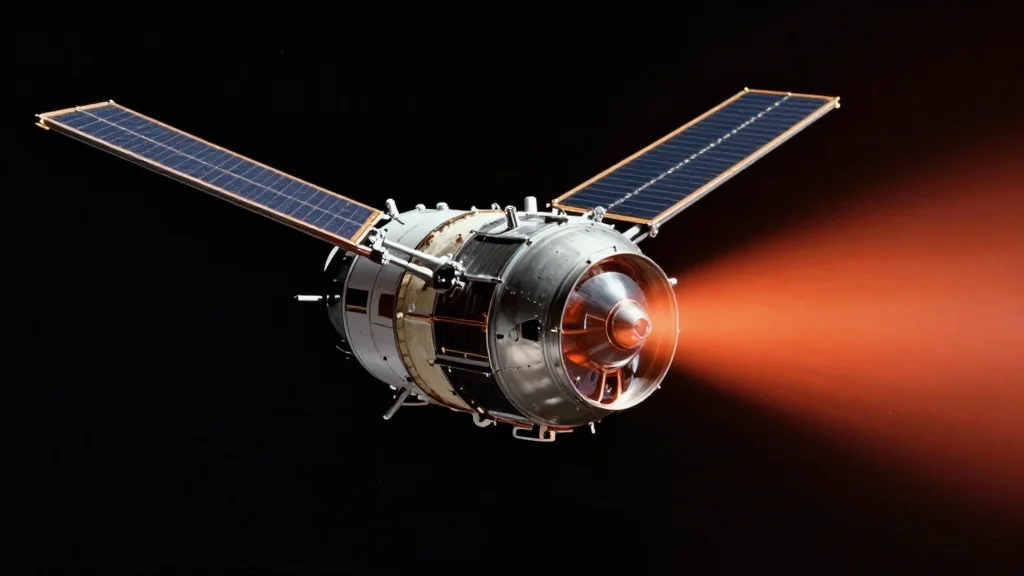
During the Cold War, the United States and the Soviet Union raced to verify compliance with emerging nuclear test bans. The U.S. responded by deploying the Vela series of satellites equipped with neutron, X‑ray and gamma‑ray detectors. While monitoring for clandestine explosions, Vela 4 recorded an anomalous gamma flash in July 1967. Subsequent detections proved the events were not weapons signatures but distant cosmic explosions, prompting scientists at Los Alamos to publish the findings and inadvertently birthing the field of gamma‑ray astronomy. This military‑origin story underscores how security‑driven R&D can yield civilian breakthroughs.
Gamma‑ray bursts are now recognized as the brightest electromagnetic events in the cosmos, releasing as much energy in seconds as the Sun will emit over its entire 10‑billion‑year lifetime. Modern observatories—both space‑based like NASA’s Swift and ground‑based facilities—have linked long‑duration GRBs to massive star collapses (hypernovae) and short bursts to the merger of neutron stars, a connection cemented by the 2017 detection of gravitational waves (GW170817) alongside a gamma flash. Despite decades of study, the precise jet formation mechanisms and emission physics remain unresolved, driving a vibrant multi‑messenger research agenda.
The Vela episode illustrates a broader lesson for today’s technology ecosystem: dual‑use sensors and data analytics developed for defense can catalyze commercial and scientific markets. Companies investing in high‑energy detectors, radiation‑hard electronics, and rapid data pipelines can tap both national‑security contracts and the burgeoning space‑science sector. Policymakers and investors therefore monitor defense‑origin innovations as a pipeline for future breakthroughs, while ensuring transparent pathways that balance security concerns with open scientific collaboration.
Loving Explosions
Comments
Want to join the conversation?