Key Takeaways
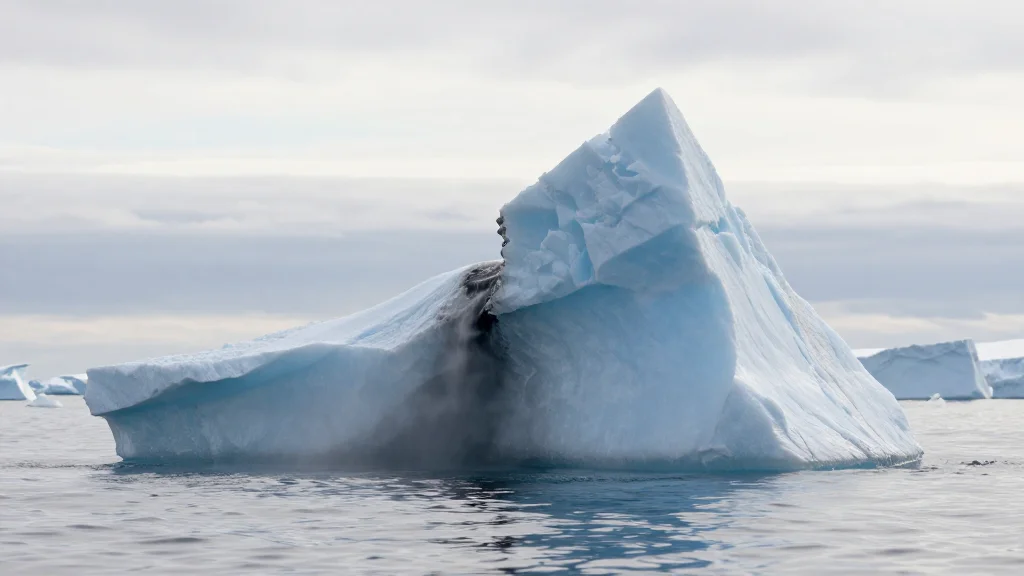
- •Asymmetric shape creates meltwater plume that pushes iceberg forward
- •Propulsive thrust can equal roughly 10 % of wind force
- •Effect observed in both fresh‑ and salt‑water experiments
- •Could refine navigation risk models for ships in polar routes
Pulse Analysis
The recent study of asymmetric icebergs uncovers a subtle yet powerful physical process: as meltwater streams down an uneven surface, it forms a dense, sinking plume that pushes the entire block forward. By modeling the iceberg as a right‑triangular prism, researchers quantified the resulting thrust and demonstrated its consistency across freshwater and seawater settings. Although the force is modest compared with wind, it can account for up to one‑tenth of the total propulsive energy, especially when melt rates accelerate in warmer currents.
For the shipping industry and offshore operators, this insight reshapes how iceberg drift is predicted. Traditional models prioritize wind, currents, and Coriolis effects, often overlooking melt‑induced motion. Incorporating the newly quantified thrust can reduce positional uncertainties, allowing vessels to plot safer routes through high‑latitude waters and lowering the risk of costly collisions or rerouting. Moreover, climate scientists gain a finer tool for estimating iceberg melt contributions to sea‑level rise, as self‑propulsion influences the timing and location of ice mass loss.
Looking ahead, the findings invite interdisciplinary collaboration. Oceanographers may integrate melt‑driven forces into large‑scale circulation models, while engineers could explore analogues in artificial structures that harness controlled melting for propulsion. Continued field measurements and satellite tracking will be essential to validate laboratory results at scale. Ultimately, acknowledging this hidden driver enriches our understanding of polar dynamics and supports more resilient maritime and climate strategies.
Melting Can Propel Icebergs
Comments
Want to join the conversation?