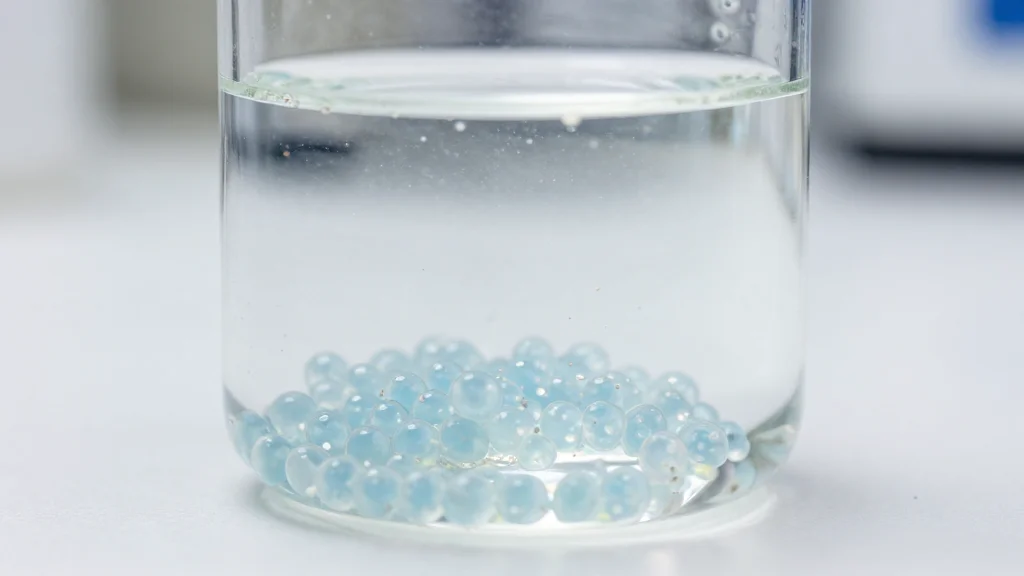
Microgel Glue Captures Nanoplastics that Water Treatment Plants Miss
Key Takeaways
- •pVIM microgel captures >90% nanoplastics as small as 100 nm
- •Magnetic Fe₃O₄@pVIM enables residue‑free separation
- •Removal works for polystyrene, polyethylene, polypropylene, PET
- •Performance stays above 85% in lake and seawater
- •CO₂/N₂ gas switch releases ~38% of bound plastics
Pulse Analysis
The emergence of nanoplastics—particles under one micrometer—has exposed a blind spot in municipal and industrial water treatment. Traditional coagulation, sedimentation, and membrane filtration rely on particle size and charge to achieve capture, but thermal motion and surface hydration keep nanoplastics in suspension. By engineering a microgel that mimics a molecular adhesive, the Xiamen team sidesteps these physical limits. The pVIM polymer combines a highly hydrated backbone with pH‑responsive imidazole groups, creating a soft, conformal coating that adheres through multiple weak forces. This multi‑modal binding not only aggregates nanoplastics into settleable clusters but also works across diverse polymer chemistries, from aromatic polystyrene to aliphatic polyethylene.
A key innovation is the incorporation of iron‑oxide nanoparticles, producing a magnetic composite (Fe₃O₄@pVIM) that can be drawn out of solution with a simple magnet. This eliminates the need for downstream filtration membranes, reducing capital and operating costs. Field‑relevant tests in lake and seawater demonstrated only a modest dip in efficiency, confirming robustness against competing organic matter and ionic strength. Moreover, the reversible CO₂/N₂ gas‑switching mechanism offers a practical route to regenerate the microgel, potentially lowering consumable expenses and waste generation.
For water utilities, the technology promises a plug‑and‑play upgrade to existing treatment trains, addressing a regulatory gap that many jurisdictions are beginning to close. Scaling challenges remain—continuous flow reactors, long‑term durability, and integration with sludge handling must be validated—but the adhesive‑driven approach provides a fundamentally new lever for nanoplastic mitigation. As public pressure mounts and scientific consensus sharpens on the health risks of nanoplastics, solutions like pVIM could become a cornerstone of next‑generation water stewardship.
Microgel glue captures nanoplastics that water treatment plants miss
Comments
Want to join the conversation?