Key Takeaways
- •Droplets bounce on vibrating silicone oil mimic quantum particles.
- •Faraday wave acts as standing wave for Kapitza-Dirac analog.
- •Experiment reproduces electron diffraction using macroscopic droplets.
- •Pilot-wave analog bridges classical fluid dynamics and quantum behavior.
- •Findings could inform quantum foundations and novel simulation methods.
Summary
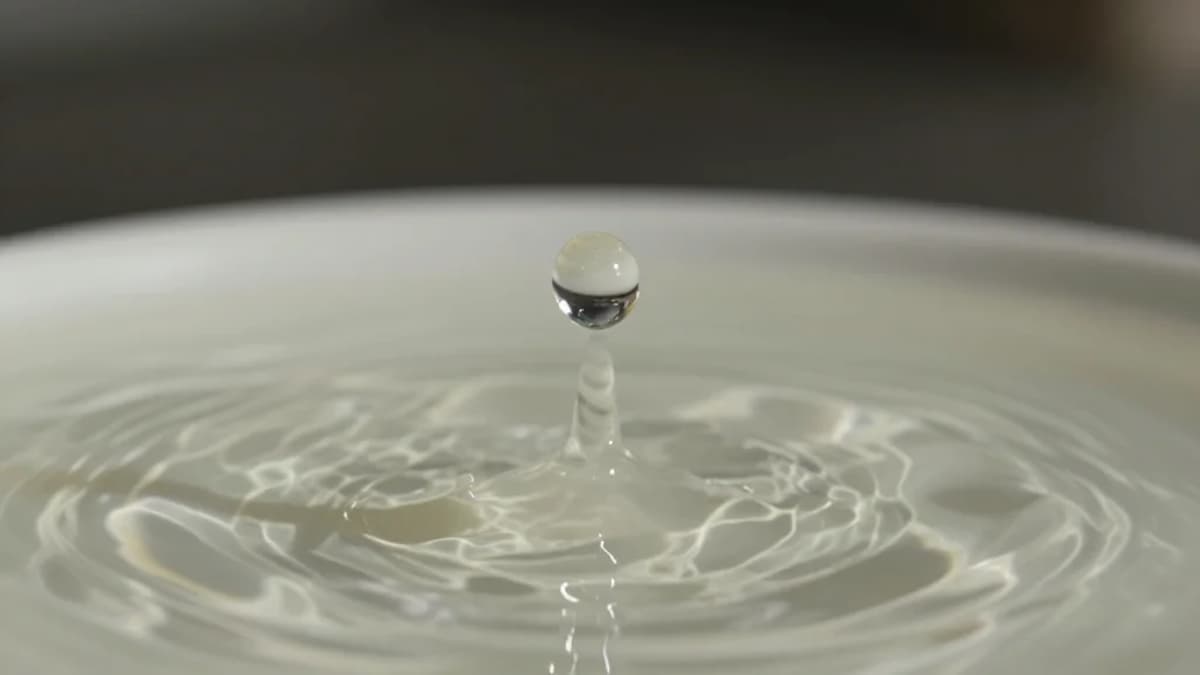
Researchers have used vibrating pools of silicone oil to create macroscopic droplets that bounce and walk, reproducing quantum phenomena in a fluid medium. By introducing a standing Faraday wave, the team mimicked the Kapitza‑Dirac effect, causing droplets to diffract similarly to electrons in an electromagnetic standing wave. The work extends earlier pilot‑wave analog experiments, such as double‑slit demonstrations, into new territory of wave‑particle interactions. Findings are detailed in two recent Physical Review papers and a supporting video.
Pulse Analysis
The resurgence of pilot‑wave research leverages everyday fluids to model exotic quantum effects, bridging a gap between classical mechanics and the probabilistic world of particles. By vibrating a silicone oil bath at precise frequencies, researchers generate Faraday waves that serve as a standing‑wave lattice, analogous to the electromagnetic fields used in the original Kapitza‑Dirac experiment. When droplets encounter this lattice, they diffract, producing interference patterns that echo electron behavior, thereby providing a visual and controllable analogue of quantum diffraction.
Beyond its novelty, the macroscopic platform grants scientists unprecedented access to parameters that are impossible to tune in true quantum systems. Variables such as wave amplitude, droplet size, and obstacle geometry can be altered in real time, allowing systematic studies of decoherence, tunneling analogues, and wave‑particle duality. This level of experimental control fuels deeper inquiries into the foundations of quantum theory, offering a sandbox for testing interpretations like de Broglie‑Bohm mechanics without the constraints of sub‑atomic scales.
The broader implications extend to education, technology development, and interdisciplinary research. Demonstrations of quantum‑like phenomena using simple laboratory setups can demystify complex concepts for students and the public, while the underlying fluid dynamics may inspire novel approaches to wave‑based computing or sensing. As the field matures, these analog systems could complement quantum simulators, providing cost‑effective, scalable testbeds for exploring emergent quantum behaviors in a classical context.
Comments
Want to join the conversation?