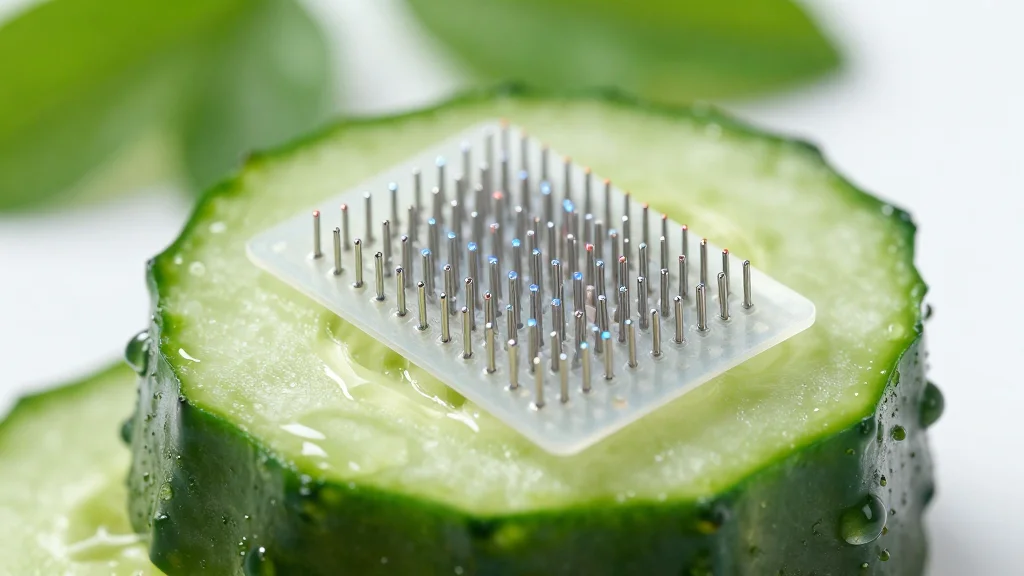
Nanosensor Patches Detect Fungal Toxin Before Plants Show Disease
Key Takeaways
- •Microneedle patch detects fusaric acid via blue/red fluorescence ratio
- •Sensor distinguishes Fusarium infection from heat, salt, UV, bacterial stress
- •Detection works in living plants within 5 minutes, matching HPLC results
- •Minimal tissue damage; photosynthesis remains comparable to untreated leaves
Pulse Analysis
Fusarium wilt remains one of the most costly fungal threats to global agriculture, inflicting billions of dollars in yield losses each year. Traditional diagnostics rely on destructive sampling followed by chromatography or mass‑spectrometry, which delays intervention until visual symptoms emerge. Early biochemical markers such as fusaric acid appear long before wilting, yet accessing these markers without harming the plant has been a technical bottleneck. The new microneedle‑based nanosensor directly addresses this gap by providing in‑situ chemical readouts, promising a paradigm shift from reactive to proactive disease management.
The core of the technology is a dual‑emissive nanocomposite: fluorescent carbon dots are encapsulated within a zinc‑based metal‑organic framework (ZIF‑8) and embedded in a polyvinyl alcohol microneedle matrix. Separated carbon dots emit a blue signal that is quenched by fusaric acid, while clustered dots produce a stable red reference. By calculating the blue‑to‑red intensity ratio, the patch compensates for variations in illumination, sensor loading, and tissue contact, delivering a quantitative readout within five minutes. Laboratory tests show a 30 % ratio drop in infected pak choi versus healthy controls, and field‑level measurements align with HPLC‑derived toxin concentrations of 4–13 ppm, confirming both sensitivity and selectivity against other stresses.
If scaled, this platform could integrate with handheld spectrometers or smartphone cameras, turning fluorescence ratios into actionable alerts for growers. Minimal puncture damage preserves photosynthetic capacity, making the approach compatible with high‑value crops and intensive farming systems. Challenges remain in ensuring long‑term stability under variable field conditions and in mass‑producing uniform microneedle arrays. Nonetheless, the convergence of nanophotonics, plant physiology, and portable analytics positions this technology to accelerate precision agriculture, reduce fungicide use, and safeguard food security.
Nanosensor patches detect fungal toxin before plants show disease
Comments
Want to join the conversation?