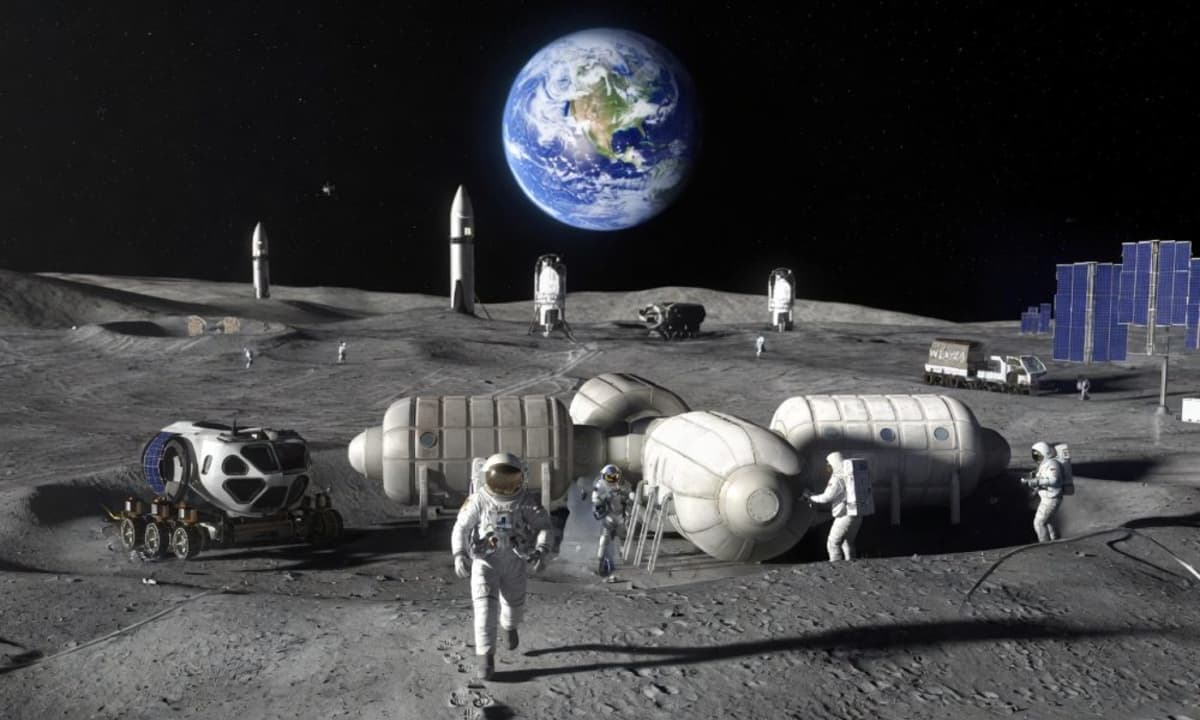
NASA’s First Human Outpost on the Moon Starts Now – SpaceX on Deck
Key Takeaways
- •Moon Base I launches fall 2026 using Blue Origin’s Blue Moon lander
- •Moon Base II delivers 1,100 lb of cargo via Astrobotic’s Griffin lander
- •NASA awarded $219 M to Astrolab and $220 M to Lunar Outpost for rovers
- •SpaceX’s Starship will handle crew landings and in‑orbit propellant transfer
- •Water‑ice extraction will enable on‑site fuel, reducing Earth resupply
Pulse Analysis
NASA’s latest Moon Base roadmap marks the most detailed blueprint for a permanent human presence beyond Earth. By sequencing uncrewed and crewed deliveries, the agency aims to build essential habitats, power, and mobility assets at the Shackleton Connecting Ridge, a region rich in water‑ice. The schedule accelerates with three missions slated before 2027, leveraging commercial landers from Blue Origin, Astrobotic and Intuitive Machines. This approach spreads risk across multiple providers while cementing the United States’ leadership in lunar logistics.
Ground mobility is a critical pillar of the plan, and NASA’s $219 million contract to Astrolab and $220 million to Lunar Outpost will field the first Lunar Terrain Vehicles. Astrolab’s 2,000‑pound crewed rover can exceed 6 mph, while Lunar Outpost’s Pegasus rover reaches over 9 mph and can operate autonomously. These rovers will support scientific payloads, such as the FLIP rover and survey drones, and will be ready for surface operations by 2028. Simultaneously, Blue Origin’s $188 million lander contract and an optional $280.4 million extension ensure cargo delivery capability, reinforcing a robust supply chain.
At the strategic core is SpaceX’s Starship, the sole U.S. contractor for the Human Landing System that will ferry astronauts under Artemis IV, targeted for 2028. Starship’s ability to perform in‑orbit propellant transfer and later refuel on the Moon could turn lunar water‑ice into a sustainable source of oxygen and methane fuel, dramatically lowering dependence on Earth launches. This closed‑loop capability not only underpins the Moon Base’s viability but also serves as a rehearsal for Mars missions, positioning the commercial space sector for a new era of deep‑space exploration and economic activity.
NASA’s first human outpost on the Moon starts now – SpaceX on deck
Comments
Want to join the conversation?