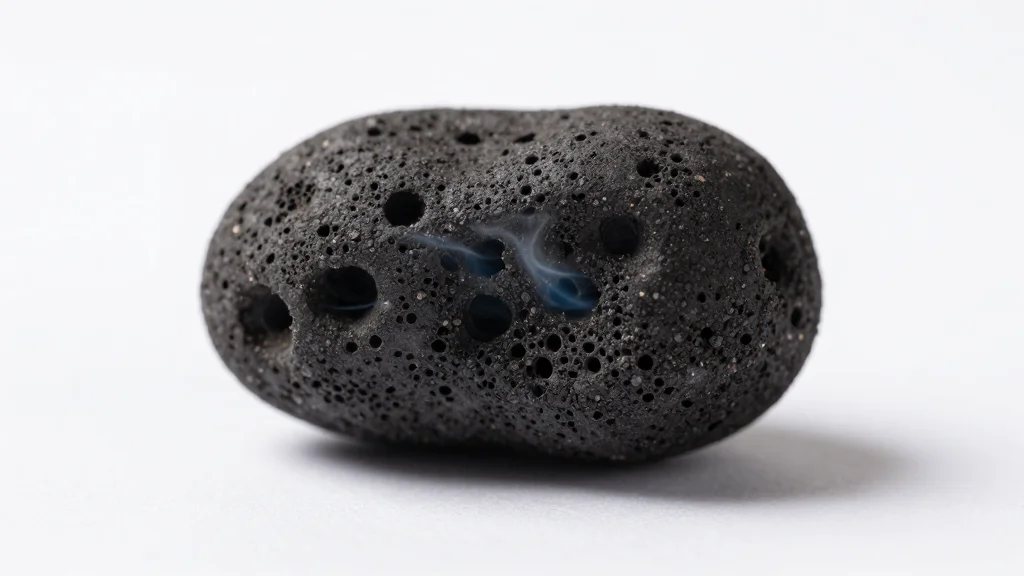
New Study Reveals Hidden Role of Larger Pores in Biochar Carbon Capture
Key Takeaways
- •Larger pores actively enhance CO₂ adsorption
- •High-temperature biochar captures up to 3.82 mmol CO₂/g
- •Micropores remain primary adsorption sites
- •Pore geometry and roughness affect gas diffusion
- •Optimizing full pore hierarchy improves sorbent efficiency
Pulse Analysis
Biochar has long been touted as a cheap, scalable carbon‑negative material, but its commercial adoption has been hampered by an incomplete understanding of which pore sizes drive CO₂ sorption. Traditional research focused almost exclusively on micropores—tiny channels under one nanometer—because they offer the highest surface area per unit volume. This narrow view ignored the potential contribution of larger mesopores and macropores, which were assumed to act merely as transport pathways. The new study reframes that narrative by showing that the geometry and surface roughness of these larger pores can directly influence adsorption kinetics, especially when the biochar is produced at elevated temperatures.
The experimental campaign examined sawdust‑derived biochar across a temperature gradient from 300 °C to 1000 °C, employing mercury‑intrusion porosimetry and CO₂ adsorption isotherms to map pore characteristics. Results revealed a clear upward trend: biochar pyrolyzed at 1000 °C achieved a CO₂ uptake of roughly 3.82 mmol per gram, more than three times the capacity of material made at 300 °C. Correlation analysis linked this performance boost not only to increased micropore volume but also to enhanced mesopore/macropore surface area and a more complex fractal geometry. These larger pores create tortuous pathways that slow gas diffusion, increasing the probability of physical adsorption on the internal surfaces.
For industry, the implications are immediate. Engineers can now target a balanced pore hierarchy—optimizing both the abundance of micropores for high‑capacity adsorption and the structure of larger pores for improved diffusion control. This dual‑focus strategy could lower production costs, as less aggressive activation processes may be needed to achieve desired performance. Moreover, the insights extend beyond carbon capture to other applications such as water treatment, energy storage, and gas separation, where tailored porosity is a key performance lever. As policymakers and investors seek scalable climate solutions, biochar engineered with a full‑spectrum pore design stands poised to become a cornerstone of the low‑carbon economy.
New study reveals hidden role of larger pores in biochar carbon capture
Comments
Want to join the conversation?