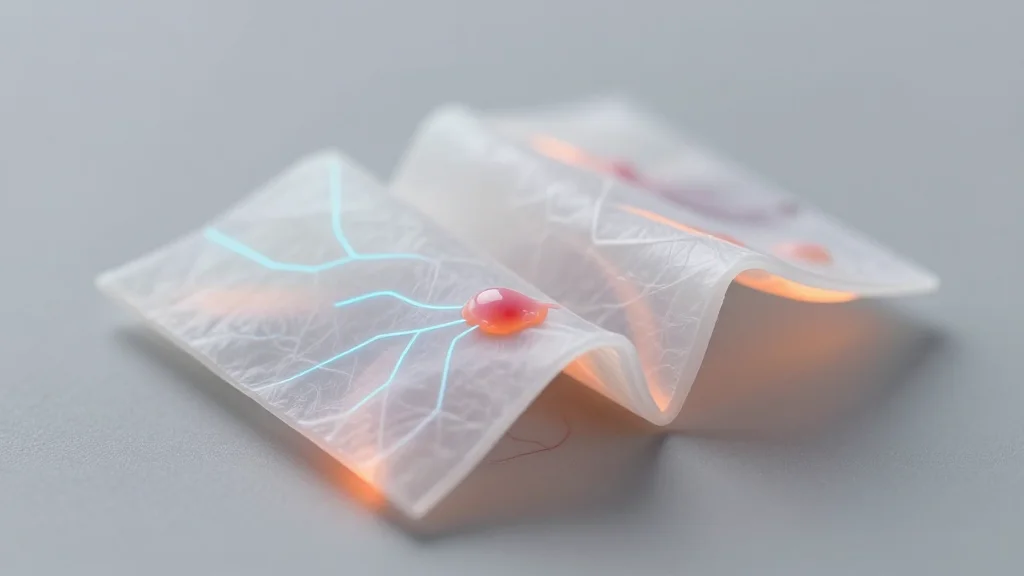
Piezoelectric MXene Scaffold Promotes Cartilage Repair While Limiting Vessel Growth
Key Takeaways
- •Origami folds double piezoelectric output versus plain PLLA
- •1.5% MXene reaches ~41 °C under NIR, blocking angiogenesis
- •TRPV4 links mechanical and thermal cues to chondrogenesis
- •Irradiated MXene scaffold shows best cartilage repair in rats
Pulse Analysis
Cartilage injuries remain a therapeutic blind spot because the tissue lacks its own blood supply and responds poorly to conventional scaffolds that inadvertently promote vascular growth. Recent advances in piezoelectric biomaterials have shown that mechanical loading can generate electrical cues that steer stem cells toward a chondrogenic lineage, yet those same cues often activate endothelial pathways, compromising the low‑oxygen environment cartilage needs. The new PLLA/MXene origami scaffold builds on this foundation by embedding MXene nanosheets within a biodegradable poly‑L‑lactic acid matrix, creating a folded architecture that amplifies voltage generation during joint compression while preserving structural integrity in synovial fluid.
The innovation lies in the scaffold’s photothermal capability. Near‑infrared illumination raises the implant temperature to roughly 41 °C, a narrow window that selectively impairs VEGF‑driven angiogenesis without harming surrounding tissue. Simultaneously, the mild heat synergizes with piezoelectric signals to activate the TRPV4 ion channel, a mechanosensitive pathway that boosts glycosaminoglycan synthesis and type II collagen expression. In vivo experiments in rat knees demonstrated that the combined electrical‑thermal stimulus produced cartilage that resembled native tissue in composition and morphology, while subchondral vascularization was significantly curtailed.
For the orthobiologics market, this dual‑modality approach could redefine scaffold design standards. By delivering self‑powered, on‑demand stimulation without external wiring or batteries, the technology aligns with minimally invasive surgical workflows and reduces long‑term device failure risks. Future research will need to address scale‑up challenges, such as delivering uniform near‑infrared energy to larger human joints and confirming long‑term safety. If these hurdles are overcome, the PLLA/MXene platform may accelerate the commercialization of next‑generation cartilage repair solutions that combine biomechanical intelligence with precise thermal control.
Piezoelectric MXene scaffold promotes cartilage repair while limiting vessel growth
Comments
Want to join the conversation?