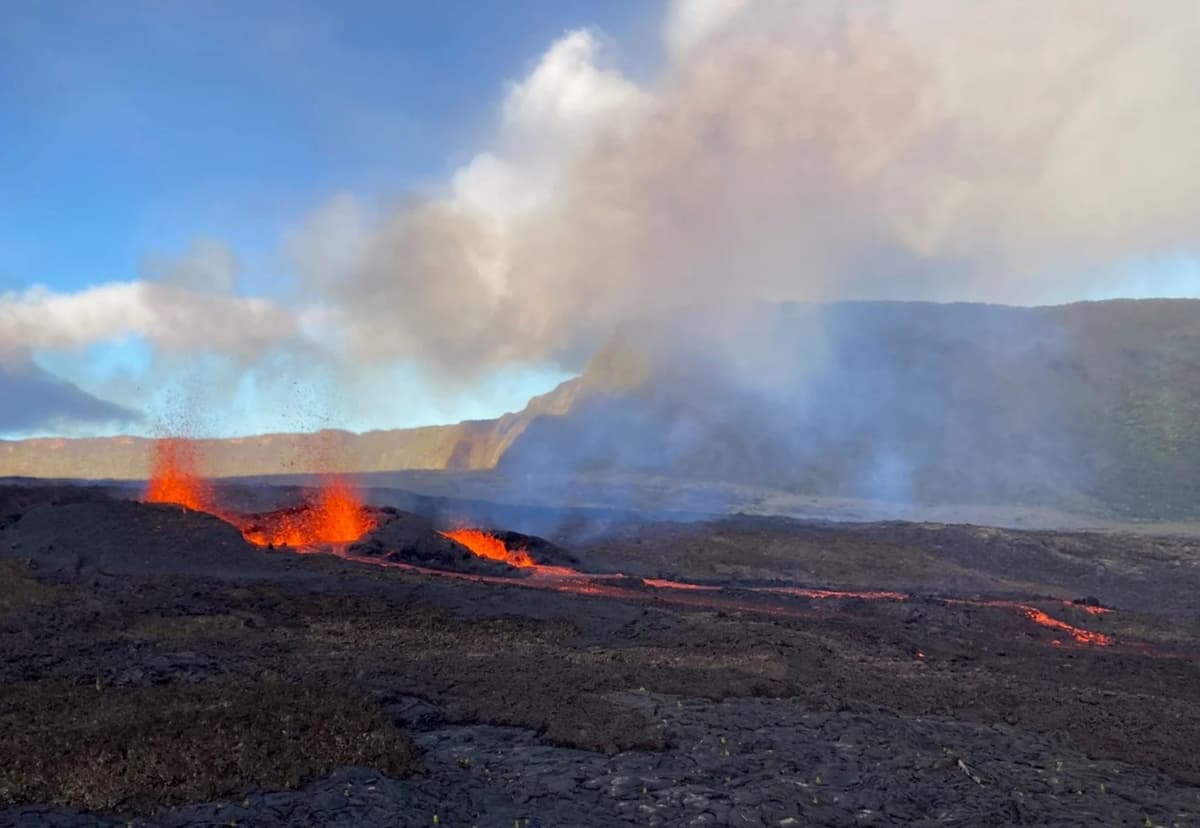
Key Takeaways
- •Jerk predicts eruptions with 92% accuracy at Piton de la Fournaise
- •System uses real‑time ground‑movement data from magma‑induced fracturing
- •Forecasts range from minutes up to several hours before eruption
- •Second deployment planned for Italy’s Mount Etna to test signal universality
- •Early warnings could safeguard communities and streamline remote volcano monitoring
Pulse Analysis
Predicting volcanic eruptions has long been a scientific holy grail, hampered by the chaotic nature of magma movement and limited monitoring infrastructure. The Jerk system, operational at Piton de la Fournaise since 2014, sidesteps traditional seismology by focusing on micro‑scale ground deformation that precedes fracturing. By continuously streaming high‑resolution tilt and strain data, the algorithm isolates a distinct “jerk” signature, allowing it to issue alerts minutes to hours before lava breaches the surface. This approach marks a shift from reactive observation to proactive forecasting, offering a template for other high‑risk volcanoes.
The technical backbone of Jerk relies on a network of GPS‑grade sensors and interferometric synthetic aperture radar (InSAR) feeds, processed through machine‑learning models trained on historic eruption cycles. The 92% success rate reported in peer‑reviewed studies outperforms many conventional early‑warning schemes, which often grapple with false alarms or delayed detection. Moreover, the system’s automated pipeline reduces human error and operational costs, making it attractive for agencies with limited field personnel. Its ability to generate probabilistic forecasts also integrates smoothly with civil‑defense protocols, enabling tiered evacuation plans based on confidence levels.
Looking ahead, the planned rollout at Italy’s Mount Etna will test whether the jerk signal is a universal precursor or a site‑specific phenomenon. If replicated, the technology could be scaled to remote, under‑instrumented volcanoes across the Pacific Ring of Fire, where early warnings are most needed. Beyond public safety, industries such as aviation, insurance, and tourism stand to benefit from more reliable eruption timelines, potentially reshaping risk‑assessment models and investment strategies. As climate change intensifies geological stressors, tools like Jerk may become essential components of global disaster‑resilience frameworks.
Predicting Volcanic Eruptions
Comments
Want to join the conversation?