Radical Molecules Self-Organize Into Switchable Quantum States on Superconductors
Key Takeaways
- •Radical molecules on lead surface exhibit bistable charge and spin.
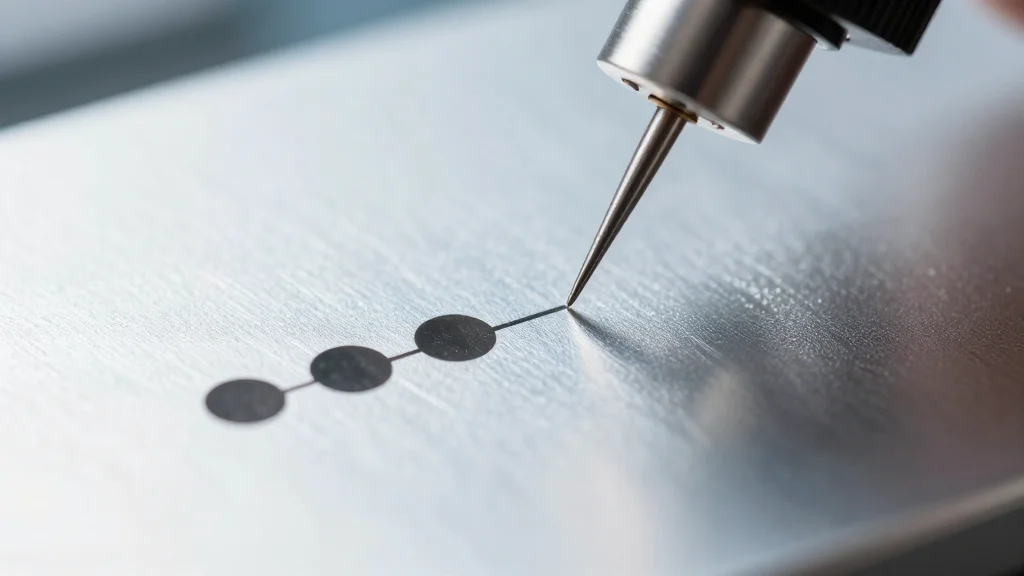
- •STM tip toggles molecule between magnetic (state I) and neutral (state 0).
- •Chains of up to five molecules retain stable, switchable quantum states.
- •Charge transfer from lead superconductor creates unpaired electron, inducing magnetism.
- •Research paves way for molecular spintronics and controllable quantum devices.
Pulse Analysis
Spin‑based electronics has long promised faster, lower‑power computing, yet the field has struggled to achieve reliable, atom‑scale control of magnetic moments. Traditional approaches rely on bulk ferromagnets or engineered quantum dots, both of which face decoherence and fabrication challenges. By leveraging organic radicals—molecules that naturally host an unpaired electron—researchers can embed spin functionality directly into a chemical scaffold. When such radicals are placed on a superconducting substrate, the interplay between the molecule’s electronic structure and the superconductor’s Cooper pairs creates a unique environment where charge and spin can be independently addressed.
The breakthrough reported by the Basel‑Bern team hinges on precise synthesis of a tetrabromo‑tetraazapyrene derivative and its manipulation with a scanning tunneling microscope. The STM tip not only images individual molecules but also injects or removes a single electron, flipping the molecule between a magnetic (state I) and a non‑magnetic (state 0) configuration. Importantly, when molecules are linked into linear chains, the collective interactions preserve these bistable states, allowing repeated switching without structural damage. The lead surface’s superconductivity enhances stability by suppressing thermal excitations, effectively extending the operational temperature window for quantum experiments.
From a commercial perspective, this method offers a scalable route to molecular qubits and spintronic components that could be integrated with existing semiconductor processes. The ability to write and read spin states electrically, combined with the inherent miniaturization of organic chemistry, may accelerate the development of dense quantum processors and ultra‑secure communication links. Future work will need to address coherence times at higher temperatures and devise wiring schemes for large‑scale arrays, but the current results lay a solid foundation for turning molecular spin control into a practical technology.
Radical molecules self-organize into switchable quantum states on superconductors
Comments
Want to join the conversation?