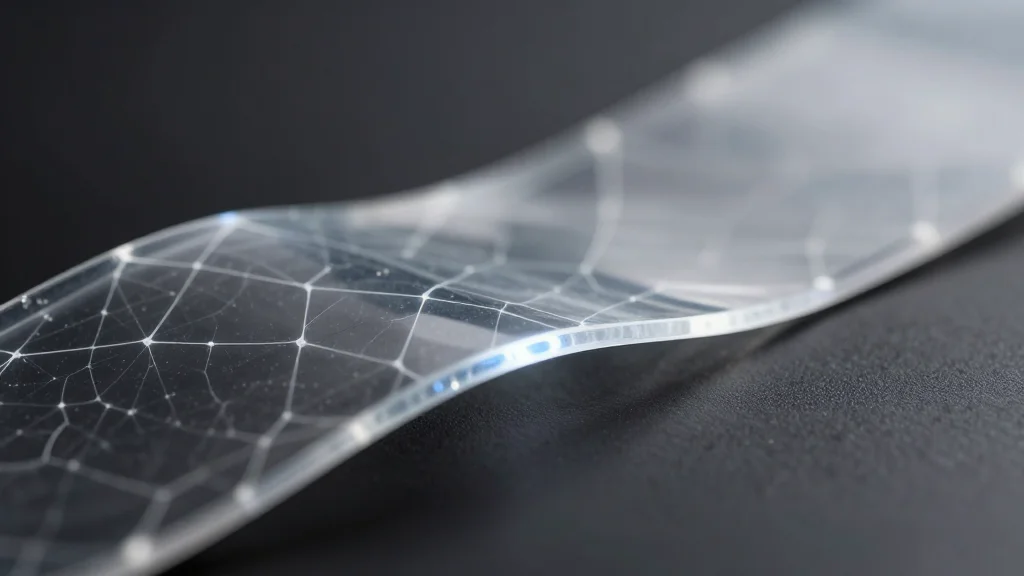
Researchers Discover Piezoelectric Effect in Diamond Membranes
Key Takeaways
- •Diamond membranes generate voltage under mechanical bending
- •Grain‑boundary asymmetry drives charge polarization
- •Edge‑exfoliation enables flexible, ultra‑thin diamond sheets
- •Potential for self‑powered implantable medical sensors
- •Challenges remain in scaling production for commercial use
Pulse Analysis
Diamond has long been prized for its hardness, thermal conductivity, and electrical insulation, but its role in active devices was limited to serving as a passive substrate. The new study flips that paradigm by showing that when diamond is thinned to the nanometer scale and rendered flexible, it can convert mechanical strain into electrical energy. This breakthrough aligns diamond with traditional piezoelectric materials such as quartz and lead‑zirconate‑titanate, yet it retains diamond’s unmatched durability and chemical inertness, making it uniquely suited for harsh environments.
The research team employed a novel edge‑exfoliation method to peel away layers of polycrystalline diamond, creating membranes thin enough to flex without fracturing. Mechanical cycling tests confirmed repeatable voltage outputs, while density‑functional theory revealed that the asymmetry of grain boundaries concentrates charge during deformation. By isolating the piezoelectric response from triboelectric noise, the authors validated a genuine material property rather than an experimental artifact. This insight not only expands the fundamental understanding of diamond’s electronic behavior but also provides a clear engineering route for integrating diamond into micro‑electromechanical systems (MEMS) that demand both mechanical resilience and electrical functionality.
From a market perspective, the ability to harvest energy from body movements using a biocompatible, non‑toxic material could accelerate the adoption of implantable sensors that no longer rely on batteries. Industries ranging from healthcare to aerospace stand to benefit from diamond‑based self‑powering components that operate reliably over decades. While scaling the exfoliation process and ensuring cost‑effective manufacturing remain hurdles, the study lays a solid scientific foundation for commercial ventures targeting high‑reliability, low‑maintenance energy solutions. Investors and innovators should watch for follow‑on work that bridges laboratory prototypes to real‑world applications.
Researchers discover piezoelectric effect in diamond membranes
Comments
Want to join the conversation?