Key Takeaways
- •56% of acute ACL patients exhibit arthrogenic muscle inhibition.
- •Swelling, high pain, crutch or pillow use triple AMI risk.
- •Simple hamstring‑fatigue then quad activation reverses AMI in 79% of cases.
- •Prior ACL injury reduces AMI likelihood, suggesting neural adaptation.
- •Biofeedback and motor imagery help the 20% resistant cases.
Pulse Analysis
Arthrogenic muscle inhibition (AMI) is a neural shutdown of quadriceps that commonly follows knee trauma, especially ACL tears. By dampening motor output, AMI hampers knee extension, prolongs swelling, and delays functional milestones. The 2024 cross‑sectional analysis of 300 ACL patients quantifies this phenomenon, revealing that more than half experience AMI within six weeks of injury—a prevalence that rivals the injury’s mechanical severity and underscores the need for early neuro‑muscular assessment in orthopedic clinics.
The study pinpoints several modifiable risk factors that amplify AMI risk by two to threefold: excessive joint swelling, high pain scores, reliance on crutches or a pillow under the knee, and concurrent multi‑ligament damage. Notably, a shorter interval between injury and initial evaluation also correlates with higher inhibition, suggesting that delayed clinical contact may allow maladaptive neural patterns to solidify. Conversely, patients with a history of prior ACL injury exhibited a lower incidence of AMI, hinting at central nervous system adaptations that mitigate the reflexive quadriceps block. These insights empower clinicians to target swelling control, pain management, and patient education as frontline strategies to curb AMI development.
Therapeutically, the research validates a straightforward protocol: a hamstring‑fatiguing drill to trigger reciprocal inhibition, followed by short‑arc quad activation. This sequence resolved AMI in nearly four‑fifths of affected individuals during a single session. For the remaining cohort, adjunctive tools such as electromyographic biofeedback and motor imagery facilitated recovery. The high reversal rate reinforces the value of early, active interventions over prolonged immobilization, shaping physical‑therapy guidelines toward aggressive neuromuscular re‑education in the acute ACL window. Future investigations may explore long‑term functional outcomes and the neuroplastic mechanisms behind the protective effect of prior ACL injuries.
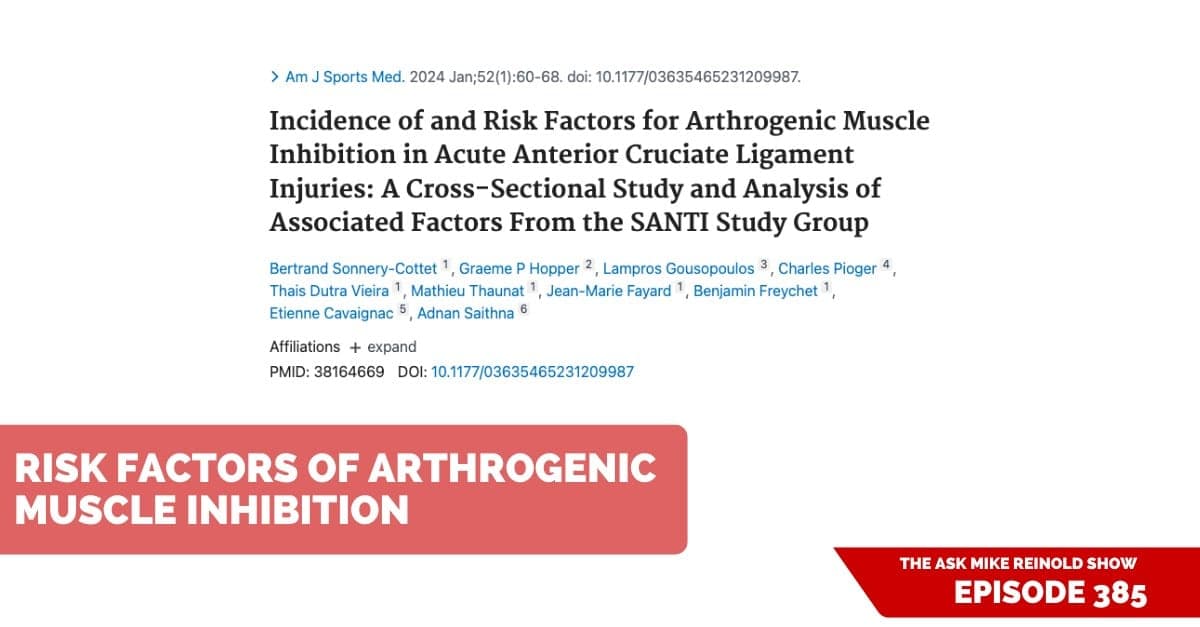
Risk Factors of Arthrogenic Muscle Inhibition
Comments
Want to join the conversation?