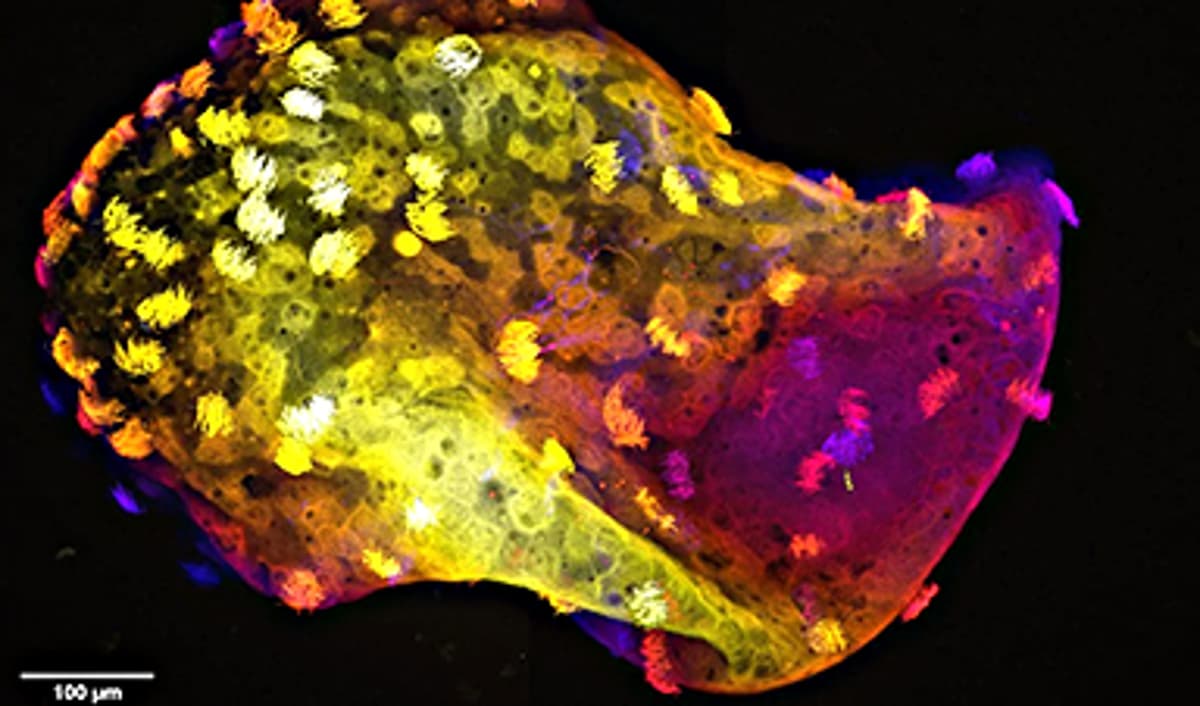
Scientists Create “Neurobots” – Living Machines With Their Own Nervous Systems

Key Takeaways
- •Neurobots integrate frog neurons into xenobots, forming self‑organized nervous systems
- •Added neurons increase size, elongation, and produce complex swimming patterns
- •Calcium imaging confirms electrical activity and functional synaptic networks
- •Drug pentylenetetrazole alters neurobot behavior, showing neural control of movement
- •Gene expression reveals unexpected activation of visual‑processing pathways
Pulse Analysis
The emergence of neurobots builds on the 2020 breakthrough that turned frog embryonic cells into autonomous xenobots—tiny, scaffold‑free organisms capable of locomotion, self‑repair and cell aggregation. By seeding these biobots with neural precursor cells, researchers at Tufts and the Wyss Institute have effectively grafted a primitive brain onto a living chassis. The resulting constructs not only develop axonal and dendritic architectures but also fire calcium signals that can be visualized in real time, confirming that they host functional neural circuits. This hybridization pushes the frontier of synthetic biology from purely mechanical or chemical control toward true bio‑electronic integration.
Behavioral assays reveal that neurobots move with greater vigor and follow repeatable trajectories, a stark contrast to the simple, random swimming of their neuron‑free ancestors. Exposure to pentylenetetrazole—a seizure‑inducing compound—modulates their motion patterns, providing direct evidence that the nascent neural networks are influencing locomotion. Microscopic analysis also uncovered up‑regulation of genes linked to visual processing, hinting that future iterations could respond to light or other environmental cues. These findings illustrate how cellular collectives can self‑organize complex functions when supplied with the right building blocks.
Beyond academic curiosity, neurobots could become a versatile platform for regenerative medicine and drug testing. Their fully biological composition sidesteps the immune‑compatibility issues that plague synthetic implants, while their programmable behavior offers a controllable model for studying neurodevelopmental disorders. As the field advances, ethical frameworks will be essential to guide the creation of increasingly sophisticated living machines. Nonetheless, the ability to engineer nervous systems from the ground up signals a paradigm shift, promising new therapeutic strategies and a deeper understanding of how biology assembles function from cellular chaos.
Scientists Create “Neurobots” – Living Machines With Their Own Nervous Systems
Comments
Want to join the conversation?