Scientists Ditched a Scary Climate Scenario. What Now?
Why It Matters
Dropping RCP8.5 narrows the range of projected warming, influencing climate‑policy targets and investment decisions that were based on an overly dire baseline. It also forces researchers to refine risk communication and adapt mitigation strategies to more probable futures.
Key Takeaways
- •RCP8.5 deemed implausible due to declining coal and rising renewables
- •New scenario set aligns with current energy‑mix trends
- •Studies must recalibrate climate‑impact projections without extreme pathway
- •Policy frameworks may shift focus from worst‑case to likely outcomes
- •Risk communication will need nuance after removal of iconic scenario
Pulse Analysis
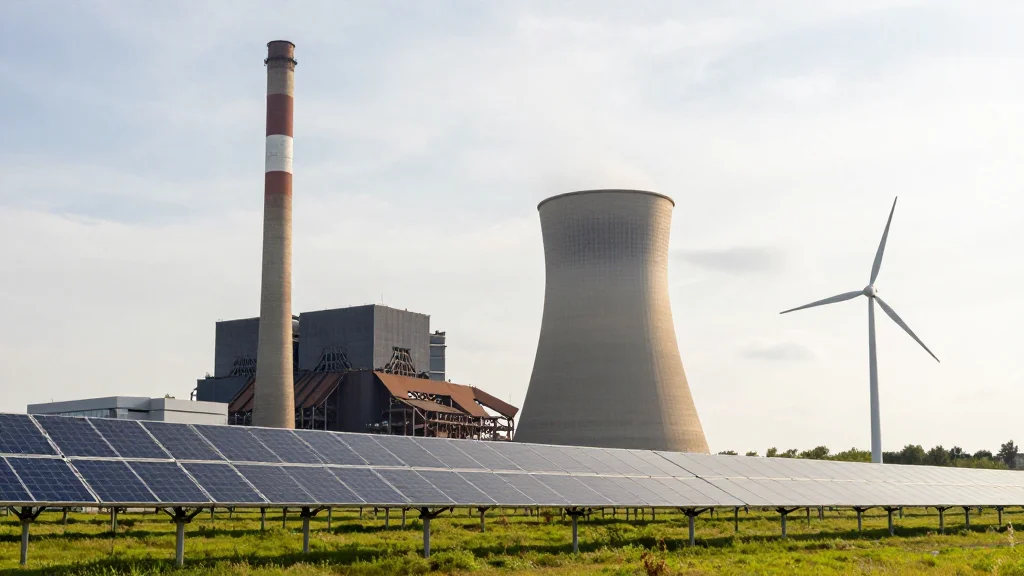
The Representative Concentration Pathways (RCPs) have been the backbone of climate modeling for over a decade, with RCP8.5 serving as the emblem of a high‑emissions future. Researchers used it to explore the upper bounds of temperature rise, sea‑level increase, and extreme weather, making it a staple in academic papers, policy briefs, and media narratives. Its prominence meant that even modest policy discussions often referenced the "RCP8.5 world" as a cautionary benchmark, despite criticism that its assumptions—especially about unabated coal growth—were increasingly unrealistic.
The latest revision, published in the journal Geoscientific Model Development, argues that recent energy trends—sharp declines in coal consumption, rapid cost reductions for solar and wind, and stronger climate policies in major economies—render the RCP8.5 trajectory unlikely. By replacing it with scenarios that reflect current decarbonization pathways, the scientific community aims to provide more credible baselines for impact assessments. This shift does not diminish the urgency of climate action; rather, it refines the lens through which risk is evaluated, ensuring that mitigation and adaptation plans are grounded in plausible emissions trajectories.
For businesses, investors, and governments, the retirement of RCP8.5 carries practical implications. Financial models that priced climate risk based on the extreme scenario may need recalibration, potentially altering asset‑allocation strategies and insurance underwriting. Moreover, policymakers must adjust communication strategies to avoid complacency while still emphasizing the need for deep emissions cuts. The move underscores a broader trend toward dynamic, data‑driven scenario planning, where future pathways are regularly updated to mirror the evolving energy landscape, delivering clearer guidance for climate‑resilient decision‑making.
Scientists Ditched a Scary Climate Scenario. What Now?
Comments
Want to join the conversation?
Loading comments...