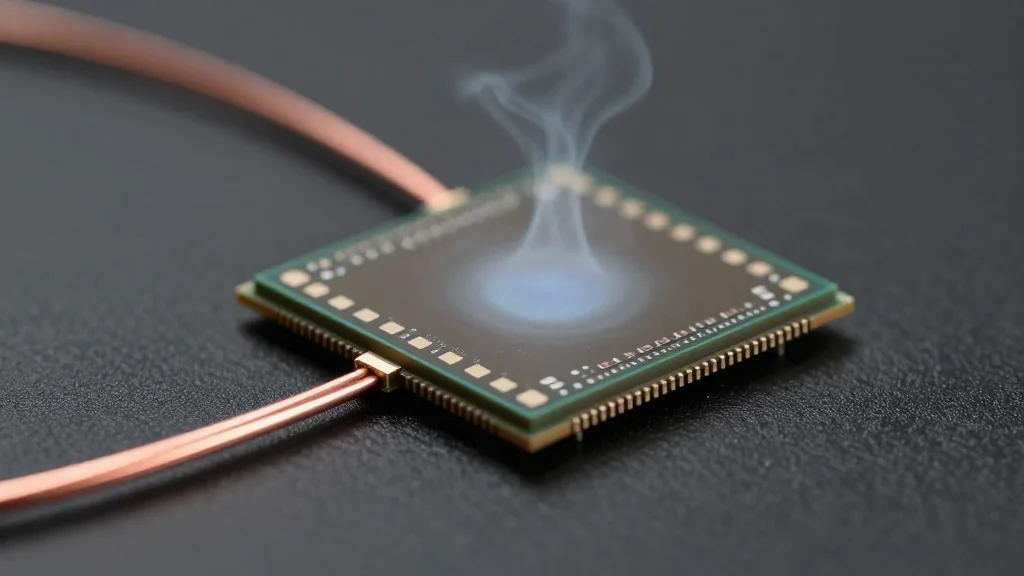
Scientists Identify the Origin of Noise in Spin Qubit Quantum Processors
Key Takeaways
- •Charge‑noise from two‑level fluctuators drives qubit frequency shifts
- •Simulations of 10⁸ TLF configurations match experimental temperature dependence
- •Operating at ~200 mK reduces Larmor shift, boosting gate fidelity
- •Controlling interface trap states can improve large‑scale silicon quantum chips
Pulse Analysis
Spin qubits, which store quantum information in the spin of a single electron, have emerged as a leading candidate for scalable quantum processors because they combine long coherence times with compatibility to mature semiconductor fabs. Yet, the promise of silicon‑based quantum chips has been hampered by microscopic noise that perturbs the qubit’s Larmor frequency, eroding gate fidelity and threatening error‑correction thresholds. Recent advances in quantum‑dot fabrication have pushed single‑ and two‑qubit gate errors below the surface‑code limit, but the underlying charge‑noise mechanisms remained elusive, leaving manufacturers without clear design rules.
In a breakthrough study published in IEEE Access, Professor Takayuki Kawahara’s team from Tokyo University of Science and AIST employed a hybrid approach of theoretical modeling and massive statistical simulations—evaluating 10⁸ distinct parameter sets, each with 5,000 random two‑level fluctuator (TLF) configurations—to trace the origin of the temperature‑dependent frequency shift. The simulations revealed that TLFs with exponentially distributed activation energies and rapid switching rates, strongly temperature‑dependent, reproduce the experimentally observed non‑monotonic shift. Crucially, the model shows that at ~200 mK, the transition times of these traps become much shorter than gate durations, effectively decoupling the qubit from charge fluctuations and raising gate fidelity.
The implications for the quantum‑hardware ecosystem are immediate. By pinpointing electronic transitions between the conduction band and trap states at the semiconductor/oxide interface as the dominant noise source, the research directs fab engineers toward process optimizations—such as improved oxide quality, interface passivation, and controlled annealing—to suppress trap density. These steps could unlock higher‑performance silicon spin‑qubit arrays, accelerating the rollout of fault‑tolerant quantum computers that leverage existing CMOS infrastructure. As the industry races toward quantum advantage, mastering charge‑noise will be as pivotal as scaling qubit counts.
Scientists identify the origin of noise in spin qubit quantum processors
Comments
Want to join the conversation?