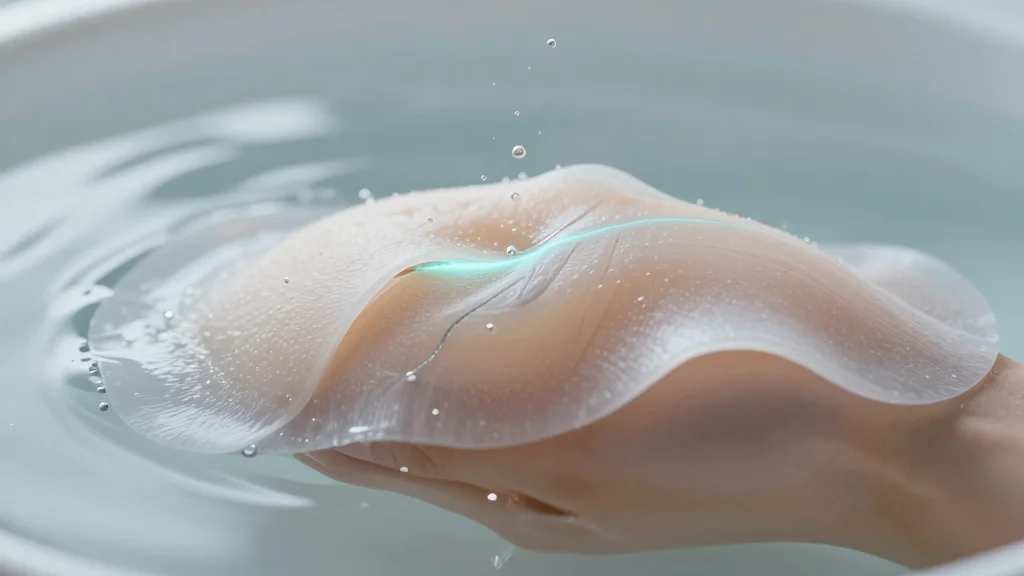
Self-Healing Sensor Feels Touch, Detects Pain, and Repairs Itself Underwater
Key Takeaways
- •Self‑healing elastomer restores shape in 3 seconds, 92% elasticity
- •Liquid‑metal EGaIn conductors maintain conductivity after cuts underwater
- •Sensor detects damage levels via resistance spikes, differentiating injury severity
- •Operates battery‑free via magnet‑coil induction, 41 ms response time
Pulse Analysis
Underwater robotics and wearable devices have long wrestled with two opposing constraints: the need for delicate, high‑resolution sensing and the harsh, corrosive marine environment that quickly degrades conventional electronics. Traditional solutions rely on rigid housings, bulky batteries, and frequent retrieval for maintenance, limiting operational depth and mission length. The emergence of soft, self‑healing materials reshapes this landscape, offering devices that can stretch, bend, and even repair themselves after damage—attributes essential for prolonged, autonomous underwater work.
The SMES achieves this breakthrough through a multilayer architecture built around a fluoropolymer elastomer infused with an ionic liquid and a trace crosslinker. Reversible ion‑dipole interactions enable the material to seal cuts and punctures, regaining 92% of its original elasticity within seconds and reaching almost complete healing after ten days submerged. Conductivity is preserved by patterned eutectic gallium‑indium (EGaIn) liquid‑metal traces that flow with the polymer, ensuring electrical pathways survive mechanical trauma. Power is harvested via electromagnetic induction: a moving magnet relative to an internal coil generates voltage, delivering sensor output in roughly 41 milliseconds without any battery or external wiring.
Practical demonstrations underscore the technology’s commercial promise. A smart diving glove equipped with five SMES units translates finger proximity into distinct voltage signatures, enabling wireless commands and instant damage alerts via Bluetooth. Likewise, an underwater robotic hand uses color‑coded LEDs to signal sensor health, allowing operators to differentiate recoverable from critical injuries in real time. By embracing damage as an expected event rather than a failure mode, the SMES paves the way for longer‑lasting autonomous submersibles, marine‑biology instrumentation, and next‑generation wearable interfaces that function reliably far from the surface.
Self-healing sensor feels touch, detects pain, and repairs itself underwater
Comments
Want to join the conversation?