Key Takeaways
- •Helium soap bubbles visualize separation bubble dynamics on backward‑facing ramp
- •Streak photography captures unsteady recirculating flow patterns
- •Computer analysis extracts quantitative flow fields from bubble streaks
- •Technique validates CFD models for aircraft wing and fuselage design
- •Low‑frequency bubble dynamics suggest avenues for drag reduction
Pulse Analysis
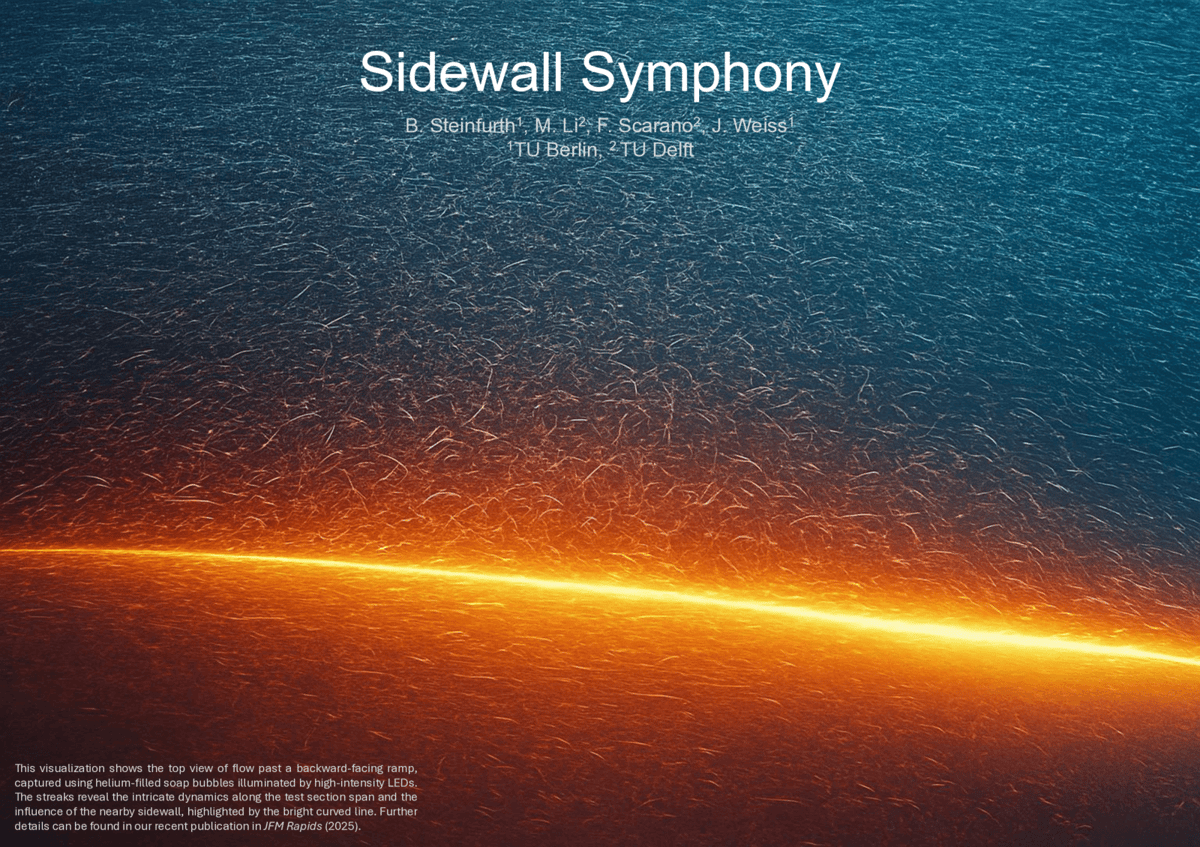
The separation bubble over a backward‑facing ramp is a classic test case for aerodynamicists because it mimics the flow detachment that occurs on wing‑root junctions and fuselage‑wing intersections. Traditional measurement techniques—such as hot‑wire probes or pressure taps—often disturb the delicate flow or lack spatial resolution. By introducing helium‑filled soap bubbles, the research team created a non‑intrusive tracer that follows the local velocity vectors, while high‑intensity lighting records each bubble’s path as a luminous streak. This visual approach yields a dense, three‑dimensional map of the bubble’s motion, capturing both the large‑scale recirculation and the finer, low‑frequency oscillations that drive unsteady loads.
Beyond the striking imagery, the real value lies in converting the streak patterns into quantitative flow data. Machine‑learning‑based edge detection and particle‑image‑velocimetry (PIV) algorithms parse the photographs, reconstructing velocity vectors and vorticity fields across the separation region. The resulting datasets provide a benchmark for computational fluid dynamics (CFD) solvers, allowing engineers to assess model fidelity in predicting bubble size, shedding frequency, and reattachment points. Such validation is critical for high‑performance aircraft where even marginal drag reductions translate into significant fuel savings and lower emissions.
The broader industry impact is twofold. First, the method offers a cost‑effective, scalable tool for wind‑tunnel and in‑flight testing, accelerating the design cycle for next‑generation airframes. Second, insights into low‑frequency bubble dynamics open pathways for active flow‑control strategies—such as plasma actuators or surface‑mounted vortex generators—to suppress separation and trim drag. As aerospace firms chase tighter efficiency targets, integrating this visual‑quantitative technique into their R&D pipelines could become a competitive differentiator.
“Sidewall Symphony”
Comments
Want to join the conversation?