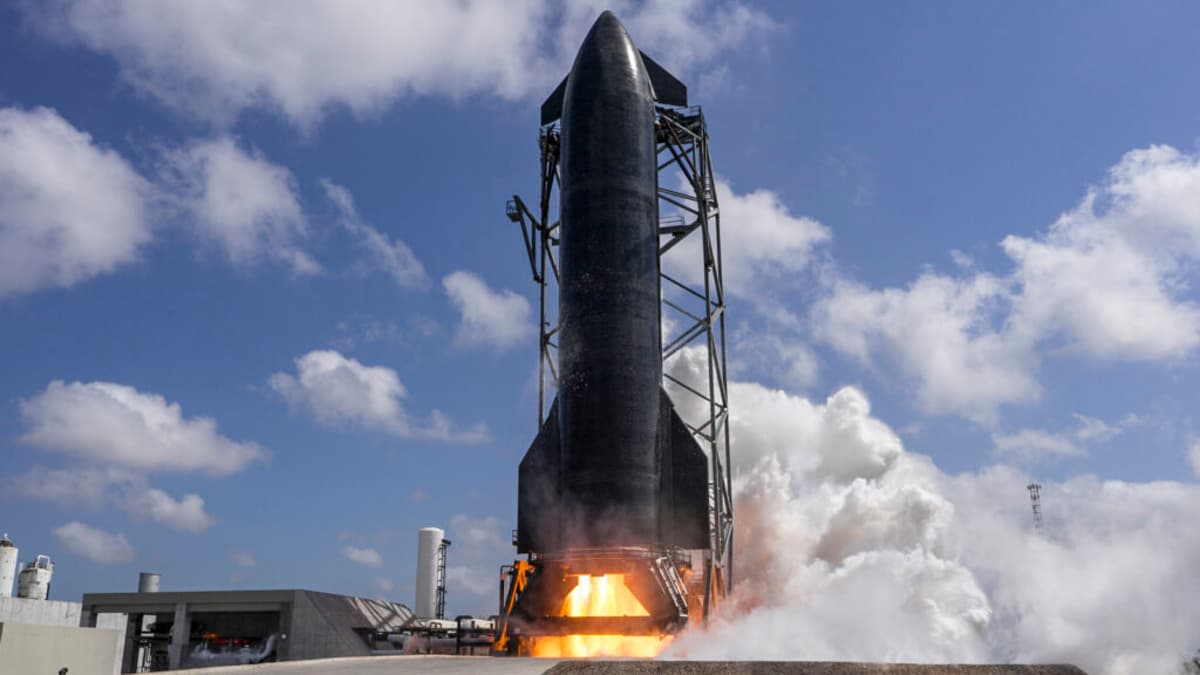
SpaceX Starship V3 Has Successful Static Fire

Key Takeaways
- •Starship V3 completed full-duration static fire on all six Raptor engines
- •Test validates propulsion upgrades planned for next orbital flight
- •Booster 19 delay pushes launch window to next day
- •Successful fire reduces risk for upcoming integrated flight test
- •SpaceX maintains lead in heavy‑lift launch capability
Pulse Analysis
SpaceX’s latest milestone, a successful static fire of Starship V3 (also known as starship 39), marks a critical step toward the company’s ambitious deep‑space agenda. During the test, all six Raptor engines ignited for the full programmed burn, confirming the propulsion system’s readiness after months of iterative design changes. Static fires serve as the final ground‑based verification before an integrated flight, allowing engineers to assess thrust, vibration, and thermal loads under realistic conditions. The achievement reinforces SpaceX’s aggressive schedule to launch the first orbital Starship mission within the next year.
The V3 configuration incorporates upgraded Raptor engines that deliver higher thrust-to-weight ratios and improved combustion stability, features that were scrutinized during the static fire. Data from the burn showed nominal pressure curves and no anomalous vibration, suggesting the new engine cycle is performing as modeled. However, the test also revealed a minor scheduling hiccup: Booster 19, slated to pair with the Starship for the next integrated test, was delayed until the following day due to a pre‑flight checklist issue. Such delays are typical in a program of this complexity and are being addressed swiftly.
From a market perspective, the successful fire underscores why SpaceX remains the dominant player in heavy‑lift launch services, a segment projected to exceed $10 billion annually as satellite constellations and lunar missions scale up. Competitors such as Blue Origin and NASA’s SLS program still face longer development timelines, giving SpaceX a clear commercial advantage. Investors watching deep‑tech portfolios view each test as a risk‑mitigation milestone, potentially unlocking additional funding for both the Starship program and downstream ventures that rely on its payload capacity. The next integrated flight test will be a litmus test for the company’s ability to meet its ambitious launch cadence.
SpaceX Starship V3 Has Successful Static Fire
Comments
Want to join the conversation?