Student-Built Instruments Head to Space
Key Takeaways
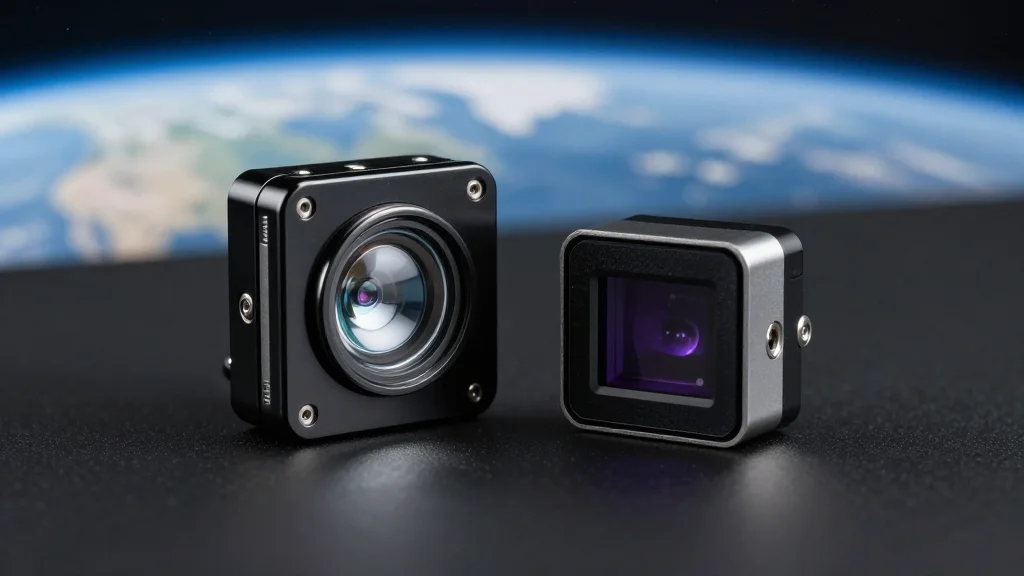
- •College of Charleston undergrads built two ISS research cameras.
- •Instruments launch on Northrop Grumman Cygnus‑24 cargo mission.
- •Cameras will operate six months, then return for analysis.
- •Project marks South Carolina’s first space‑based instrument demonstration.
- •Experience steers students toward graduate studies in instrumentation.
Pulse Analysis
The Cygnus‑24 resupply flight, scheduled to launch from Kennedy Space Center, will carry the College of Charleston’s student‑designed payload to the International Space Station, a rare achievement for a public liberal‑arts college. By handling everything from concept to integration, seniors Eva Godwin and Gael Gonzalez demonstrated that undergraduate teams can meet the rigorous standards required for orbital hardware, a capability traditionally reserved for seasoned aerospace firms or research universities. Their involvement underscores a growing trend of NASA leveraging academic partnerships to diversify its engineering talent pool.
Scientifically, the two cameras address distinct research frontiers. The liquid‑lens optical system will capture high‑resolution images of biological specimens as they experience microgravity, providing unprecedented insight into cellular behavior that could inform future life‑support systems. Meanwhile, the ultraviolet camera will conduct photometric surveys of young stars, tracking flare activity and magnetic cycles that shape planetary habitability. Both instruments are slated for a six‑month orbital stint before returning to Earth, allowing researchers to validate data pipelines and refine instrument designs for longer‑duration missions.
Beyond the immediate science, the mission carries broader implications for higher education and regional innovation. South Carolina’s first space‑based instrument demonstration showcases how smaller states can contribute to national space objectives, potentially attracting federal research funding and industry collaborations. For the students, hands‑on experience with flight hardware solidifies career trajectories toward graduate studies in instrumentation, experimental astrophysics, and aerospace engineering, reinforcing the pipeline that fuels the next generation of space professionals.
Student-Built Instruments Head to Space
Comments
Want to join the conversation?