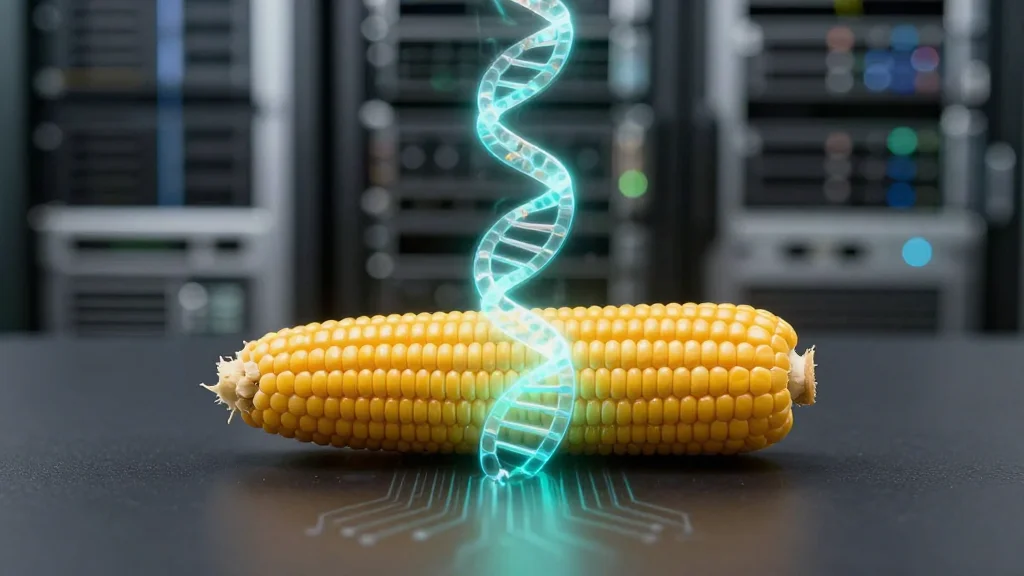
TACC: Scientists Uncover New Information on How DNA Works in Maize
Key Takeaways
- •Maize euchromatin splits into early‑replicating and late‑replicating sub‑compartments
- •Study processed 1.3 billion Hi‑C reads using TACC’s Stampede3, Corral, Ranch
- •Sub‑compartment organization links replication timing to gene activity
- •Findings could enable manipulation of replication timing for crop trait improvement
- •Collaboration showcases HPC’s pivotal role in advancing plant genomics
Pulse Analysis
Maize remains a cornerstone model for plant biology, yet its 2‑billion‑base‑pair genome poses analytical challenges that exceed conventional computing. Repetitive sequences and the sheer data volume generated by modern genomics—especially Hi‑C chromatin‑conformation assays—require petascale processing power. By leveraging TACC’s Stampede3, Corral, and Ranch systems, the research team aligned over a billion short reads and reconstructed three‑dimensional nuclear architecture, delivering resolution previously unattainable in crop genomics.
The breakthrough centers on the discovery that maize euchromatin is partitioned into two sub‑compartments with distinct replication schedules. Early‑replicating regions host highly active genes, while later‑replicating zones exhibit unique structural signatures. This dual‑compartment model refines the classic euchromatin‑heterochromatin dichotomy and suggests that temporal control of DNA synthesis is a direct regulator of gene expression. The integration of high‑throughput sequencing, 3D microscopy, and advanced computational pipelines enabled the researchers to map these patterns across the entire genome, establishing a direct link between spatial chromatin organization and functional output.
Beyond basic science, the findings carry tangible implications for agriculture. Manipulating replication timing could become a strategic tool for enhancing stress tolerance, yield, or nutrient use efficiency in maize and related cereals. Moreover, the project exemplifies how collaborative HPC initiatives accelerate translational research, turning massive data sets into actionable insights for breeders and biotechnologists. As climate pressures intensify, such computationally driven discoveries will be pivotal in developing the next generation of resilient crops.
TACC: Scientists Uncover New Information on How DNA Works in Maize
Comments
Want to join the conversation?