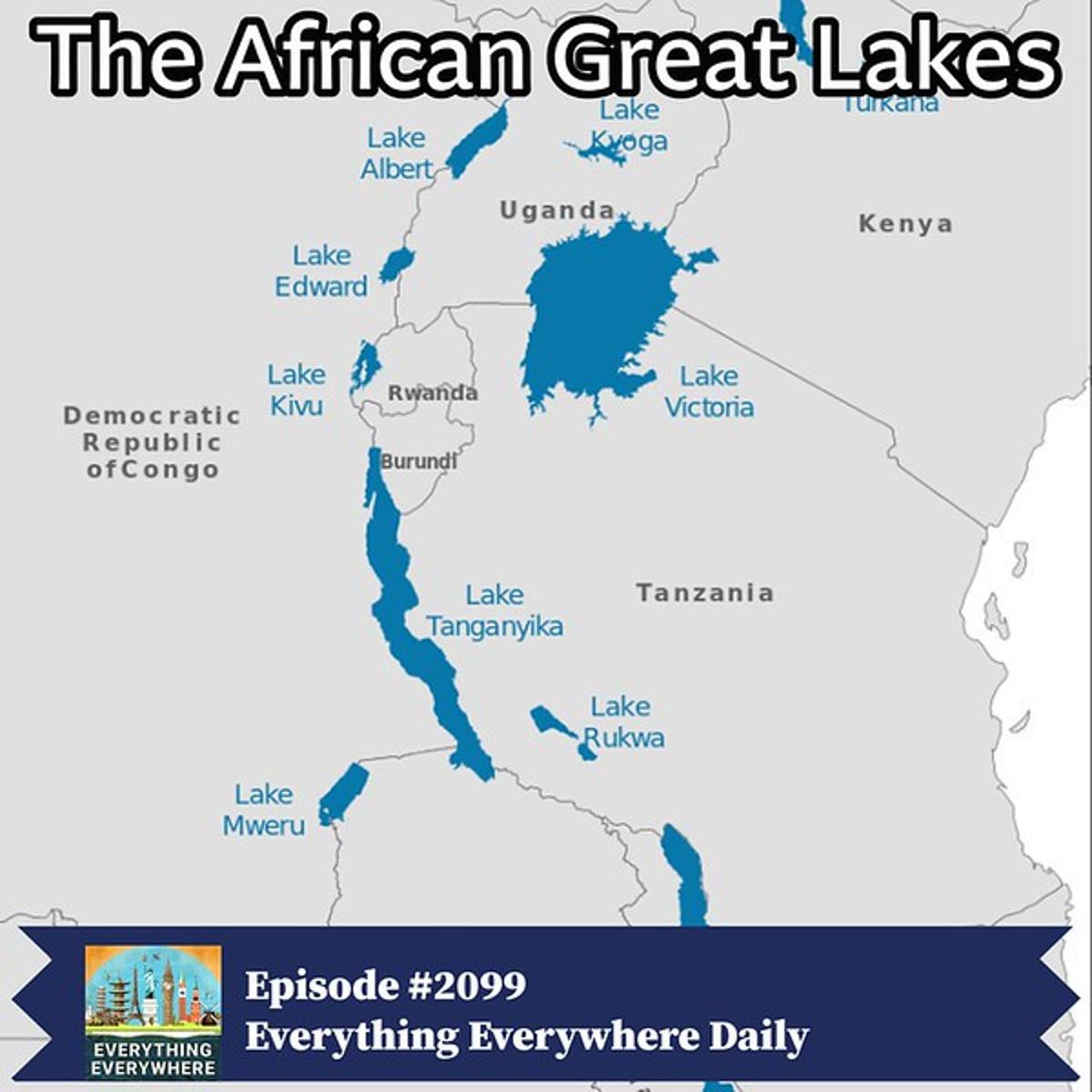
The African Great Lakes: Ancient Waters That Shape Modern Africa
Key Takeaways
- •Rift tectonics formed lakes, older than North American counterparts
- •Lake Victoria uniquely formed in shallow depression, not rift basin
- •Cichlid adaptive radiation produced hundreds of endemic species
- •Lake Kivu holds methane, posing eruption risk to millions
- •Lakes sustain fisheries, water, transport for 50 million
Pulse Analysis
The African Great Lakes are a product of the East African Rift, a continental plate boundary that began pulling apart roughly 25 million years ago. Unlike the glacially carved North American Great Lakes, these basins are tectonic grabens that have been deepening over eons, giving rise to Lake Tanganyika’s 1,470‑meter depth and a sediment record that stretches back millions of years. Scientists mine these cores for climate proxies, providing one of the longest continuous freshwater archives on the planet and informing models of past monsoon variability and global temperature shifts.
Biologically, the lakes are unrivaled laboratories of evolution. The explosive cichlid radiations in Victoria, Malawi and Tanganyika generated anywhere from several hundred to a thousand species in mere millennia, a textbook example of adaptive radiation that reshapes our understanding of speciation speed. This diversity fuels a global aquarium market worth tens of millions of dollars, while also supporting local fisheries. However, human interventions such as the 1950s introduction of Nile perch in Lake Victoria triggered the loss of roughly 200 native cichlid species, illustrating how fragile these ecosystems are.
Beyond science, the lakes underpin the livelihoods of an estimated 50 million people. Fisheries on Lake Victoria alone employ over 200,000 fishers and generate export revenues of several hundred million dollars, while Lake Kivu’s dissolved methane and carbon dioxide represent a potential energy source for the Democratic Republic of Congo and Rwanda, albeit with the specter of a limnic eruption that could affect two million residents. Shared borders create diplomatic friction over water allocation, oil exploration, and pollution, prompting regional bodies like the Nile Basin Initiative to seek cooperative management—an essential step for sustainable development.
The African Great Lakes: Ancient Waters That Shape Modern Africa
Comments
Want to join the conversation?