Key Takeaways
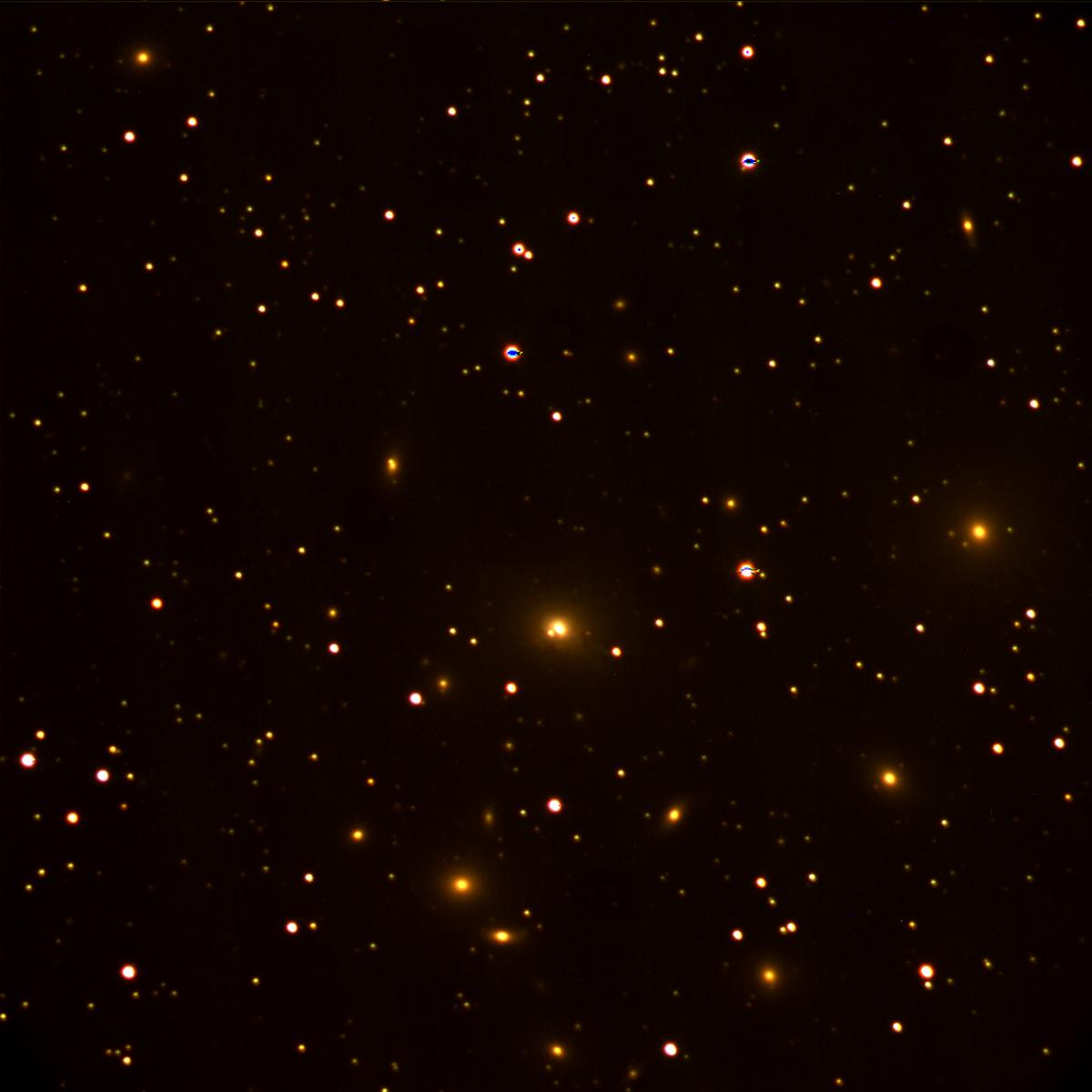
- •Students captured 240‑second exposure of Perseus core with 1.20 m telescope
- •Image covers 15 arcminutes, revealing dozens of bright cluster galaxies
- •Euclid’s space‑based 1.20 m mirror resolves far more galaxies than ground
- •Project demonstrates hands‑on training and outreach value for astrophysics students
Pulse Analysis
The Perseus Cluster (Abell 426) remains one of the most studied galaxy assemblies in the nearby universe, spanning roughly 10 degrees on the sky and lying at a distance of about 240 million light‑years. Its dense core hosts a mix of giant ellipticals, active galactic nuclei, and a hot intracluster medium that glows in X‑ray surveys. Because the member galaxies are relatively bright, the cluster serves as a natural laboratory for probing galaxy interactions, dark‑matter distribution, and feedback processes from supermassive black holes. Consequently, both ground‑based and space missions prioritize Perseus for calibration and science.
In November, a cohort of Maynooth University final‑year students spent a week at the Observatoire de Haute‑Provence, employing its 1.20 m reflecting telescope to obtain a 240‑second exposure of the cluster’s central region. The resulting frame covers a 15‑arcminute square and resolves dozens of luminous galaxies against a faint background, illustrating what a modest aperture can achieve under dark skies and optimal zenith positioning. By contrast, ESA’s Euclid mission, also equipped with a 1.20 m primary but operating above the atmosphere, captures far more faint galaxies thanks to its ultra‑wide‑field camera. The student image therefore offers a tangible benchmark for comparing ground‑based depth with space‑based completeness.
The exercise underscores the educational power of hands‑on observing campaigns, turning abstract coursework into real data that can be published and shared publicly. It also highlights the complementary role of smaller observatories in the era of large survey telescopes, where localized, high‑quality snapshots can validate and enrich all‑sky datasets such as Euclid’s early‑release catalog. As universities continue to partner with professional facilities, the next generation of astronomers will gain both technical proficiency and an appreciation for the synergistic workflow that blends terrestrial and orbital observations.
The Perseus Cluster
Comments
Want to join the conversation?