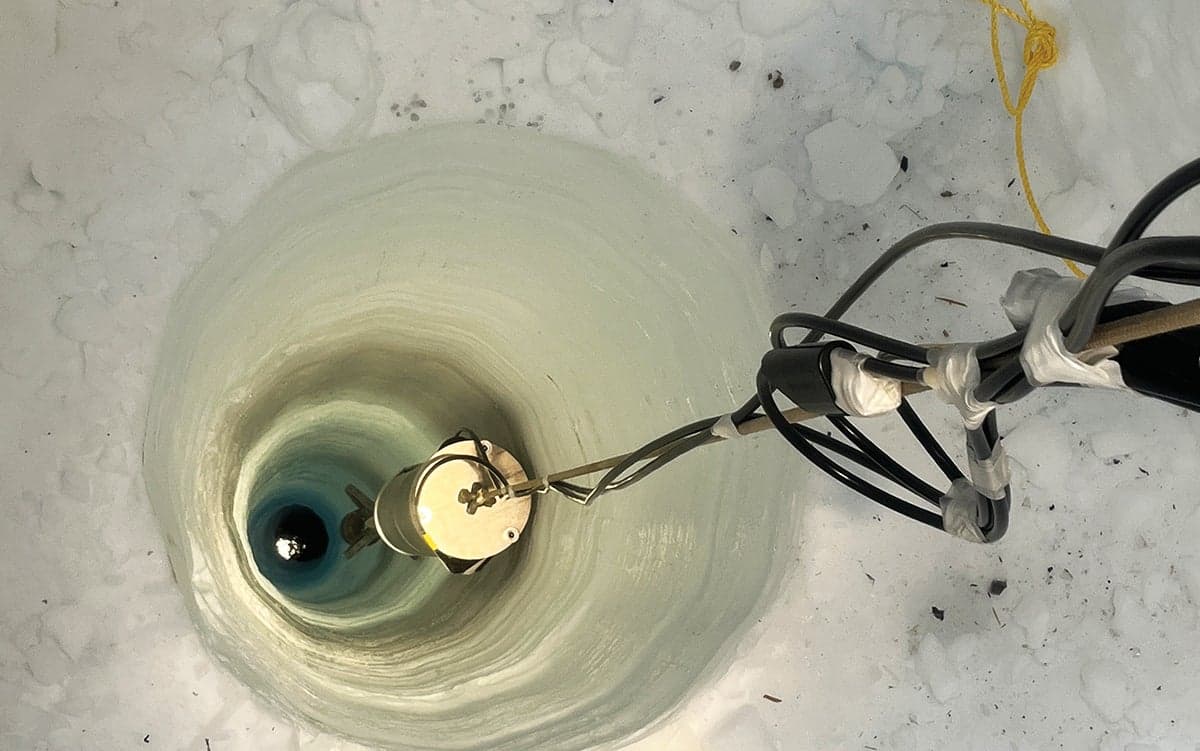
The World’s Deepest Sensors Will Detect Earthquakes Around the World From Far Below Antarctica
Why It Matters
The deployment fills a critical blind spot in the global seismic network, boosting detection capability and data quality for large‑magnitude events. Better seismic data from such a remote, low‑noise site can refine earthquake models and early‑warning systems worldwide.
Key Takeaways
- •8,000‑ft deep seismometers detect magnitude 5+ quakes globally
- •Ice‑drilling uses hot water, creating holes in ~50 hours
- •Instruments record low‑frequency waves, improving fault‑movement analysis
- •South Pole location fills a major gap in seismic network coverage
Pulse Analysis
Seismic monitoring has long relied on a scattered array of surface stations, many of which contend with cultural noise, weather effects, and the planet’s rotation that can distort recordings. Antarctica, by contrast, offers a pristine acoustic environment: the continent’s thick ice sheet and minimal human activity create one of the quietest places on Earth. Deploying sensors deep beneath the ice leverages this natural advantage, allowing scientists to hear subtle ground motions that surface instruments miss, especially low‑frequency waves that travel through the mantle for months after a major quake.
The engineering feat behind the Deep Ice Seismometer project is equally striking. Researchers used a hot‑water drill that melts ice at a rate of three feet per minute, carving 8,000‑foot‑long boreholes in roughly 50 hours. Once the hole is made, a stainless‑steel pressure vessel housing a pendulum‑in‑magnetic‑field sensor is lowered before the water refreezes. This design shields the instrument from the extreme pressures—up to 10,000 psi—and temperature swings found at depth, while preserving its sensitivity to vibrations as faint as Earth tides caused by lunar and solar gravity. The result is a sensor capable of recording seismic waves across a broad frequency spectrum, from high‑frequency tremors to the ultra‑low‑frequency “ringing” that follows magnitude‑7+ earthquakes.
The scientific payoff could be transformative. By capturing clearer, longer‑lasting seismic signals, researchers can more precisely reconstruct fault slip patterns, improving models of earthquake rupture dynamics and the likelihood of tsunami generation. The South Pole stations also plug a geographic gap in the Global Seismographic Network, enhancing global earthquake location accuracy and early‑warning reliability. As the data stream grows, the deep‑ice approach may inspire similar deployments in other remote, low‑noise regions, ushering in a new era of high‑fidelity Earth monitoring.
The world’s deepest sensors will detect earthquakes around the world from far below Antarctica
Comments
Want to join the conversation?
Loading comments...