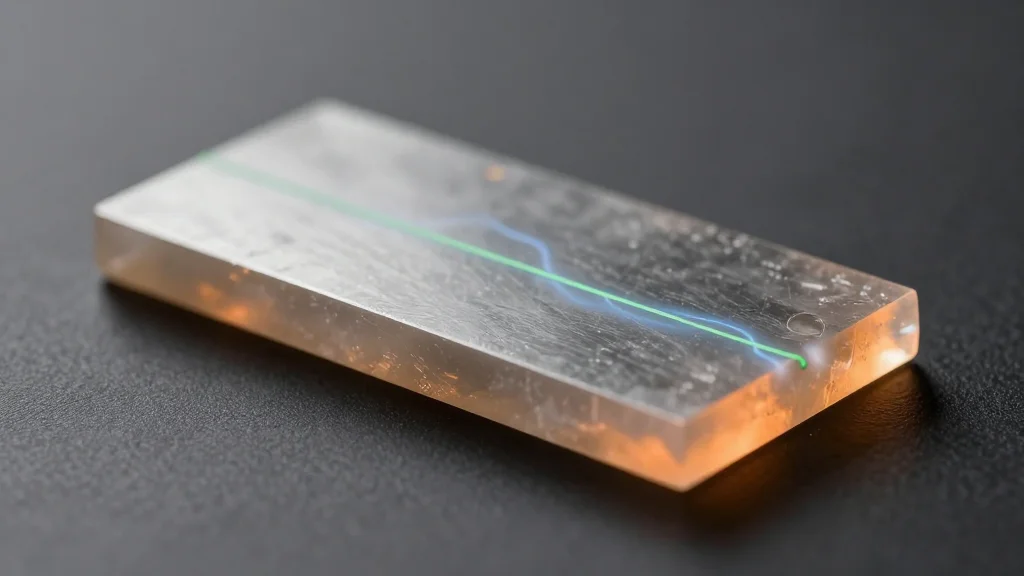
Theoretical Predictions of Unusual Nonlinear Thermoelectric Effect Confirmed
Key Takeaways
- •RIKEN observed nonlinear chiral thermoelectric Hall effect in tellurium
- •Effect generates voltage perpendicular to temperature gradient and electric field
- •Measured signal reached microvolt levels, matching theoretical predictions
- •Potential uses include energy harvesting, heat management, and chirality probing
Pulse Analysis
Thermoelectric materials traditionally exhibit a linear relationship between voltage and temperature difference, meaning that doubling the voltage doubles the generated heat. Recent theoretical work, however, suggested that chiral crystals—where atoms arrange in a handed‑handed structure—could break this symmetry, producing nonlinear responses that depend on higher‑order interactions. Such effects promise directional heat flow and the ability to convert ambient thermal fluctuations into usable electricity, a prospect that could reshape waste‑heat recovery strategies across industries.
The RIKEN team’s experiment provides the first concrete evidence of this exotic behavior. Using high‑precision instrumentation, they created a temperature gradient across a tellurium crystal while applying an electric field orthogonal to the gradient. The resulting voltage, measured in a third direction, reached the microvolt scale—far larger than the researchers expected and in line with quantum‑geometric predictions. This alignment between theory and measurement not only confirms the existence of the nonlinear chiral thermoelectric Hall effect but also validates computational models that link material chirality to quantum geometry, offering a new diagnostic tool for condensed‑matter physicists.
Looking ahead, the ability to harness sizable nonlinear thermoelectric signals could impact several sectors. In energy harvesting, devices built from chiral semiconductors might capture low‑grade waste heat more efficiently than conventional thermoelectrics. For thermal management, the directional nature of the effect could enable heat‑flow control in microelectronics, reducing hotspots without active cooling. Moreover, the phenomenon serves as a sensitive probe of material chirality, aiding the discovery of novel quantum materials. RIKEN’s follow‑up studies aim to map temperature dependence and explore other chiral compounds, setting the stage for both practical applications and deeper insight into quantum material behavior.
Theoretical predictions of unusual nonlinear thermoelectric effect confirmed
Comments
Want to join the conversation?