Why It Matters
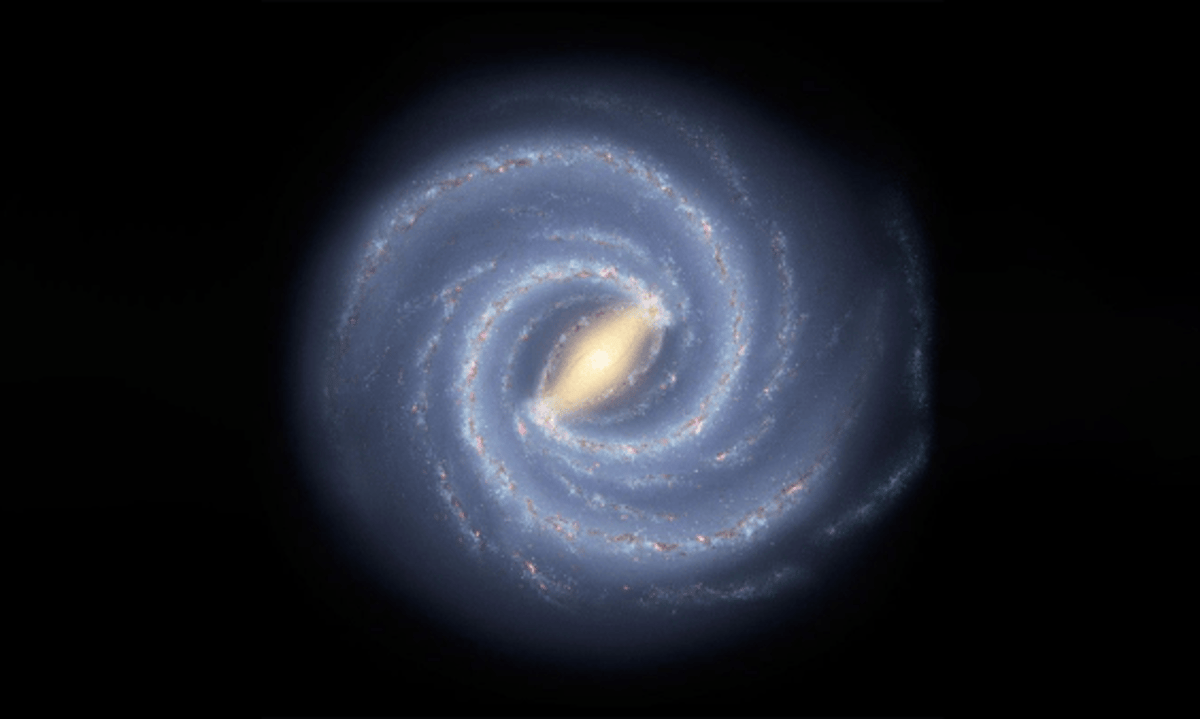
Understanding Loki’s incorporation clarifies the Milky Way’s formative mergers, informing models of galaxy evolution and the distribution of dark matter in our own halo.
Key Takeaways
- •Astronomers identified 20 metal‑poor stars likely from dwarf galaxy Loki.
- •Loki’s remnants are embedded in the Milky Way’s disk, not just halo.
- •Study supports Milky Way’s early chaotic growth via multiple mergers.
- •Kraken merged ~11 billion years ago, reshaping the Milky Way.
Pulse Analysis
The discovery of Loki underscores how astronomers now use stellar chemistry as a forensic tool to reconstruct galactic histories. Metal‑poor stars act like time capsules; their low heavy‑element content signals formation soon after the Big Bang. By mapping these stars’ orbits and compositions, researchers can pinpoint which fragments of the early universe were later swallowed by larger systems. Loki’s presence in the disk, rather than the halo, challenges the conventional view that ancient, metal‑poor stars reside only in the galaxy’s outskirts, suggesting that early mergers deposited material deeper into the Milky Way’s gravitational well.
Mergers such as Loki and the previously identified Kraken illustrate that the Milky Way’s growth was far from a tranquil accretion of gas. Kraken’s collision 11 billion years ago likely triggered a burst of star formation and redistributed dark matter, setting the stage for the spiral structure we observe today. Loki’s more recent assimilation, inferred from its stellar ages, hints at a prolonged era of hierarchical building, where smaller dwarf galaxies were repeatedly captured. These events leave imprints not just in stellar populations but also in the galaxy’s kinematic and dynamical architecture, offering clues about the unseen dark‑matter halo that binds the system.
Looking ahead, large‑scale surveys like Gaia and upcoming spectroscopic missions will expand the catalog of chemically distinct stars, enabling finer‑grained reconstructions of the Milky Way’s merger timeline. As the inventory of identified dwarf remnants grows, astrophysicists can refine simulations of galaxy formation, testing how often disk‑embedded accretion occurs versus halo‑only deposition. Ultimately, unraveling the Milky Way’s cannibalistic past informs broader cosmological questions about how typical spiral galaxies assemble in the universe.
There’s A Dwarf Galaxy Hidden Inside the Milky Way
Comments
Want to join the conversation?
Loading comments...