Why It Matters
The finding reveals a previously unknown mutualistic strategy among ants, expanding our understanding of insect social complexity and offering insights into convergent evolution of cleaning behaviors across ecosystems.
Key Takeaways
- •First observed cleaning mutualism between harvester and cone ants
- •Harvester ants solicit cone ants to remove debris from exoskeletons
- •Interaction may enhance microbial health for both species
- •Behavior parallels marine cleaner‑fish relationships, suggesting convergent evolution
- •Findings expand understanding of ant social complexity and interspecies cooperation
Pulse Analysis
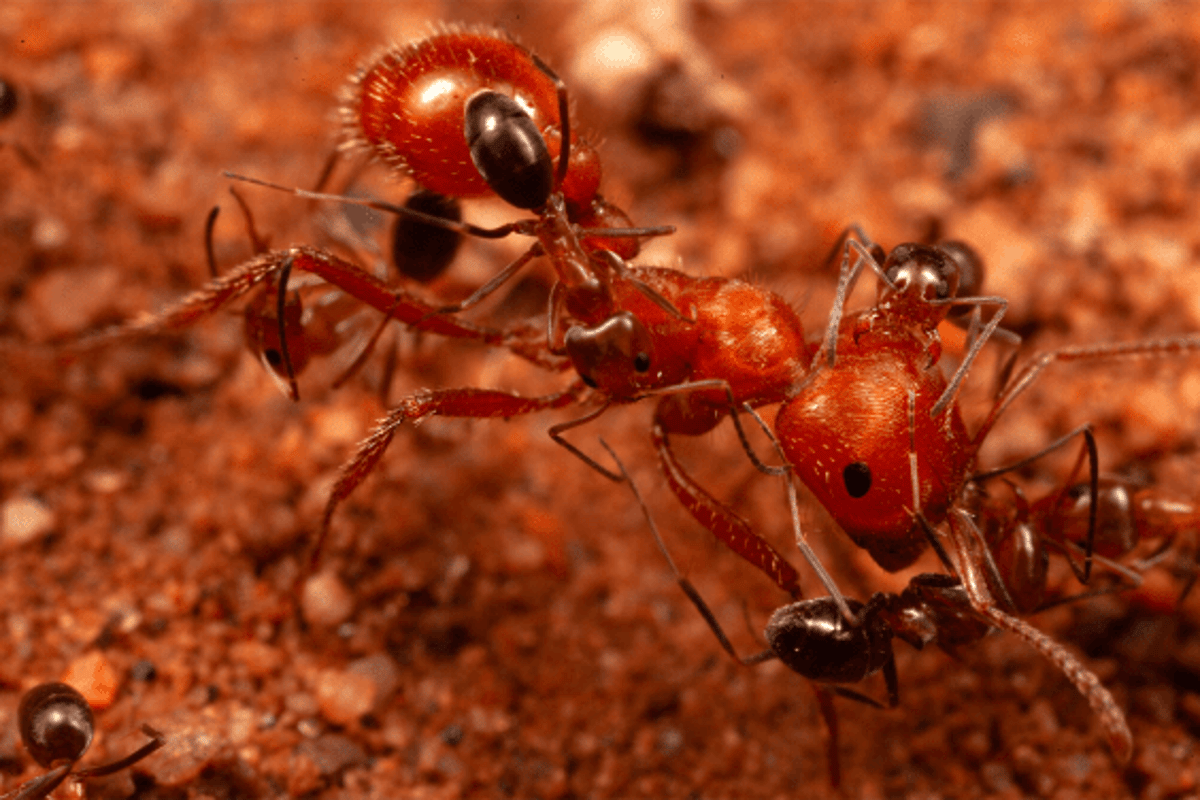
The observation of a cleaning partnership between the desert harvester ant (Pogonomyrmex barbatus) and the diminutive cone ant marks the first documented case of interspecific grooming among ants. Biologist Mark Moffett recorded the behavior in the Sonoran Desert, noting that the larger ants adopt a stationary, elevated posture while the smaller ants crawl over them, nibbling at the exoskeleton for periods ranging from fifteen seconds to five minutes. This ritual, initiated by the harvester ants, challenges the prevailing view of ants as exclusively competitive and adds a new dimension to the study of insect social interactions.
The ant‑cleaner interaction mirrors the well‑known mutualism between marine cleaner fish and their client species, where the fish remove parasites and dead tissue in exchange for a meal. In the desert scenario, the cone ants likely feed on detritus, fungal spores, or ectoparasites lodged on the harvester’s cuticle, while the larger ants gain a more thorough grooming than they can achieve themselves. Such convergent behavior suggests that similar ecological pressures—namely the need to maintain a healthy surface and microbiome—can drive unrelated taxa toward comparable cooperative strategies.
Beyond its novelty, this discovery reshapes our understanding of ant community dynamics and offers fresh avenues for research into microbial exchange, chemical signaling, and the evolution of mutualism. Ecologists may now explore whether other ant species engage in comparable cleaning services, potentially influencing colony fitness and ecosystem processes such as seed dispersal. Moreover, the principles uncovered could inspire biomimetic designs in robotics or surface‑cleaning technologies, where small, agile agents perform precision maintenance on larger structures. As field studies expand, the cleaner‑ant model may become a cornerstone example of interspecies cooperation in terrestrial ecosystems.
These Small Ants Act Like Cleaner Fish
Comments
Want to join the conversation?
Loading comments...